Gantlet Vs Gauntlet

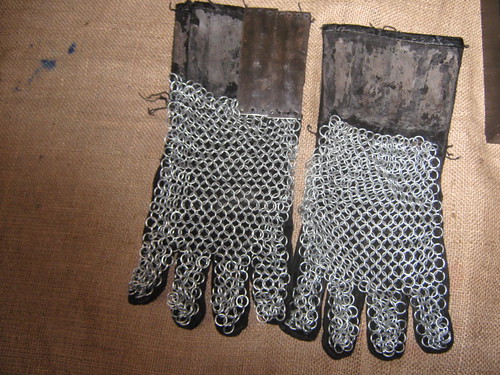
Medieval gauntlet by fullon2012, on Flickr

Medieval gauntlet” (CC BY-NC 2.0) by  fullon2012 

I recently wrote a piece in which I compared driving in a country as “running a gantlet.” My reviewers all said they thought I had spelled the word wrong. But I was so sure I was right. I had even looked it up in a dictionary (I can’t say “the” because I don’t know which one I used). I knew “gauntlet” referred to armored gloves worn in medieval times.

So imagine my surprise when I tried again today and I found this result on THE dictionary (Merriam Webster):

gantlet.png

And then grammarist.com presented me with this result:

gantlet vs gauntlet

Have I become a language snob by trying to use the historically correct variant? What do you think?


Book Review: Say It Like Shakespeare

Five StarssayitlikeshakespeareTom Leech’s Say It Like Shakespeare presents communication tips for business people through comparison with Shakespeare’s language. While the subtitle of the book, The Bard’s Timeless Tips for Communication Success, misled me slightly, leading me to expect more direct references to communication within Shakespeare’s drama, Leech’s deft selection of examples made it clear his tips are in fact timeless. Shakespeare simply observed humans in interaction, offering Leech a plethora of examples from plays and sonnets to illustrate the points effectively.

Leech also used contemporary works, both novels and movies as well as newspaper headlines and articles, to emphasize his points regarding the need for clarity in communication. Or to point out examples of communication failure. But each time an author turns to modern works as examples, there is risk that a reader isn’t among the throngs who read that book or saw that movie if the reference is recent and also risk that in just a few years, that same reference, especially to what my eighth grade geography teacher referred to as “current events,” may seem out-of-date, tempting the reader to put it aside and the author to feel another edition is needed. That’s where Leech’s use of Shakespeare shines. While it is likely no reader of the book has read every one of Shakespeare’s plays and sonnets, it is unlikely that any reader has read none of them.

Leech divides his message into six parts: The Path to Better Communication, The Sender’s Role, The Receiver and Feedback Roles, Getting a Good Message, The Medium Supports the Message, Competitive Communication, and Continuing Onward. The first five parts address the requirements of any communication system: sender, receiver, message, mutually intelligible code, and medium. He addresses the non-verbal aspects of communication as well, including body language, clothing, visual aids, and silence.

There were no footnotes within the text which initially had me wondering just where all the information came from, but I fear footnotes would have interfered with my reading pace and enjoyment. I was pleased to discover the book ends with credits for both the images and quotations contained. The alphabetical Index of Famous Lines offers reminders of just how much the words of Shakespeare have become ingrained in our language. All in all, Say It Like Shakespeare delivered more than it promised, always a happy outcome.

  • Print Length: 326 pages
  • Publisher: McGraw-Hill Education; 1 edition (May 4, 2001)
  • Publication Date: May 4, 2001
  • Genre: Words, Language & Grammar, Public Speaking, Running Meetings & Presentations, Reference

Readers Write-Perseverance

The Sun banner

Each month, The Sun magazine offers fiction, poetry, essays, interviews, and photos in a black-and-white format without advertising. Each issue includes provocative ideas from people of science, religion, philosophy, the arts, or a combination. Each issue also includes Readers Write, a feature compiling nonfiction submissions from the magazine’s readers on an intentionally broad topic. Occasionally I submit pieces for consideration. More often, I write essays on the topics too late to submit them.

This piece should have been submitted by June 1, 2016, for consideration for the December 2016 issue.

I feel it appropriate that I begin this series with an assignment I could have completed by the deadline, if I had been paying attention.

Back in 1965, my 12th grade English teacher, Miss Buslee, assigned a research paper to my class. We were all considered college-bound, so the assignment made a lot of sense. The topic of the research paper was careers. I have always thought it was a brilliant topic.

But at that time, it was easier for me to list what I didn’t consider interesting or possible than to figure out what interested me. For example, I knew I didn’t want to be a nurse. Like most eighth grade girls, I had then declared I wanted to be a nurse. But after a six-week stint as a candy-striper at a nursing home, I knew nursing was not for me. And though the idea of being a stewardess had been high on my list of exciting possibilities in fifth grade, my teacher that year, who had been a stewardess once, pointed out that stewardesses had to have excellent eyesight. But I wore glasses–thick glasses–so that option seemed off limits.

I was interested in foreign languages. My ninth grade class was the first to be offered German as a foreign language and I loved the challenge. So my career-oriented research centered on careers involving foreign languages.

As I conducted my research, one career possibility captured my attention: Foreign Service Officer. Since it was 1965, it is likely the information I was able to find in my small midwestern town’s library came from many years earlier, so it isn’t surprising that my initial enthusiasm was tempered by the discovery of two things: First, becoming a Foreign Service Officer required excellent health, including good eyesight, so my glasses might affect my options. Second, female Foreign Service Officers must be single. If a female Foreign Service Officer married, she was required to resign. And like all the girls I knew, I assumed I would get married. At least, I hoped so.

I put the idea of becoming a Foreign Service Officer in the back of my mind and got on with my college studies. I continued to study German and added Russian to the mix. The summer between my sophomore and junior years at college, I spent a summer in New Jersey where I discovered I already knew a foreign language so well I didn’t have to study it–English was a foreign language to the Cuban immigrants in the Weehawken neighborhood I volunteered in. And they all wanted to learn English.

I changed my major to English, but no one in the middle of Minnesota had any idea what it meant to teach English as a foreign language. By the time I graduated, I was prepared to teach English to high school students who probably hated the subject. But I got lucky: I couldn’t find a teaching job in California where I moved after college graduation.

Three years later, I added Spanish to the list of languages I tried to master. I also entered graduate school in order to learn how to teach English as a foreign language. At that point, I saw teaching English as the key to being able to live and work overseas and continue my journey with languages. Once again, I got lucky: I lived and worked in two countries while I taught English as a foreign language–Iran and Romania.

Even more years later, I rediscovered the Foreign Service as a career option. Much had changed since I completed my 12th grade research paper. Being in good health was still a requirement, but contact lenses addressed my weak eyesight sufficiently. And in 1972, six years after I completed my research paper, the Foreign Service reversed the prohibition on married women being accepted.

Along with about 20,000 people each year, I began taking the Foreign Service Written Exam, offered then on the first Saturday of December. I passed the written exam several times and was invited to take part in the Oral Assessment. I passed it twice, but still I had to wait. I knew the process was competitive. Only one to two percent of those who take the exam are hired.

In 1985, after eighteen years had passed since I completed my research paper, I was appointed to the US Department of State as a Foreign Service Officer. That’s perseverance.


Eight-Week Challenge: Week One Results

week one

Week one of my eight-week challenge is done. So far, so good.

As a reminder, here are my goals for the eight-week challenge:

  • eat more nutritious food with fewer empty calories,
  • spend one day a week reading the backlog of magazines sitting on the end table, and
  • write at least 500 words per day for at least five days each week.

When thinking about how to report my progress, I wanted to avoid listing numbers. Instead, I wanted a type of dashboard to represent graphically how well I’m doing. Since I love working with Excel’s conditional formatting feature, I chose to record numbers for each of the goals and then represent the numbers in color on the chart above.

Since my first goal is to eat food that is more healthy for me, I decided to measure two things from a formula I used to follow for many years, General Electric’s Health By The Numbers program, or the 0-5-10-25 program. This program measures four things each day, the number of cigarettes smoked (0 is the goal), the number of portions of fruits and vegetables eaten (at least 5 is the goal), the number of steps walked (at least 10,000 is the goal), and Body Mass Index (25 or less is the goal). Since the first two numbers are not ones I have to measure any longer (I quit smoking years ago and my diet is now includes only fruits, vegetables, seeds, and nuts), I chose to include my BMI and the number of steps I walk each day as metrics for my health. On the chart above, a green cell indicates when I met the target during the first week of my eight-week challenge. An orange cell, under “Steps,” indicates when I reached at least 50% of the goal.

An unforeseen benefit of sticking with my diet and exercise program is that I noticed I have been waking up earlier than usual, with all the energy I need to get started on my day’s activity. And that’s the main reason I have been able to get a walk of at least 5,000 steps each day. Most days I have walked 7,500 to 9,000 steps, but only once did I get above 10,000. Shopping at Costco for my fruits and vegetables that day made the difference.

To represent my second goal, I recorded the number of magazines I read each day. A green cell in the Magazine column represents success. Since my stated goal was to spend one day a week working on that backlog, just one green cell meets the goal. But when I counted up the number of back issues I have to get through, I need to read at least five magazines per week to clear the backlog. That is a better metric than just spending one day reading magazines. I’ll have to redo the formulas to represent progress using at least five magazines per week for success.

A benefit of this goal is that I found a number of writing prompts in some of the magazines which will help ensure I meet my third goal. Writer’s block is not allowed during the challenge.

To represent my third goal, I recorded the number of words I wrote each day for either my memoir or a blog post for either this blog or for the San Diego Writers/Editors Guild blog which I manage. Green represents meeting this goal.

From now on, I’ll include the graphic snapshot of my progress each week, without so many words, so I can focus more on the benefits obtained in the process.

Homework: Conditioning

A prompt from 13 Steps to Awakening:

Homework

  • Think of how your negative conditioning harmed you in the past. Describe a few situations where you acted out of unconscious negative conditioning patterns and discuss what happened and why.
    • Many years ago, I arrived in a new country for yet another assignment. There I would supervise several American employees as well as a number of locally hired employees.

      On my first day in the office, one of the Americans I would supervise–let’s call him Phil–told me that he had been given permission by my boss to take some time off once I arrived since he had been handling both his job and mine for the previous two months. He planned to leave the following Wednesday after work. On that day, Phil still hadn’t given me a leave slip. So I brought home a copy to bring to Phil’s house. Phil seemed annoyed. I explained that if he left without having approved leave, I would consider him AWOL–Away Without Official Leave. Phil filled out part of the form and signed it, but he didn’t fill in the dates. I added the following Saturday’s date as the start date and asked him how long he thought he’d be gone–one week, two weeks, longer? He replied two weeks would probably be enough. So I filled in the end date for two weeks from then.

      The following Saturday morning, I found a fax on the office fax machine, from Phil. It was a copy of his Army reserve orders to report on Monday to Frankfurt, Germany, for a period of 13 weeks. It was dated the week before I arrived in the country.

      He knew before leaving how long he would be gone, but he chose not to tell me. I was shocked. And angry.

      I contacted the officer who had signed Phil’s orders and explained that I wanted Phil to return from his assignment as soon as possible. He suggested I speak with someone at the Pentagon about USERRA–the Uniformed Services Employment and Reemployment Rights Act of 1994–which he said guaranteed Phil he could be gone for whatever length of time the orders covered. It also guaranteed he would get his job back when he returned. He did agree with me that Phil did not handle informing me of the situation very well, but there was nothing I could do to change Phil’s orders.

      When others within my own agency with more knowledge about the issues backed up the Pentagon officer’s description of the situation, I felt betrayed and let down.

  • Now describe how the same situations could have turned out if you were able to control your conditioning.
    • The first problem was that I assumed I had all the facts. As soon as I learned Phil had previously received orders he chose not to show me at the time, I should have consulted with others in the office to learn what others knew of the story. I realize now that my anger came more from what appeared to be Phil’s unwillingness to trust me with the truth and lack of recognition that my bringing a leave slip to his home was for his benefit. I let Phil’s actions get under my too-thin skin.

      The second problem was that I assumed I would be seen as weak if I turned to others for advice. When I did consult, I framed the story in such a way that I expected others to support my indignation at Phil’s lack of honesty. Instead, those I consulted provided me with the information I didn’t have. If I had not allowed my anger to intervene, I would have learned more about the issue instead of feeling let down by those I had turned to for support.

The above prompt is part of the third of 13 free lessons, developed by Alex Moses, Life Strategist, available on the A Life Answers website, shared with his permission.

Eight-Week Challenge

eight week challengeOne of my favorite bloggers is Queen of Blank (real name, Danielle). Her blog is The Caffeinated Writer (from which I nicked the image for this post since I’m following her lead, but you can see that because it is part of the image). She’s on the East Coast, where I came from back in 2012 when my husband and I moved to San Diego. And she’s moving soon–back to Texas. Oh, and she’s getting married–all the best to you, Danielle and Brad.

To prepare for the move, she has set herself an eight-week challenge. And she has inspired me to set up my own eight-week challenge, though I won’t have the same big change in my life at the end of the eight weeks. But I know setting goals as New Year’s resolutions rarely works, so why wait for a specific date on a calendar to begin working towards goals? I have at least as high a likelihood of succeeding if I start the last week of May.

Danielle’s goals have to do with losing weight, reading more, and writing more. So I’m taking on goals with a similar theme: eating better, reading more magazines, and writing more regularly.

So here are my goals in my personal eight-week challenge:

  • eat more nutritious food with fewer empty calories,
  • spend one day a week reading the backlog of magazines sitting on the end table, and
  • write at least 500 words per day for at least five days each week.

Eat more nutritious food

I admit that I’ve already begun working on the first one. When my doctor prescribed medication to address my type 2 diabetes, I started reading about other options–mostly significant changes to my regular eating habits–that may get me off medication. I found two books in particular helpful, though I also did more online research as a result.

After reading these two books, I thought back to the advice I had received when I was first prescribed a statin for high cholesterol levels at least fifteen years ago as well as the dietitian’s more recent recommendations for adjusting my eating habits to address diabetes. In the first case, what I recall of what my doctor said was that once I began taking a statin regularly, I could eat whatever I wanted to eat. In the second case, the dietitian recommended I eliminate only five foods from my diet.

If only addressing medical conditions were so easy. The first solution was like assuming a magic pill would erase the problem. And the second solution assumed I would resist making bigger changes.

I also searched online for reports on the effects of taking statins for women. While I could find many reports that included the standard advice that taking statins preventatively will reduce the risk of cardiovascular problems, I was startled to find other reports that indicated women who have never had a heart attack or stroke are unlikely to benefit from taking a statin. In addition, there is evidence that for women, statins may actually bring on diabetes and memory loss. Even the Mayo Clinic admits there is a relationship between statins and increased glucose levels or type 2 diabetes. WebMD.com lists a number of possible side effects, though it continues to make the case for more people being prescribed these drugs.

After reading the books and doing the research, I decided to do two things.

First, following Dr. Fuhrman’s recommendations, I am now eating a plant-based diet of fruits, vegetables, nuts, legumes, and unrefined grains, with no meat, dairy, eggs, or oils and very limited carbohydrates. On the weekends, I will allow myself to have one traditional dessert when we are out at a restaurant or at someone’s home.

Second, I’ve stopped taking the statin. After all, since the purpose for taking the statin is to reduce the cholesterol in my body, I shouldn’t need it any longer since I am no longer eating foods with cholesterol.

I’m still taking the medication prescribed for diabetes because I have an appointment with my endocrinologist at the end of the month. I plan to tell her I wish to stop taking the medication and continue eating the plant-based diet instead, to see if my body can control the glucose levels in my blood in that way.

Oh, and I know I need more exercise to go along with this diet, so my pedometer is once again my friend.

Spend one day a week reading magazines

I read something every day. I set a goal of reading at least 50 books in 2016 through the Goodreads.com challenge and I am well on my way to meeting that goal. But I need to cull through the backlog of magazines that keep piling up as reading the next book looks more enticing. This week I got through seven magazines in one day–but they were the short ones, the ones I just skim through, scanning most of the pages to see whether anything is worth more time. Those left are the big ones, Writer’s Digest and The Sun, magazines that have so much of value in them I need more than a day to get through them.

Write at least 500 words per day for five days each week

I don’t plan to count words I revise in what I have already written. I will count only words put down to flesh out the many chapters of my memoir that right now contain only a title. Or a new blog post. Or maybe something completely new. Back in 2013 I set out to write at least 500 words a day for 365 days, so I know I can do it. I just need to put the seat of my pants into the seat of my chair and then do it.

At the end of each of the next eight weeks, I’ll report on whether I have been able to stick with my plant-based diet as well as on how many steps my pedometer reports each day. I’ll report on the number of magazines I have managed to knock of the stack. And I’ll provide a list of the number of words I’ve written each day.

Thanks in advance for keeping me accountable for these goals.
Book Review: Wild Ginger

Three starswildgingerAnchee Min’s Wild Ginger relates a love story in the midst of turmoil told from the point of view of a teenage girl, Maple, who suffers at the hands of a bully, Hot Pepper, because Maple’s father was in a forced labor camp at the beginning of Mao’s Cultural Revolution. She meets the title character, Wild Ginger, when the latter joins her school class. Because Wild Ginger has “foreign” eyes and her father is half-French, she becomes another target for Hot Pepper, but Wild Ginger fights back and the bond between the two outcasts is forged.

Maple’s father is missing from her life because of his political crimes; Wild Ginger’s father is dead. Maple has siblings. Wild Ginger is an only child. Their mothers are left with responsibility to hold their two families together. Together they fight the injustice, but when Wild Ginger’s mother hangs herself, she loses hope.

In spite of the hopelessness of her situation, fortunes change when she is declared a heroine for discovering a group of unscrupulous men as they tried to divide up profits from thefts from a factory. As a result, she meets Mao after the newspaper headlines proclaimed that she acted based on following the teachings of the Chairman.

The story involves love of all types: best-friends-forever love between teenage girls, love of country, love of family, and first love. It also touches on the negative reactions to love: embarrassment, jealousy, envy, anger, betrayal, revenge. The book’s nearly storybook ending is satisfying on one level, but felt just a bit too tidy for a book aimed at an adult audience.

And that touches on what the biggest problem was for me. Because of the age of the central characters, initially I considered the book aimed at a young adult audience. The themes of bullying, friendship, and loyalty all seemed appropriate for YA readers. But as the love story that pitted Wild Ginger and Maple against one another for the love of Evergreen, the details were too graphic for a YA audience. Yet the story line, though complicated and touching on real political and psychological issues, offered too simple a path to satisfy most adults.

I have read other books by Anchee Min, more successful books based on historical characters, fleshed out using fiction techniques. Wild Ginger, when compared with Empress Orchid, disappointed me.

  • Print Length: 242 pages
  • Publisher: Mariner Books; Reprint edition (January 1, 2004)
  • Publication Date: January 1, 2004
  • Genre: Historical Fiction, Political Fiction

IWSG

Insecure Writers Support Group BadgeIt’s Insecure Writer’s Support Group Wednesday. And this is my second post since joining.

Last month I mentioned I was working on a synopsis of my memoir. It’s better, but not yet final, still on the back burner, not out of mind, but out of sight for now.

Instead of continuing to plug away on it, I’ve been spending time rereading my journals and going through photos to bring buried memories to the surface. Last month I completed a four-week course with Judy Reeves on “How We Got Here from There: Exploring and Writing Memories for Memoir or Personal Narrative” at San Diego Writers, Ink. Judy had us bring in photos and objects to use as writing prompts, all in order to help us uncover memories. The results from the many talented writers in the group were amazing. All the pieces I wrote for her class have found a place within my draft memoir.

Now I just need to get my pants into the seat of my office chair more regularly and get to work.

At the beginning of the year I started out with the best of intentions to sit down first thing each day to get my writing done early. I even set up my office with a white board right next to my desk to keep my goals and deadlines where I couldn’t ignore them. But there are too many other things that also vie for that time slot–getting my daily dose of walking in, for example. And that desk is now so covered with stuff I don’t want to work in it. Instead, my laptop sits on the coffee table in the living room so that I can pick it up at any time without having to leave the couch. I know this isn’t the best arrangement, but it’s so much easier.

What is your best writing time? writing space? writing rituals?

Book Review: The Genie Who Had Wishes of HIs Own

thegeniewhohadwishesofhisownMargaret Harmon’s 22 21st-century fables provide lessons about Five Starsgreed, hubris, jealousy, pride, procrastination, living through others, idealism, creativity, wasted opportunities, optimism vs pessimism, and the question of just what is success. Some are reminiscent of traditional fairy tales, especially three involving magic lamps and turbaned genies, “The Ingénue and the Genie,” “Freeing the Genie,” and “The Second-best Juggler in the World.” But none have the predictable ending our childhood tales have taught us to expect.

If the fables had morals–and Harmon insists even Aesop’s fables did not originally include morals until the Victorians, who feared children wouldn’t otherwise learn from them, added them–the likely moral of the first would be “Don’t let perfect be the enemy of good enough,” of the second, “Appreciate every opportunity, especially those that benefit others,” and of the third, “Opportunities aren’t guarantees.” Well, those last three words are Harmon’s, from “The Second-best Juggler in the World.” So I’m certain she would agree with me.

While each fable tells an entire story, there are themes that run through many of them. Seizing the opportunity is a theme that applies not only to the three genie tales but also to others. “Two Young Farmers,” “The Snake in the Terrarium,” and my favorite, “The Track Team,” also deal with recognizing an opportunity or creating an opportunity or of missing out on an opportunity. In “The Track Team” Harmon contrasts three team members who agree there is a problem: their team keeps losing. And they agree something must be done. But each chooses a different solution, leaving the reader to decide which of the three is more likely to succeed. “Two Young Farmers” poses a similar situation, though the outcome is unambiguous: one farmer believes perfection must be found first while the other begins with what he is handed and creates his own opportunity.

One of the longest fables, “The Philanthropist,” presents the scariest of images to me. The title implies the central character is a success, having acquired so much wealth he can afford to give it away. But the moral of this fable involves the means more than the ends.

It may be several years yet before I can tell these fables to my pre-school aged grandchildren. I hope Margaret keeps writing fables to add to these by then.

  • Print Length: 226 pages
  • Publisher: Plowshare Media; 1 edition (July 31, 2013)
  • Publication Date: July 31, 2013
  • Genre: Literary Humor, Short Stories, Fairy Tales