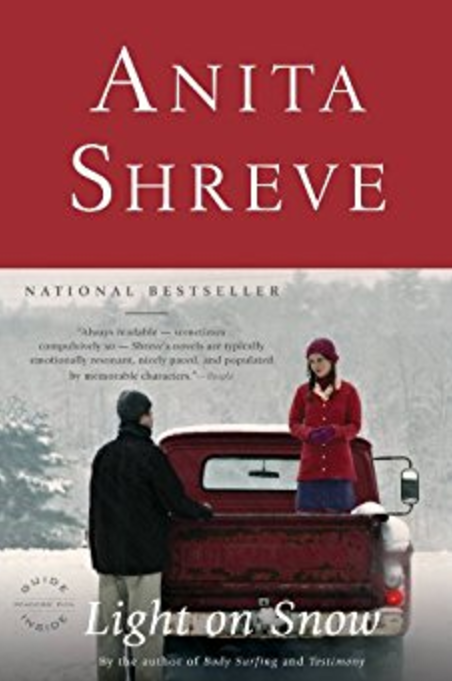
Book Review: Light on Snow

Five StarslightonsnowIn Light on Snow, 12-year-old Nicky Dillon and her father, Robert, struggle to set up a new life in a new place after having left New York two years earlier. Her father could no longer tolerate living in the city where Nicky’s mother and her infant sister, Clara, were killed in an auto accident, turning their world upside down.

One winter evening before Christmas, Nicky and her father take a walk in the woods behind their remote and isolated home. While walking, they hear a cry her father recognizes as a baby’s cry. They find an infant girl abandoned in the snow, wrapped in a sleeping bag. They rescue the baby and bring her to the local hospital. But they cannot leave behind their thoughts about the baby.

The mother of the baby, Charlotte, appears at the Dillon home, intending to thank them for saving the baby, but her arrival angers Nicky’s father while sparking a connection for Nicky who sees Charlotte as a replacement for her mother and the baby as a replacement for her sister. A storm isolates them, preventing Charlotte from leaving and putting Nicky and her father at risk of being considered her accomplices. Eventually, they both accept Charlotte’s explanation for the circumstances of the baby’s abandonment and begin thinking of themselves as her protector.

Both Nicky and her father need to find a way forward, first in the situation they find themselves harboring Charlotte, and then in life on their own. The encounter with Charlotte serves as a catalyst to break their pattern of hiding from life.

The novel raises questions about what it takes to make up a family. Are Nicky and her father a family? Or are they the remnants of a family that was broken when Nicky’s mother and sister died? Does a family need both a mother and a father? Can a broken family be fixed? Or are these questions about what makes up a family just devices to represent the denial Robert is still caught up in regarding the death of his wife and child?

The novel doesn’t answer these questions. But it catches the reader in its simple language, told from 12-year-old Nicky’s viewpoint, though 18 years later when Nicky had reached 30 years old. Is the story appropriate for a 12-year-old reader?  I think so.

  • Genre: Literary, Contemporary Fiction
  • Print Length: 288 pages
  • Publisher: Little, Brown and Company; 1st edition (October 1, 2004)
  • Publication Date: October 1, 2004

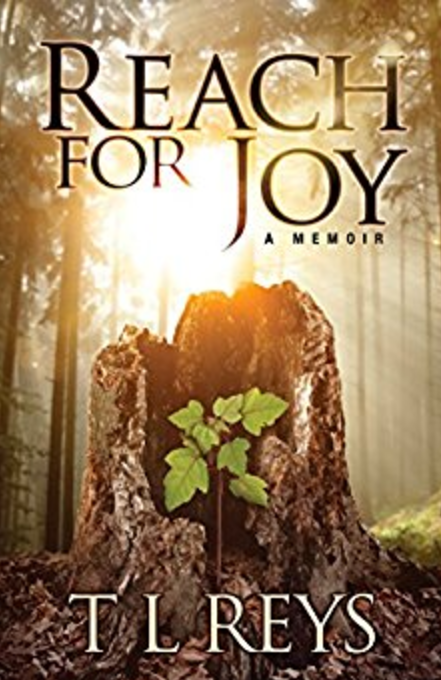
Book Review: Reach for Joy

Four starsreachforjoyIn Reach for Joy, Tessy Reyes (a pseudonym) tells of her 30-year marriage to an independent survivalist who controlled her and her children until she succeeded at getting away from him. During that time, she bore ten children, nine of whom survived. Her memoir opens with the memory of the child who didn’t survive, a heartbreaking story, even more so when she puts it into context later in her story.

The family often lived without heat, electricity, water, or plumbing. She home schooled her children so that both she and her children wouldn’t need to leave the house. For many of those years, Tessy’s husband forbade her from driving and spied on her whenever she left home for errands.

Reyes wrote her story in order to give support to other women who may be in abusive, controlling relationships. Her hope is that her story will give courage to others to escape sooner than she did.

While I sympathized with the author throughout the book, I hadn’t realized until I finished reading it that the author used a pseudonym instead of her real name. Other names in the book are also pseudonyms. And this made me feel a bit like I was tricked into sympathizing with her. I immediately went back to the beginning of the book–a Kindle version–to see if I missed something. I didn’t.

Because I was surprised that she chose a pseudonym, I did some online research and eventually found her website where she indicates she is not afraid to use her name, but she chose a pseudonym to protect others from being easily identified. Is this a good enough explanation for a pseudonym? I don’t know. I believe her story is real—unfortunately so. And I applaud her goal of encouraging other women who may be in similar relationships to find the courage to get out. But I feel her case would be stronger if she used real names or at least pointed out in the beginning that she chose pseudonyms for a good reason, for the protection of the privacy of others.

Genre: Memoir
Print Length: 185 pages
Publisher: Northwest Sourdough
Publication Date: June 1, 2016

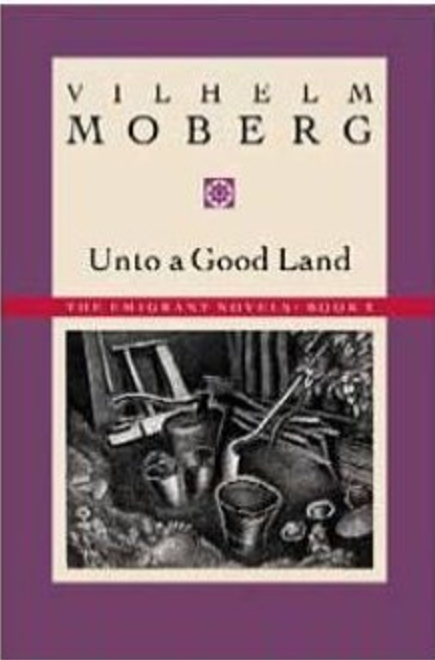
Book Review: Unto a Good Land

Five StarsuntoagoodlandVilhelm Moberg’s Unto a Good Land continues the story of Karl Oskar and Kristina Nilsson’s band of Swedish emigrants from Småland, southern Sweden, from New York where the group landed at the end of the first book in this series to Washington County in Minnesota, near Stillwater. The group make their way by riverboat, train, steamboat, and oxcart through northern New York, the Great Lakes, and through the upper midwest by water and then to their final destination at Taylor’s Falls by ox cart and on foot. For only a portion of the journey, until they reached Detroit, did they have a Swedish-speaking guide.

Moberg’s descriptions of the challenges the group faced–to communicate with others, to find food and other essentials with the little money they had, and to discover what they must do to claim land in order to establish themselves–effectively put the reader in the settlers’ shoes. I felt the hunger and pain Kristina felt when she had little to give her children to eat on the journey. But the challenges didn’t end even when Karl Oskar found land for them to settle. The group arrived so late in the summer, there wasn’t enough growing season left for crops. There was only time to build shelter to protect the family from the cold of the winter just ahead.

The core group of settlers who had gone through so many hardships together did not remain together once they reached Minnesota. Karl Oskar’s brother, Robert, and his friend, Arvid, set out for California, leaving Karl Oskar’s family behind with one fewer farmhand to break up the land. The different images each of the immigrants had of America’s promise began to separate, rather than unite, them.

Even those who chose to remain to claim land to farm in Minnesota ended up at a distance from one another, which brought another challenge, loneliness.

Moberg’s story continues in two more volumes, Settlers: Book 3, and Last Letter Home: Book 4 . The first volume in the series, The Emigrants, details the conditions of life in Sweden that led to the Småland group deciding to make the long and dangerous journey by sea to New York.

Moberg intended the four volumes to be read as one continuous story. Having read two of them, I am impressed that Moberg manages to tell a complete story in each, allowing the reader to begin with either The Emigrants or Unto a New Land without the feeling that something has been left out. Nonetheless, I plan to read all four books to see how the story ends for each of the original emigrants.

Genre: Literary Fiction, Family Saga
Print Length: 412 pages
Publisher: Minnesota Historical Society Press; 1 edition
Publication Date: June 30, 2009
Original Publication Date: 1952

IWSG-September

Insecure Writers Support Group Badge
Here we are at the first Wednesday of the Month where many of us bloggers write about our hopes and fears in the Insecure Writer’s Support Group, founded by Alex J. Cavanaugh. Please visit either site for more info and a list of participating bloggers, to join, or offer encouragement.

This month’s question for IWSG Wednesday is “How do you find the time to write in your busy day?”

A better question for me would be “How do you fill your day while you procrastinate on your writing?” And that’s easy for me to answer. I read. I read some more. I watch another episode of Midsomer Murders on Netflix. When I have seen all of them, I’ll find another multiple episode series. I check my three e-mail accounts, plus the account of the San Diego Writers/Editors Guild, to be sure I haven’t missed anything important. Then I check out Facebook, including my personal account, the Guild’s page, my Toastmasters club’s page, all of which I manage. And for good measure, I’ll check out the Meetup group pages for the multiple groups I administer.

Oh, and then there are meals to prepare. My husband eats meat and I rarely do, so that’s two different meals to prepare for lunch and dinner. He takes care of breakfast on his own.

And I have to find time to wash clothes at least once a week.

Oh, and I need to get in 10,000 steps each day.

And there’s that new 2,000 piece jigsaw puzzle that I just have to finish. Putting the pieces together helps clear away mental cobwebs I am convinced are blocking my neural pathways to better writing.

These are the activities I have filled my days with recently because I’ve reached the point where I have to decide whether to include some of the tough stuff in my memoir: events I’d rather forget than include or events I’m not sure my colleagues at that time will forgive me for mentioning. Including such subplots might add the tension all my writing instructors insist must be included, but my life has been more marked with incredibly good luck (nothing bad happens while I’m in town, though revolutions may be brewing in the background) so I feel including them as (minor) “inciting events” into the arc of my memoir is manipulative.

The question I know I need to answer at this point is just what message do I want readers to take away from what I write. I should have answered that question long ago, but I’ve been dragging it around with me for the past year as I write, edit, read for critique, and then rewrite.

Here’s what I’m going to do before October’s IWSG Wednesday: I’m going to reread Marni Freedman’s 7 Essential Writing Tools: That Will Absolutely Make Your Writing Better (And Enliven Your Soul) to focus attention on the planning steps I’ve been avoiding while I’ve been balancing my checkbook and entering all my receipts and expenditures into Quicken Essentials. Then I’ll apply the seat of my pants to the seat of my chair and get back to writing.

Book Review: Between the World and Me

Five StarsbetweentheworldandmeTa-Nehisi Coates’s treatise Between the World and Me takes the format of a series of letters from the author to his teenage son, offering him historical perspective on the advice he feels his son needs to succeed—and to stay alive—in the future. Coates refers often to Americans “who believe they are white” to refer to those who have bought into the American “Dream.” I believe he uses the phrase for people of any color who look to the dream as a means to escape from their past. Instead, he sees the dream as a myth that only hides the reality of history and the fact that we continue to deny that we use the term “race” as an explanation for the inevitable economic or other disparity instead of recognizing it as a human construct of history that we use to justify a continuation of the same history. I am certainly among the Americans who believe they are white. And I think this book is an important one, though not necessarily comfortable, for all Americans to read.

Coates points to American history to explain his response to questions he believes are important, such as why he believes progress of the people “who believe they are white” was built on looting and violence. And to make his point, among other things, he tells his son of the overwhelming feeling of fear that permeated his childhood and how fear still clings to him now, in spite of superficial changes that have only marginally improved society.

The contrast between Coates’s description of the tension he felt while simply walking to school and the freedom I enjoyed doing the same in the largely northern-European, mid-western neighborhood of my childhood struck me in ways no other description of the impact of racism and discrimination has ever done.

Perhaps it is because I now have grandchildren, whose experiences will likely be more like mine than like Coates’s. I had no reason to understand the impact of white privilege while I was a child, and I skipped the step of watching children of my own, having acquired a step-son when he was already 13. When he came into my life, I was protective and warned him of the dangers I knew adolescence would present to him, or at least made sure his father did, but at no time did those warnings come from a sense that he might be taunted, struck, injured, or arrested for smiling at the wrong person or wearing the wrong color clothes. I didn’t fear that he faced danger simply by stepping outside during daylight hours.

I also didn’t advise him on how he should respond if he saw someone taunting, striking, or injuring someone else for no reason other than their skin color, economic level, or IQ. Did I expect that would never happen? Or did I assume his mother had already taken care of that? Or did I think that was something his father had done or would do?

Every page of Between the World and Me revealed to me the impact of white privilege I have enjoyed without realizing it exists. I believed that racism affected others–those being discriminated against–that it had no impact on my life. I believed that my not expressing negative statements about someone because of his or her race, or not doing intentional harm to anyone, gave me immunity to accusations of being racist. I saw the issue as black-or-white, not as background-and-foreground, not as context-and-detail.

My parents provided me with lots of advice about how to avoid trouble, to remain a “good” girl, to reach success in both my professional and personal life. They never had to provide the advice Coates feels compelled to share with his son. The things I learned to fear could be listed: walking alone at night, accepting rides from strangers, talking to strangers, being taken advantage of if I drank. I could avoid them because I could control them. In contrast, Coates describes how fear intrudes into everyday activities in his world: walking to school, reacting to a stranger’s critical comment on an escalator, being stopped by a someone because he was a stranger in the neighborhood. Coates estimates he devoted one-third of his brain’s activities to addressing fear in order to ensure his safety from minute to minute when outside of his home. Fear was part of his daily activities; he could not avoid it. Someone else always had control.

Coates’s writing challenges me to consider what advice I would include in a letter to my grandchildren. Any thoughts I had of the content of such advice prior to reading Between the World and Me have been shattered. The impact of white privilege assures that I need not write anything similar to Coates’s advice. Instead, my advice should include what my grandchildren need to know in order to take part in breaking down white privilege so that no parent of color ever has to write similar advice to their children.

But do I have sufficient empathy, a broad enough vision, to address the lessons which may help them change the context within which the fear breeds? Have I learned enough to contribute to such a noble cause? At this point, I fear not. But since white privilege means I can control fear, I plan to consider how I can change my answer in the future by choosing to observe life through a different filter, one that Coates offers in his book.

• Genre: Discrimination and Racism, Race Relations, United States
• Print Length: 163 pages
• Publisher: Spiegel & Grau; 1 edition
• Publication Date: July 14, 2015
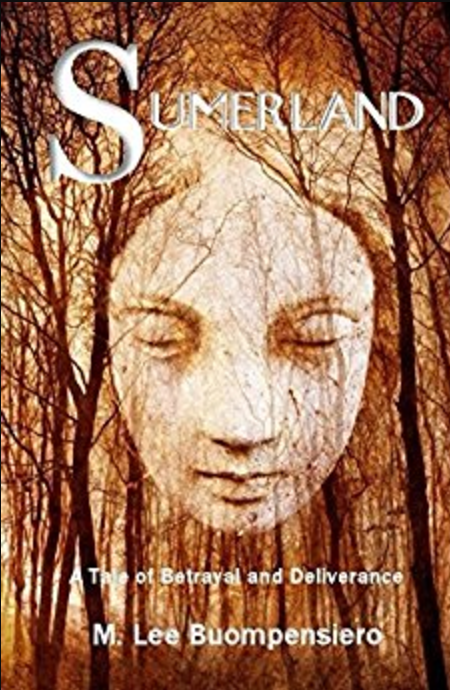
Book Review: Sumerland

Five StarssumerlandIn Sumerland, M. Lee Buompensiero tells a fascinating tale that makes the case that family secrets are best uncovered and allowed to breathe. When secrets are stifled, the results are often worse for those the secret-keepers imagine they are protecting than would be the truth. This is the case for Kate Post, Sumerland‘s protagonist. The tension Buompensiero creates kept me turning pages and wishing for more when I reached the end.

After her parents die suddenly, Kate learns she has inherited a grand house from her mother, a house neither she nor her father knew anything about. The need to make decisions about the house, including whether to keep or sell it, keeps her in San Diego, away from her San Francisco home, longer than she expected. So long, in fact, that she begins to notice ghostly visions in the house that both repel and intrigue her, especially after she discovers a scribbled inscription in the sidewalk, under a bush, with initials, a date, and the misspelled name, Sumerland. Long enough also to meet Jack, whose presence further complicates her decisions.

Kate’s curiosity about both what led to her mother’s acquisition of the house that had for most of the previous 30 years had been a rehabilitation hospital for veterans and the ghostly images that interrupt her sleep lead her to discover family secrets that bring her together with family members she didn’t know she had at the same time as answering questions from her childhood that she never dared ask.

• Genre: Ghosts, Teen and Young Adult, Teens
• Print Length: 270 pages
• Publisher: Grey Castle Publishing
• Publication Date: July 27, 3016

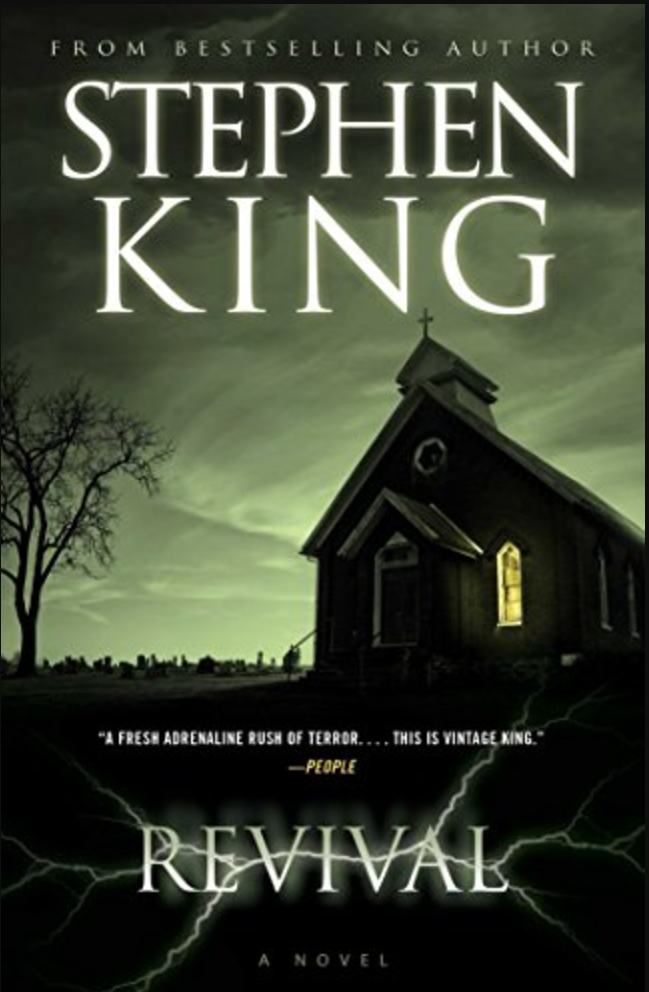
Book Review: Revival

revival
Five StarsI am in awe. I want to give this book more than five stars, but I don’t want to have to recalibrate my other reviews. Five stars mean I love it, and I loved Revival.

Revival is the first of Stephen King’s book I have read. After having seen several movies based on his books, I had concluded I wouldn’t enjoy his books. Horror stories just aren’t my thing. Thankfully, I recently read his book, On Writing: A Memoir of the Craft, in which he introduces readers to his thought process when deciding what to write about as well as tips to those who wish to become better writers. From it, I learned that King observes the everyday and ordinary around him and then figures out how to create a riveting story around them. I knew I wanted to read them, not rely on a Hollywood rendition of his stories. And now I know I want to write like him, too.

Everything about Revival delighted me. It’s the story of Jamie Morton, an ordinary six-year-old boy living in a small town in Maine, and Charles Jacobs, a young adult, a newcomer in town who arrives with his wife and young son to take up the vacant Methodist minister position at the church just down the road from Jamie’s home. Rev. Jacobs  introduces the boy to wonder, a metaphorical breathing life into him. Though tragedy strikes Jacobs, causing him to leave town after only three years, the connection between the two remains, bringing them together 30 years later and then again in another 20 years.

Initially King surrounds the story and characters with innocence and wonder, characteristics of an idealized happy childhood. But it is no fairy tale; it is simply a well-written story with just enough hooks and teasers to keep the reader turning the pages to figure out what sadness awaits Jamie as well as what in the world the title of the book means.

I had expected to read a horror story; eventually it appeared. But everything leading up to it kept me smiling in recognition of what the passage of time does to tease, punch, and kick us as childhood blends into youth and then into adulthood, middle age, and finally into that age King describes as “how the fuck did I get old so soon?” King includes just enough stories of love–first love, later lust, even a case of abusive love–to keep the larger story moving forward.

Revival is a story about relationships and what makes–or breaks–them, and why they are important to us. It is a story of love, dependence, independence, and redemption as well as including just enough mystery to keep the reader turning the pages to see what else is in store. King uses the analogy of cooking a frog by placing it in a pot of cold water and then gently applying the heat so the frog doesn’t notice the water getting warmer to explain Jamie’s transformation through the story. King does the same for his readers with the horror story in Revival. By the time the horror appeared, I felt satisfied, not shocked or frightened. I didn’t notice the water getting hotter at all.

Readers Write-Making Ends Meet

The Sun banner

Each month, The Sun magazine offers fiction, poetry, essays, interviews, and photos in a black-and-white format without advertising. Each issue includes provocative ideas from people of science, religion, philosophy, the arts, or a combination. Each issue also includes Readers Write, a feature compiling nonfiction submissions from the magazine’s readers on an intentionally broad topic. Occasionally I submit pieces for consideration. More often, I write essays on the topics too late to submit them.

This piece should have been submitted by March 1, 2015, for consideration for the September 2015 issue.

Is ignorance bliss? Or does a positive attitude beget positive results?

I married for the first time at 20 years old. Too young. And to the wrong man.

But the first few months felt like success. I’m still trying to figure out if it was because he and I were actually on the same page working towards the same goals or if I just didn’t know enough to recognize failure when it stared me in the face.

We were both still students, though set to graduate with our bachelor’s degrees within five months. We each had part-time jobs. His salary paid the rent. My salary paid for groceries. That’s all the expenses we had, and we had them all covered. At least for the six months our student loans were deferred and the four months of grace on our car loan. We didn’t have a plan for what we would do then. We just thought we’d figure it out when we needed to.

My part-time job was very part time. I worked 16 hours a week at 70 cents an hour. After withholding, my take-home pay each week was $7.67 cents. So long as I had three pennies to round the amount up to $7.70, I could cash the check at the Black Hawk bar next door to the movie theatre where I was an usher. The bar wouldn’t hand out pennies, and I didn’t want to settle for $7.65. Because that was all I had to buy groceries and all the other non-grocery items, such as toilet paper and shampoo, each week.

We got our checks every Friday evening. Saturday mornings, I headed for the warehouse grocery store in town with my detailed list of necessities. In order to stretch the money, I picked up canned and packaged goods first. Each shopper was handed a grease pen on arrival with instructions to write the prices on the items as we picked them up. I am amazed now at the trust the store placed in all its customers. But it never occurred to me to write anything other than the listed price. The act of writing also helped me total up the prices as I walked up and down the aisles.

Once I had the cans, boxes, and paper products I needed, I calculated how much money I had available for meat. Ground beef was about 49 cents a pound in those days, chicken was even cheaper, but only sold as a whole bird, and a package of hotdogs was also 49 cents. So for every dollar I didn’t need for canned goods, I could buy two pounds of beef, two packages of hot dogs, or a chicken. That determined the proportion of meat to rice or noodles in the meals I could prepare for the upcoming week.

It never occurred to me to complain that I had so little money. I had what I had. And that had to be enough. So it was.


Eight-Week Challenge: Week Eight Results

Week 8

Last week of the eight-week challenge is done! Whoo-hoo! Again, thanks to Danielle for inspiring others and me to take on this challenge.

I wish I had done better, but I’m pretty darn happy with having met the first goal, at least as measured by my body-mass index, for the entire eight weeks. And for cleaning up that backlog of unread magazines.

As a reminder, here are the goals I set for the eight-week challenge:

  • eat more nutritious food with fewer empty calories,
  • read at least five magazines each week to clear out my backlog of unread magazines, and
  • write at least 500 words (raised to 750 words once the magazine backlog was cleared) per day for at least five days each week.

Healthy Eating

I tried one more twist on my eating habits this week, mostly to provide easy-to-prepare meals for my husband: I signed up with Blue Apron.  Our daughter-in-law signed up first, and after the first week she received three invitations for one free week of meals to share with others.

She shared one with us. The following Friday a refrigerated package arrived with everything needed for three meals-for-two: Serrano Pepper & Goat Cheese Burgers, Lemon Chicken & Green Beans, and Sweet Corn & Tinkerbell Pepper Pizza. I’ve cooked up the first two. Hubbie approved, though he did turn down most of the vegetable side dishes. More for me, so I can’t complain, though I would like him to eat more balanced meals, too.

I went ahead and had the burger the first night, though I fantasized about replacing the meat with a quinoa burger. I cooked up both chicken portions the next night, but left one for Hubbie to eat this week. I supplemented my meal with the rest of the summer squash he wouldn’t eat and the leftover veggies from the previous meal.

So now I have three invitations to send out to others interested in trying out Blue Apron. Interested? Let me know.

Exercise

The weather is getting warm here–one day was over 100 degrees by 9 a.m. Well, maybe that’s an exaggeration to get sympathy. But I didn’t always get up early enough to walk while the heat could still be beaten. So I missed my goal more often than I met it. I managed to get to at least the half way point more often than not, so I count that as a half win.

Writing

My writing goal to write at least 750 words at least five days a week took a big hit this week. Too much to do again. The bright light in this area is that I was able to finalize a couple of first drafts. And I realized that one reason I haven’t reached the point of sharing my writing is that my standards are higher. A year ago, I shared anything I managed to complete that had a beginning, middle, and end. But now I know that showing, not telling, is important. And the really difficult piece, admitting how I feel or felt about the story, has been a big challenge.

But I’ll keep working.

Overall

AverageAs a wrap-up for the eight weeks, I calculated the averages for my weight/body-mass index, number of steps walked, and number of words written (for at least five days of each week), to see if the overall picture is closer to my goals than the last week’s results.

I like it! At least there is no red.