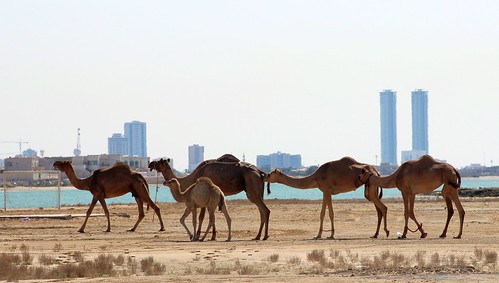
U is for United Arab Emirates

We moved to the United Arab Emirates in 1996. Abu Dhabi was my second Foreign Service assignment in the Middle East, and my third living experience in the region.

When Ramadan came around our first year in Abu Dhabi, I thought I knew what it was all about, having lived more than two years in Iran and then two in Qatar. I already knew that I hadn’t learned much about the month in Iran, however, because not all restaurants closed during the day; they just pulled down the shades so that those fasting wouldn’t have to see those who weren’t. But in Qatar, all restaurants, except those in the big hotels, closed until sundown, which was announced by a canon being shot off along the corniche. Ramadan, therefore, was a dreary place for most of us in Doha. We all looked forward to its end.

The restaurants in Abu Dhabi remained closed during the day during Ramadan, but it didn’t seem like the dismal month I recalled in Doha. The local employees talked about Ramadan with joy. Instead of focusing on all those hours when they couldn’t eat, they celebrated the dishes that were most often served only during Ramadan and being together with family and friends each evening. I began to think of Ramadan more as a month-long Thanksgiving celebration than a burden and inconvenience to have to get through.

Our first Abu Dhabi Ramadan, we were invited to many evening iftar, or breaking of the fast, meals hosted by my contacts at the embassy. This was no different from my experiences in Qatar. But perhaps because the traditions were more familiar I learned more of what I hadn’t known before. One example: the food that was prepared for these large fast-breaking meals was also distributed to those in the city who didn’t have the means to provide such lavish meals for their families. With the wealth of the country being so well-known, it was a surprise for me to learn that not every Emirati was so self-sufficient. But everyone in the country had the opportunity to join in the evening meals of Ramadan.

But the main reason for the shift in my thinking came during our second Ramadan in Abu Dhabi. One afternoon, Huda, the wife of one of the local employees who worked for me, Mackawee, called me at work to tell me not to cook anything that evening because she planned to bring a typical Yemeni Ramadan meal for Alex and me. I was surprised and pleased, especially because I couldn’t think of anything that I had done to deserve such treatment. I appreciated Mackawee, but I don’t think that I treated him with any more respect or regard than my predecessors. But Huda decided to share the joy of the holiday with us. She brought a number of typical Yemeni foods, explained what each was, and then left us to enjoy the meal so that she could spend the evening with her husband.

The following year, our last in Abu Dhabi, I brought up the idea of hosting an iftar at the embassy to a number of the women who worked there. We agreed it would be an excellent way to encourage more of a community feeling among the employees and their families, so we started by making a list of the foods we each thought of as typical Ramadan food.

I was surprised to learn that what was typical on the Arabian peninsula wasn’t necessarily typical in Jordan or Egypt or Lebanon, countries represented by some of the women who organized the meal. So coming up with the menu was not so simple. We agreed that the meal must begin with fruit juice and dates, the items the most devout ate first to regain their strength after which they would pray and return for the rest of the meal. For the meal, we had lamb and rice and stuffed vegetables and salads and many other items I can no longer remember. For dessert, I contributed the other item I always thought of as typical of Ramadan, Oum Ali–an Egyptian dessert, the richest bread pudding in the world.

Most of us had to prepare the food at home and bring it back to the embassy to assemble the table. Just before sundown, the local employees began to return, with their families. As we saw the gathering numbers, we had a moment of panic that we wouldn’t have enough food. But we had more than enough.

Once everyone who had returned to the embassy compound had eaten, we brought plates of food to those who never seemed to get away from their desks. And we brought plates to the Marine on duty as well as the Marines whose home was one of the adjacent buildings. And still there was food left over, so we brought plates to the police guards who were on duty outside the embassy compound walls.

As we cleaned up after the meal, I learned that several of the women who had helped with the meal had never before participated in hosting an iftar meal because while they were Arabs from Jordan, Lebanon, or Egypt, they were Christians. The entire event was more of an adventure than I had thought.

Two years later, I was in Yemen and the beginning of Ramadan coincided with Thanksgiving that year. Since the Muslim calendar is lunar, it is 11 or 12 days short of the solar calendar. Ramadan and all other Muslim holidays occur earlier in the solar calendar in successive years. The coincidence of Thanksgiving with what I had come to think of as a month of Thanksgivings prompted me to mention how we observed Ramadan in Abu Dhabi my last year.

As soon as I mentioned it, my secretary Sumayya suggested the local employees should host a similar iftar meal in Yemen.  She brought the idea to the local employee association. They agreed. And within a week, we had plans for a Yemeni-American Iftar-Thanksgiving event on a Thursday (Gulf Saturday) evening. The local staff set up Bedouin-style tents on the grounds of the embassy compound and brought in big pillows to line the interior of the tents for casual lounging while we ate. The Americans brought foods we thought of as typical for Thanksgiving and the Yemenis brought food they typically ate for Ramadan.

No one went away hungry.

T is for Transnistria

Transnistria, a sliver of land at the eastern border of Moldova, right next to the Ukraine, wanted to be part of Russia, not Moldova, when the former Soviet Union broke apart in 1992. Refusing to assimilate into Moldova, Transnistria continued to use the Russian ruble even after Russia had issued new rubles and stopped accepting the old-style currency as legal tender. The Transnistrians added a postage stamp to the Russian rubles to indicate they were their currency.

Since the collapse of the Soviet Union, Russian troops have been present in Transnistria. While my husband Alex and I were in Moldova, from 1992 until 1994, General Alexander Lebed was in command of the Russian 14th Guards Army in Moldova which was involved in skirmishes in Transnistria and another semi-autonomous region, Gaugazia.

The Organization for Security and Cooperation in Europe (OSCE) has had a presence in Moldova since the early 1990s, charged with facilitating a negotiated settlement between Moldova and Transnistria. At the time we were in Moldova, the ambassador from the OSCE to Moldova was a Canadian. One weekend, he, his wife, one of his local staff, Oksana, the U.S. Ambassador to Moldova, Mary Pendleton, Alex, and I set off for a relaxing few days in Odessa, on the Black Sea coast of the Ukraine. We left Friday afternoon in two cars, the OSCE ambassador, his wife and Oksana in one, Ambassador Pendleton, Alex, and I in the other. The OSCE ambassador’s car was in the lead since Oksana was to be our translator for the trip. She was to explain to the guards at the Transnistrian “border,” which the U.S. government did not recognize, why we needed to be given speedy and unimpeded passage through Transnistria to the Ukraine.

Oksana had been a university student in Odessa and she was very eager to show us what Odessa had to offer.  Her initial responsibility, getting us through the Transnistrian border, was not a problem as Ambassador Pendleton was waved through without having to stop. Once we reached Odessa, we checked in at a private sanitarium at the edge of the city. The name conjured up visions of patients with tuberculosis or schizophrenia, but Oksana explained it was a place that offered a relaxing and calming setting and was very desirable for weekend stays.

We didn’t spend much time there. That evening we headed for a meal at a restaurant overlooking the coastline and beach. The restaurant was full of very well-dressed, cosmopolitan young couples, some of whom looked as though they had just walked out of a stylish European casino.  There was music and dancing, although we chose to remain spectators as the fashionably dressed couples filled the dance floor.

The next day we toured several museums, many of them with a strong military slant. We also went to see the Potemkin stairs, originally 200 steps leading from the city situated on a high steppe plateau to the harbor. That evening we went to a concert where one of the most noticeable acknowledgements of the change in the government was the hole in the flag on the stage curtain where the hammer and sickle had been. After the concert, Oksana suggested we go to a hotel that was well known for its entertainment at the bar.  As she had done at nearly every other stop, she recommended that we not park directly in front of the location we intended to spend our time. Instead, she had the OSCE ambassador drive around the corner from the hotel where she located two parking spots so that the two cars would be parked one in front of the other. It may have been that desire that the two cars remain close to one another than led her to make the recommendation. We didn’t ask; we just wondered.

The next morning, Sunday and our last day in Odessa, Oksana recommended we have breakfast at a famous downtown restaurant before we headed a short distance out of town to see another Ukrainian Black Sea site. At this location, there were plenty of parking spaces directly in front of the restaurant, including on a very wide sidewalk where others parked their cars. But instead, Oksana again took us around the corner to park the two cars out of sight, and we then walked back to the restaurant. At the end of the meal, we walked back to the corner. It was immediately obvious that something was wrong. There was only one car on the street, Ambassador Pendleton’s Honda. The OSCE ambassador’s Lada was missing. Instead of spending a short time at the other site after which we planned to travel back through Transnistria, arriving at the border while it was still daylight, we ended up back at the restaurant where we had had breakfast and Oksana called the police.

Gasoline was in very short supply in all of the former Soviet Union at that time, so when Oksana got through to the police, she was asked to arrange to pick up a policeman who would investigate the missing vehicle. Ambassador Pendleton, the OSCE ambassador, and Oksana headed out to pick up the policeman, leaving the OSCE ambassador’s wife, Alex, and me behind.

Once the policeman was on site, he seemed optimistic that they would be able to find the ambassador’s car. He recommended that we just wait. In the meantime, Ambassador Pendleton, the OSCE ambassador, Oksana and the policeman made a few other stops to file reports and investigate options.

By 3 p.m., Ambassador Pendleton was concerned that if we didn’t leave soon, we would arrive at the Transnistrian border at dusk. She did not want to  confront the informal Transnistrian militia at any disadvantage, so she began to press for the six of us squeezing ourselves into her car so that we could return. Oksana assured her that she could get us past the border without a problem, so waiting a little longer would be fine.

So we waited. By 5 p.m., Ambassador Pendleton decided waiting any longer was out of the question. She insisted that the six of us get into her car and head back. But Oksana and the OSCE ambassador were unwilling to give up. Instead of getting into Ambassador Pendleton’s car, they agreed that the four of us–Ambassador Pendleton, Mrs. OSCE Ambassador, Alex, and I–should head back to Moldova while they waited in town until the car could be located. Oksana gave Ambassador Pendleton directions for what she called a short-cut so that we would get to the border more quickly.

The four of us left, now minus the only Russian speaker among us, and headed for the border as the sun sank lower and lower. By the time we reached the border, daylight was nearly gone and we realized that the guards there, most of them very young men without any identifiable uniforms, had been standing in the sun while drinking all afternoon. When the car stopped, the guard who approached the ambassador stumbled as he walked towards the driver side window. His rifle was slung over his shoulder, but the other guards were holding their rifles by the barrels, resting the butts on the ground, like walking sticks.

The guard insisted the ambassador get out of the car. She tried to speak with him in Romanian, but that didn’t work. He motioned for her to go to the back of the car and then he pointed to the trunk, indicating he wanted her to open it. She did. But when he started opening the suitcases in the trunk she pushed his hands out of the way and told him he didn’t have any right to inspect anything in her car because we were all diplomats and her car had diplomatic plates on it. She closed the trunk, got back into the car, put it in gear and drove off. The rest of us slunk down into the seats so our heads were below the level of the back window, expecting the worst.

It took a few minutes before we all exhaled.

Originally published in The Guilded Pen, Third Edition, the Anthology of the San Diego Writers/Editors Guild.

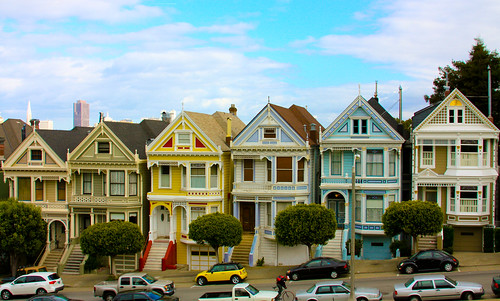
S is for San Francisco

From January 1973 through March 1975, I lived in San Francisco while studying at San Francisco State University. Before I enrolled, a package from the registrar’s office arrived with a list of what I needed to bring with me on the day of registration. One requirement: the result of a chest X-ray not more than 6 months old. Since I hadn’t had a chest X-ray in several years and I received the letter in Minnesota, I had to schedule one before I returned to California.

I made an appointment at the Fargo Clinic where I had been a patient as a child. When they finally called my name, the nurse told me I needed a doctor’s order to get a chest X-ray. I showed them the letter from the SFSU registrar that said I would not be allowed to register unless I had the report on a recent chest X-ray. I didn’t have enough time to schedule a doctor’s visit. They relented and for about $80 (a near fortune at the time), I got my X-ray.

But when I arrived to register, I saw a sign that directed those who didn’t have chest X-ray results to join the line to the left. Those with results were directed to the line at the right. What was the first stop for the line on the left? A free chest X-ray. So much for not being allowed to register without one.

The letter from the registrar also spelled out the order of priority for registering for classes, depending on one’s major, minor, and years remaining to complete a degree. Seniors, for example, had priority for classes in their major because they were in their final year and this was the last opportunity to complete all their required classes. For graduate students, the course of study was the most important. From 8 a.m. to noon, for example, I had priority to register for English classes. After noon, I could try to line up classes in other disciplines.

So I headed to the line for graduate level English classes.

Once I had signed up for a number of English courses, I headed for the Psychology Department. There I discovered the rules were quite different. The doors to the registration hall were closed, with a teaching assistant blocking the way to prevent everyone from entering.  Every half hour, someone came out and taped sheets of paper with two or three letters on them to the outside wall. Those whose last names began with one of those letters would then be allowed into the registration hall. It didn’t matter what the person’s major was, or how close he or she was to completing a degree.

I needed a psychology class to meet the requirements of the masters program. I didn’t need a specific psychology class, just one would do. But by the time the W went up on the wall outside the registration hall, none of the courses that would meet the requirement were available. With a last name that began with W, I was used to being among the last called on, but that wasn’t an excuse this time. The letters were being drawn from a hat to ensure their order was entirely random. But that random order had absolutely nothing to do with the instructions in my letter from the registrar.

A few years later, when I was teaching at Southern Illinois University, a cartoon in the local paper showed two boys walking across the campus where a sign on the lawn said “Wipe out illiteracy.” One boy asks the other what the sign says. The other responds, “I think it says ‘Keep off the grass.'”

My first thought on seeing that cartoon was of my registration experience in San Francisco where what was written wasn’t followed. Little wonder that students didn’t bother reading, if they could.

R is for Romania

I learned I had been selected for a Fulbright grant to teach English in Romania just weeks before I expected to leave Iran in July of 1977. And I was astonished that a friend was able to find a Teach-Yourself-Romanian book in Tehran so I could get a head start on the language.

It was difficult to figure out just how to pronounce Romanian words and phrases, having no audio sources. Some of the phrases didn’t look too difficult. For example, bună ziua, good afternoon, had only four syllables and more vowels than consonants. I figured it should sound something like “BOON-a ZI-wa.” Likewise bună seara, good evening, looked manageable as BOON-a se-YAR-a. But the Romanian equivalent of good morning had a lot more syllables and nearly as high a vowel to consonant ratio: bună dimineaţa. I understood that little tail under the “t” was pronounced as two English sounds: ts. Thus good morning in Romanian was BOON-a dee-meen-ee-YATS-ah, a mouthful for a non-morning person like myself.

But when I got to the pronouns, I just wasn’t sure I could believe the book. I thought it might be a version of Romanian spoken by those of several generations ago. Who ever heard of a personal pronoun having more syllables than the noun it represented?

English pronouns are all short: I, you, he, she, it, we, they. Not a multisyllabic one among them. But the Teach-Yourself-Romanian book said the Romanian equivalent of the plural (and “formal” or polite form) of you was Dumneavoastră. That is six syllables! And the single, informal form of you wasn’t much shorter, Dumneata, four syllables. I just couldn’t believe that Romanians waste that much effort and time on the personal pronoun, you.

On the plane from Frankfurt to Bucharest, I met someone who had at least heard Romanian spoken by those living in Bucharest at that time. I decided to test out my theory by asking her to tell me how to say good morning, good evening, and good afternoon as a benchmark of my interpretation of the sounds. She confirmed that I had figured out how to say those phrases fine.

Then I asked her about the pronouns, starting with the ones I wasn’t amazed at: I is eu (which sounds a lot like the Spanish equivalent, yo), we is noi, he is el, she is ea, all of them short. So I fully expected my semi-native informant to give me short versions of the singular and plural you. But she didn’t. She confirmed what the book said, Dumneavoastră was the polite form of you. But the familiar, singular form was often shortened to ta, although Romanian has many cases so the spelling varies, depending on whether it is the subject or object in a sentence.

So I learned to roll Dumneavoastră off my tongue when addressing strangers. After all, there was no point becoming too familiar too quickly.


Q is for Qatar

The summer of 1987, before I arrived in Doha in October of that year, the governments of Qatar and Bahrain adopted threatening postures towards one another, the result of a dispute about the Hawar islands off the coast of Qatar. Both countries claimed the islands, which can be seen from the western coast of Qatar on a clear day and are miles away from Bahrain.

The islands are uninhabited, but are in an area with rich petroleum reserves. The increased tension between the two countries led to the closing of selected air lanes in the Gulf* to international flights. The US government was concerned that the closure of the air lanes put both commercial and military flights at risk since Iran and Iraq were also battling one another at the time, and their battles involved guns, not just words.

For a short period of time Bahrain severed communications links between the two countries. This proved to be a challenge to the embassy in Qatar. Without telegraphic communications, no reporting on the war could be sent from Doha to Washington. Instead, telegrams had to be printed and carried by non-professional courier from Doha to Bahrain where they were sent from the embassy in Bahrain. The fact that all reporting about the dispute, covering both the Bahraini and the Qatari perspectives, arrived in Washington with the name of the US Ambassador to Bahrain at the bottom was a source of some embarrassment to the US Ambassador to Qatar, I was told.

I saw one small remnant of the dispute–a T-shirt ordered by the Doha Hash House Harriers that included the outline of the country of Qatar on the front where a pocket would have been. In addition to the neatly printed country boundary, an indistinct blob made by a permanent Magic Marker appeared to the left of the outline. Qatari Customs would not release the shirts to the Hashers until they added something to reflect that the islands off Qatar’s west coast were part of the country.

Hearing the story from my colleagues on my arrival reminded me of a Ziggy cartoon I had seen just before leaving the US for Doha. In the cartoon, Ziggy was watching TV as the announcer said, War broke out today between two insignificant little countries you probably haven’t heard of.

Sometimes life is just as funny as a cartoon.

FYI: The dispute between Qatar and Bahrain was settled in 2001 with Bahrain being named the owner.

*The Gulf referred to here has two names, depending on which side of it one sits. When I was in 8th grade geography, I learned its name was the Persian Gulf. On the southern side of that body of water, however, it is known as the Arabian Gulf. I saw atlases on sale in Qatar where the word “Persian” had been blacked out, again with black Magic Marker. I choose to refer to it as either “The Gulf” or “The Gulf that has two names.”

P is for Paris

Who doesn’t love Paris?

There’s just one thing wrong with it for me–I kept being sent back there when I really wanted to see some other places, too.

My first trip to Paris was in December 1987 1977, during the New Year’s break at Alexandru Ioan Cuza University in Iași (pronounced “Yahsh”), Romania, where I was the American lecturer, sponsored by the Fulbright-Hayes Exchange Program. I refer to the break as the New Year’s break because Romania in those days didn’t observe Christmas, or at least they didn’t observe it by name. The store windows displayed banners inviting shoppers in to buy presents to observe “December–the month of gifts.” Children in Romania looked forward to receiving New Year’s presents.

My trip began by tram from the industrial zone of Iași where I lived to downtown where I would catch the bus to the airport. As I stepped off the tram, the heel on my right shoe snapped off, making it necessary for me to walk on one tip toe as I made my way from Piața Unirii (Unification Plaza) to the Air Moldova ticket office where the bus picked up passengers for the morning’s flight to Bucharest and from there onward to Paris. Once I reached Bucharest, I was able to open my suitcase and switch shoes. First on my to-do list when I got to Paris was to find a shoe repair shop.

I chose to spend my vacation in Paris because, well, who doesn’t love Paris? In addition, a couple I knew from Tehran had moved there a year earlier. Shellagh had been our secretary and her husband, Bill, worked for IBM in Tehran until the company transferred him to Paris. They lived in an apartment in Neuilley-sur-Seine on a floor high enough up for a their living room windows to offer a splendid view of the Eiffel Tower.

Shellagh gave me directions to get from the airport to downtown where she met me and brought me to their apartment. Since she had to return to work, I had the afternoon to explore the neighborhood and get as many of the tasks on my to-do list done as possible.

Before I left for Paris, I worried about how I would get by since I had never studied French, and I had heard how impatient the French were with tourists who don’t know the language. One of the French lecturers in Iași assured me I would get by just fine. He told me I didn’t need the whole French language, I should just speak French words. In addition, Romanian is a Romance language with many cognates with French.

It pleased me greatly to be able to tell Bill and Shellagh that on the first afternoon I was able to find a place to repair my shoe, another to get film developed, a beauty shop where I made an appointment for later in the week to get my hair cut, and a boutique where I purchased a black velvet pant suit and a black dress with a subtle print in a fabric that could be washed in my bathtub and then just hung to dry without needing any pressing to wear again. All with only French words, and one French sentence, Parlez-vous anglais?

At the end of the academic year, I traveled again to Paris to see Shellagh and Bill, this time with my parents.

Two years later, the company in Minneapolis where I worked once I returned to the US scheduled several of their staff members to travel to Europe to meet with their distributors. I was among those chosen, but they sent me only to Paris.

The company knew I enjoyed traveling. In contrast, a colleague, Thom, hadn’t really wanted to go on the trip at all. So he complained. In response to each complaint, the company added an additional city to his itinerary. He was sent to the Netherlands, Norway, and France.

Maybe I should have complained, too. But it just didn’t seem right. Who doesn’t love Paris?

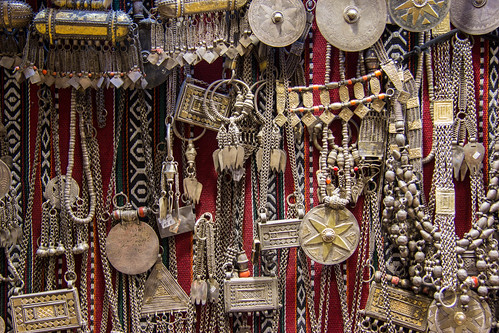
O is for Oman

Oman sparkles. In the three years, from 1996 to 1999, that we lived in Abu Dhabi, we drove to Oman several times. And every time, we felt a difference when we crossed the border. The streets looked as though they had just been swept for our arrival. The rocks at the side of the road washed and sprayed with oil or shellac so they would shine in the sunlight.

In exchange, Omanis expect those who live in the country to keep their property clean, too, especially cars. In fact, there is a law against dirty cars, with fines ranging from about $30 to $120. Since the roads are so clean, it’s unlikely your car will pick up dirt just from being driven–unless you drive off road.

Of the countries on the Saudi peninsula, Oman is better prepared for tourism than the others. Most times we drove to Oman, we stayed at the Al Sawadi Beach Resort for at least a day, to relax and wind down. We just wanted to hang around the beach, collecting shells and dipping toes into the water. But it was clear we could have arranged to take part in any number of other activities as well–diving or snorkling on water or tennis or horseback riding on land. Trips into the desert for camping and camel rides can be arranged as well.

Some of the most elegant hotels and restaurants can be found in Oman’s capital, Muscat, including the Al Bustan Palace, one of the most beautiful hotels I’ve ever seen.

For more information about traveling in Oman, check out one of the following travel guides:

Lonely Planet Oman, UAE & Arabian Peninsula (Travel Guide)

The Rough Guide to Oman

Insight Guides: Oman & the UAE

Oman (Bradt Travel Guide)

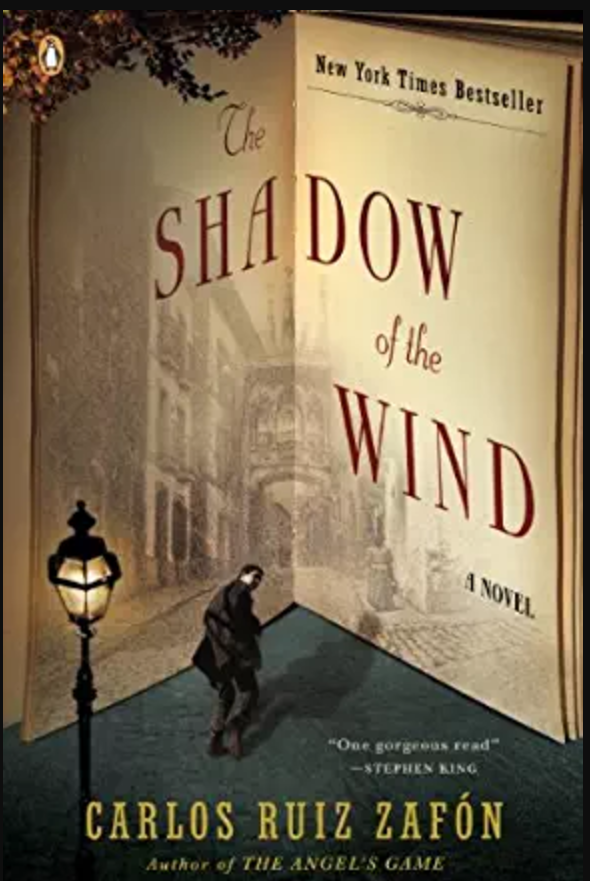
Book Review: The Shadow of the Wind

theshadowofthewindI’ve been reading so many memoirs and genre fiction books that it Five Starstook me awhile to get involved in Carlos Ruiz Zafón’s best seller The Shadow of the Wind. I sought the familiar three-act pattern as I read, and I was initially frustrated by the complexity of the story. There were more characters, all with foreign names spelled with vowels with diacritical marks above them, than I could keep track of. And what I thought were minor, though interesting, details were introduced without any indication of their significance. An example: a fountain pen that Daniel Sempere, the main character, believes will make him a great writer because it had once been owned by Victor Hugo, though its price is so exorbitant his father explains he could never afford it.
Thankfully, I continued reading. The book is, after all, the 2015 selection for One Book, One San Diego, a community reading experience, now in its ninth year, sponsored by Public TV and Radio station KPBS, the San Diego Public Library, and the San Diego County Library, with major support from a number of businesses. I started reading it based on the assumption that it must be not just a good book but a great one. I was not disappointed.

On the surface, the book’s story is about Daniel, a boy living with his widowed father in Barcelona. It opens in 1945 when Daniel’s father, a seller of used books, brings Daniel to the Cemetery of Forgotten Books, a secret, labyrinthine repository of all the world’s books that are in danger of being lost. Daniel’s father tells him to pick out one book for himself, a book he must never give away or sell. His father also warns him that he cannot tell anyone about the Cemetery of Forgotten Books, except his mother, who died several years ago. It is always all right to tell his mother secrets.

Daniel’s selection is The Shadow of the Wind by Juliàn Carax. The creation of the Cemetery of Forgotten Books draws the reader into a fantasy world, the first genre Zafón references in the novel.

The book is a book within a book and Daniel’s life begins to follow the storyline of the main character of Carax’s The Shadow of the Wind. Likewise, the book parallels the life of the author of the book. And Daniel becomes entranced to learn more about the author. In this, Zafón references a second genre, the mystery.

The antagonist of the book comes alive in Daniel’s life, pursuing him in order to obtain the book, the likely last copy in existence since a fire at a Barcelona warehouse destroyed copies before the publisher was able to sell them. In this, Zafón references a third genre, the thriller.

The author selected Barcelona at the end of the first half of the 20th century as the setting because of the drama and upheaval of the previous historical events—the Spanish Civil War and World War II. The city becomes a character itself in the novel. In this, Zafón references a fourth genre, the historical novel.

But Zafón’s The Shadow of the Wind is much more than any of the referenced genres. The book comes alive to Daniel, leading him to learn about love, fear, forgiveness, redemption, and the power of books. As the story progresses, Daniel also learns about the duality of everything. Love and hate are related. Neither exists without the other. Likewise good and evil, blame and forgiveness, transgression and redemption.

And all those interesting but minor details that nearly derailed my attention at the beginning of the novel? The importance of each eventually became clear. Nothing in this novel was insignificant. Everything supported the message of the power of books and knowledge and the importance of preserving both.

This is my favorite book of 2016 thus far.

More One Book, One San Diego selections:

2014–Monstress: Stories by Lysley Tenorio

2013–Caleb’s Crossing: A Novel by Geraldine Brooks

2012–Into the Beautiful North: A Novel  by Luis Alberto Urrea

Moloka’i  by Alan Brennert

Sky of Red Poppies  by Zohreh Ghahremani

2011–The Gangster We Are All Looking For by lê thi diem thúy

2010–Outcasts United: The Story of a Refugee Soccer Team That Changed a Town by Warren St. John

2009–The Zookeeper’s Wife: A War Story by Diane Ackerman

2008–Three Cups of Tea: One Man’s Mission to Promote Peace – One School at a Time by Greg Mortenson

2007–Enrique’s Journey by Sonia Nazario

N is for North Dakota

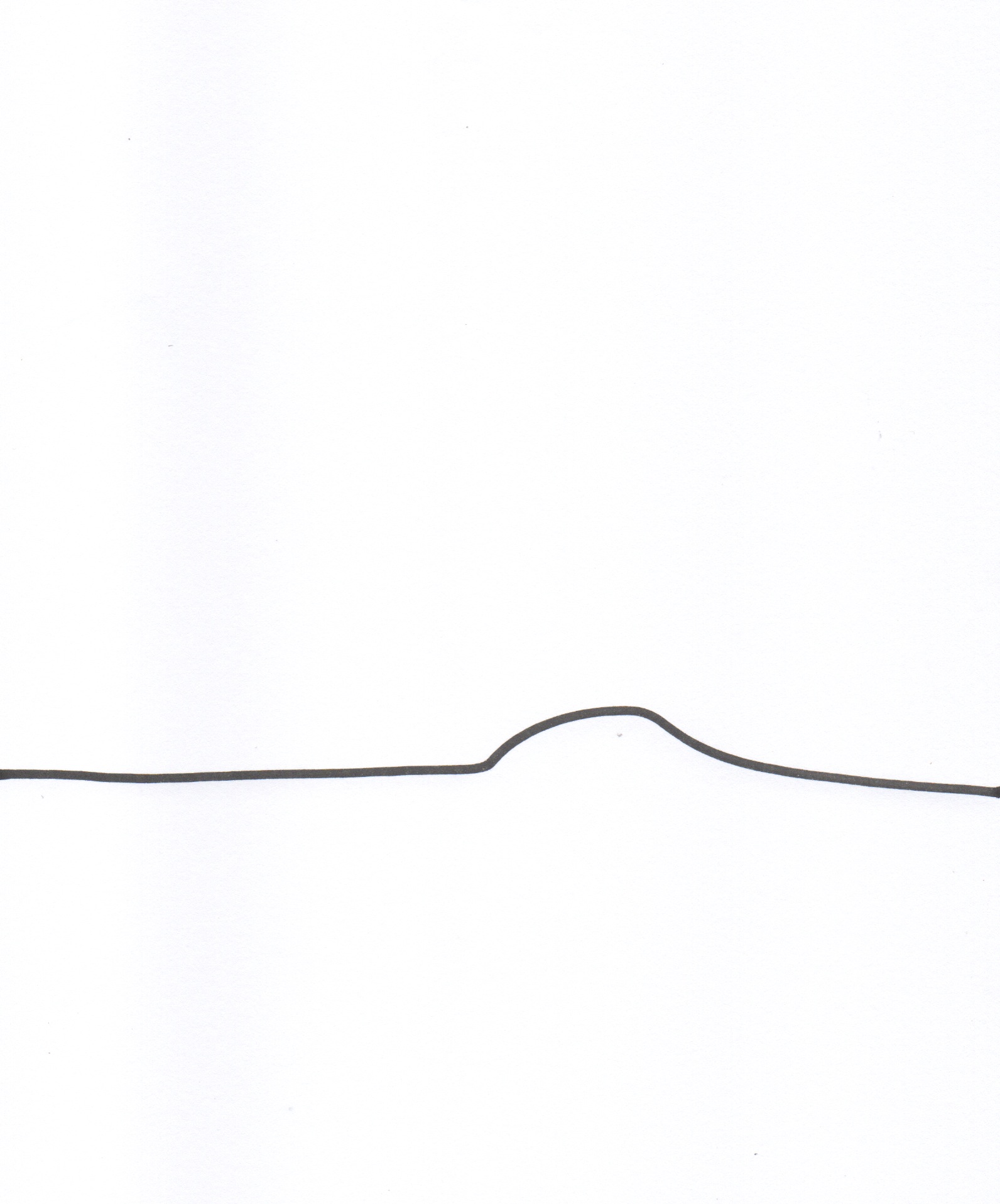
One of my favorite posters during my college days was a white background with a single black line drawn across it from left to right. It wasn’t a straight line, but almost. It ran parallel to the bottom of the poster for about two thirds of the way and then bumped upwards and back down again, returning to parallel the bottom again. Something like this:

MSG 1

Across the bottom were the words “Ski North Dakota.”

For so many years, North Dakota seemed to be the butt of jokes.

I was born in North Dakota. I never lived in North Dakota. And I’ll admit it. Most of the time I considered it space I just had to get through to reach where I was going.

But that’s changing. Slowly but surely people are beginning to hear of another side of North Dakota.

There’s the Bakken Formation, the geological structure holding oil and gas deposits that offer the promise of wealth and work. The deposits have been known for decades, but getting the oil and gas out hasn’t been technically and financially feasible until recently. And considering the controversy around hydraulic fracking, I had better stop saying anything more since some will claim the risks of fracking outweigh the benefits which calls the feasibility conclusion into question.

But the Bakken Formation put North Dakota onto the map of some, including television producers who decided to set a prime-time soap opera theoretically set there last season, Blood and Oil.

And that wasn’t the only North Dakota TV series last winter. Fargo, the TV series, ran its second season at the same time.

North Dakota is also making headlines in other entertainment areas as well–the North Dakota State University Bison football team is the only college football program ever to win five consecutive NCAA national championships. I know this not because I follow football; I know this because I am on Facebook and my friends and family from back in North Dakota and Minnesota make sure I know how well the Bison are doing.

Am I trying to get you to consider North Dakota for your next vacation? Probably not. I just looked over the list of 73 things to do in North Dakota with free admission on the North Dakota Tourism website, and I can’t say that any of them screamed “Come here right now. You can’t miss this one.”

So what I guess I am trying to convince you is that next time you hear a joke where North Dakota comes off looking pitiful, stand up and say “Now wait a minute. Don’t you know . . .” and then follow up with one of these little known facts about North Dakota:

  • In 2012, North Dakota had the lowest unemployment rate in the United States. In 2016 it dropped to third lowest, but it is still below three percent.
  • Also in 2012 North Dakota was the fastest growing state in the United States.
  • North Dakota has the highest percentage of church-going population in the country as well as the highest number of churches per capita.
  • Milk is the official drink of North Dakota.
  • North Dakota grows more sunflowers than any other state in the United States.
  • Most of the pasta in the United States is made from durham wheat grown in North Dakota.
  • North Dakota is the third highest producer of sugar in the United States.
  • North Dakota is the nation’s highest producer of honey.
  • North Dakota is the only state that has never had an earthquake.

Does that sound like a place to make fun of? Really?