Book Review: The Liars’ Club

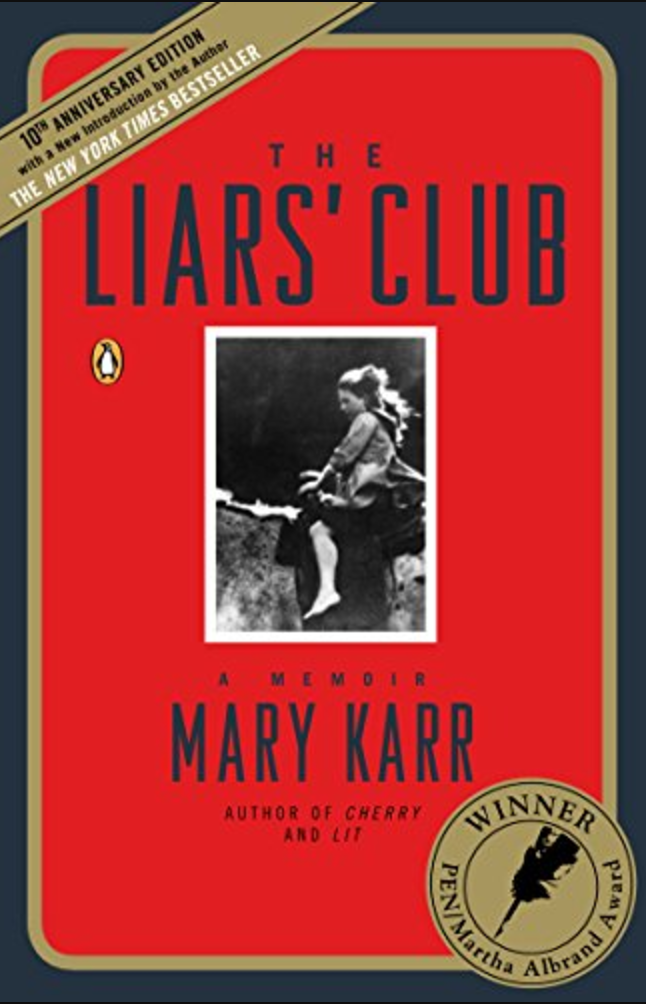
theliarsclubMary Karr’s The Liars’ Club set a new standard for memoirs when it came out in 1995. In it, Karr tells the story of her well-educated, artistic, alcoholic mother and the uneducated, hard-drinking, doing-the-best-he-can dad her mother married as they struggled with life in east Texas and Colorado.

It isn’t a story of a financial struggle; Karr’s father had a steady job and her mother at one point inherits so much money that buying fur coats for both daughter and herself and then living it up for lunch at a fancy restaurant in a big hotel seems almost commonplace.

It is the story of the complex relationships we humans get entangled in as we look to someone else to make our dreams possible instead of taking responsibility ourselves or adjusting expectations into the realistic range.

The Liars’ Club sets a high bar for wannabe memoir writers. There is a meltdown moment for conflict and drama when her mother’s Nervousness (always capitalized to acknowledge it as a euphemism for a severe mental breakdown) destroys much of their possessions and removes her from the lives of her daughters for many months. But most of the tale is of a slightly unorthodox upbringing of a feisty child and her more traditional older sister. Karr’s father includes the younger in the rituals of his drinking and fishing buddies who make up the liars’ club, exposing her to language and behavior some would consider inappropriate even were she many years older. That Karr addresses everything in her life openly, not hiding behind secrets imposed from outside, provides the charm of the story.

The sisters, the author Mary and Lecia (pronounced Leesa), end up fending for themselves from time to time, proving that children understand more than adults around them assume and make adult decisions when the adults around them behave like children.

I loved Karr’s story. If you enjoy family stories, especially stories involving secrets adults have chosen to hide from their children, you’ll love it, too.

Genre: Biographies and Memoirs
Length: 354 pages
Publisher: Penguin Classics; 20th Deluxe ed. edition (November 10, 2015)
Publishing Date: 2015

Book Review: The Glass Castle

Five StarstheglasscastleIn The Glass Castle, Jeannette Walls tells of her unorthodox upbringing by her artist mother and inventor father, during which she and her siblings—older sister Lori, younger brother Brian, and younger sister Maureen—survived frequent moves across the country, inconsistent access to school, and long periods of poverty so severe the children had nothing to eat and survived by foraging. Her parents believed children needed to learn to fend for themselves instead of being watched over and protected. In spite of the resulting challenges, the children were identified as gifted in most schools.

Throughout her childhood, Jeannette believed in her father, even when she knew he was lying to her and was willing to take the little money the family had for food in order to buy liquor. She recognized his brilliance at the same time as overlooking his destructive behavior, at least until she and her older sister Lori were able to devise a plan to escape and live on their own. Yet even after all four children had escaped their parents’ influence, Jeannette kept in contact with her parents, accepting that their lives were consistent with their principals even though Jeannette, Lori, and Brian at least, rejected their parents’ free-thinking foundation.

The Glass Castle is a tale of the resilience of children under extreme circumstances, an optimistic story of life moving forward. It is story of love, love by parents of their children and by children of their parents. It is a story of survival against bullying, the effects of poverty and hunger. It could have been a depressing story, but Jeannette’s warmth and humor come through, turning it into a story of redemption and optimism.

Genre: Biographies and Memoirs
Length: 288 pages
Publisher: Scribner
Publishing Date: 2005

Book Review: The City

Five StarsthecityDean Koontz knows how to tell a story. And his readers know there will be some fantasy, magic, or horror in his stories. In The City, there is no horror, and the fantasy or magic is understated, treated almost symbolically, as nine-year-old piano prodigy Jonah Kirk’s tells his story of confronting evil and protecting his mother from Jonah’s father who abandoned her and the near psychopathic group he ends up following.

Jonah experiences troubling dreams—the magic in the novel. Convinced there is truth in the dreams and that it is essential that he act on the knowledge he gains through the dreams, Jonah recognizes he must choose carefully whom he will tell and turn to for help. His choice: Mr. Yoshioka, a middle-aged neighbor living alone in an upstairs apartment, though he shares only as much as he believes he must to gain Mr. Yoshioka’s cooperation. The unconventional partnership offers both Jonah and Mr. Yoshioka reconciliation for events in the past and hope for the future.

Jonah doesn’t tell his mother about his fears because of his concern that, as the man in the family, he must protect her. Each of his thoughts and actions is believable for a nine-year-old boy. And because his behavior is reasonable, I willingly set aside the mystical source of his knowledge and enjoyed Koontz’s narrative. Jonah’s tale is about his childhood, but he tells it as the 50-something man, looking back, sharing with us both what he learned at the time and the larger lessons he has since realized as an adult.

I found the perspective of the tale—from the viewpoint of a child—refreshing. Because of this as well as the superb writing, I liked this book very much.

Genre: Paranormal; Mystery, Thriller & Suspense
Length: 593 pages
Publisher: Bantam
Publishing Date: July 1, 2014

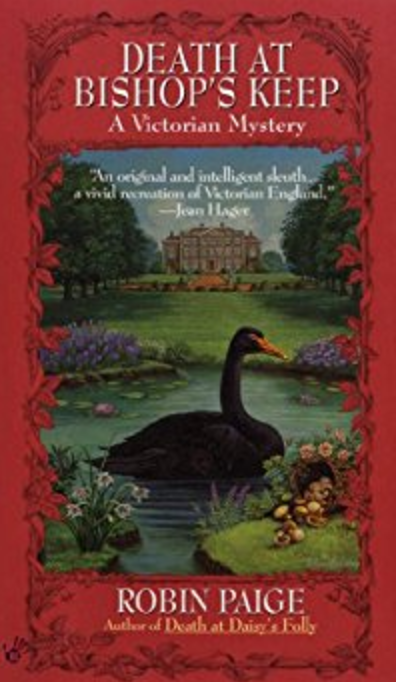
Book Review: Death at Bishop’s Keep

deathatbishopskeep
Three starsAt the end of the 19th century, plucky, Irish-American Kathryn Ardleigh, orphaned as a child and raised in New York by an aunt and uncle on her mother’s side of the family, is without employment due to the recent death of her employer. Satisfied that she will be able to support herself minimally as an author of penny-dreadful novels, she receives a surprising offer from an unknown aunt on her father’s side of the family to come to England to work as the aunt’s secretary. Kathryn agrees, thinking that even if the employment doesn’t work out, she will gain knowledge of value for the protagonist of her novels. Once in England, she discovers she has two aunts she knew nothing of and they are keeping secrets she must solve in order to succeed in her new home.

This Victorian cosy features a modern and independent female protagonist who find herself thrown mid-stream into upper crust British society where servants and masters coexist, but not often graciously. Befriended on the train from London to Dedham, near the home her aunt has invited her to live and work, by Eleanor Marden, a lady of leisure somewhat younger, her brother Bradford, and Bradford’s friend, Sir Charles Sheridan. Sir Charles is Kathryn’s foil, a modern scientist, enthusiastic that photography, fingerprints, and detailed examination of evidence when solving crimes. Yet he can’t make up his mind if Kathryn’s modern ideas are rational or acceptable.

The pace of the plot in this story could have been faster since the title crime doesn’t occur until the last third of the book. Since this was intended to be the first in a serious of Victorian mysteries featuring Miss Ardleigh, the authors seem to feel the first two thirds of this book were necessary to set up the series, not just this first novel.

Genre: Historical Romance, British Detectives, Historical Fiction
Length: 304 pages
Publisher: Berkeley, reprint edition
Publishing Date: July 1, 1998

Book Review: A Thousand Splendid Suns

Five StarsathousandsplendidsunsDuring years of occupation by the Soviet Union and inter-tribal warfare in Afghanistan, two Afghan women of different generations and regions and very different socioeconomic situations find marriage to the same older man the immediate solution to stay alive when each loses her parents. But marriage brings its own problems, including brutal beatings by the husband for minor or even just perceived infractions of his rules. When their plan to leave him is discovered, both fear for their lives and realize they must take even more extreme action for the sake of their children.

Khaled Hosseini’s A Thousand Splendid Suns explores what it means to be a family. By placing the action in the context of thirty years of changing governments, political systems, and international sponsors, the novel also explores what it takes to develop a stable nation where rival tribal leaders undertake serial switches in allegiances in order to gain power.

Hosseini tells the story well, engendering sympathy for both Mariam, the love-child of a wealthy businessman in Heart and his made, as well as for Laila, the youngest child of an educated man in Kabul and his wife. It was well-paced for the most part, though the final section moved more slowly than I expected.

Genre: Literary fiction
Print Length: 379 pages
Publisher: Riverhead Books; Reprint edition (November 25, 2008)
Publication Date: November 25, 2008
Sold by: Penguin Group (USA) LLC

Book Review: Uprising

Four starsuprisingThe young adult historical novel, Uprising by Margaret Peterson Haddix, is a well-researched and well-written story of immigrant teenage girls forced to take on adult responsibilities without protection from family or education. One of the three chief characters is the exception–she has abandoned the wealth and advantages of her birth when she realizes her father considers her only as having value as the wife of a promising business partner.

It is easy to forget that the girls are only teenagers. The contrast between the main characters’ lives and the circumstances of the likely readers of the same age of today make this novel an excellent introduction to a time before women had the right to vote and workers had guarantees for workplace safety.

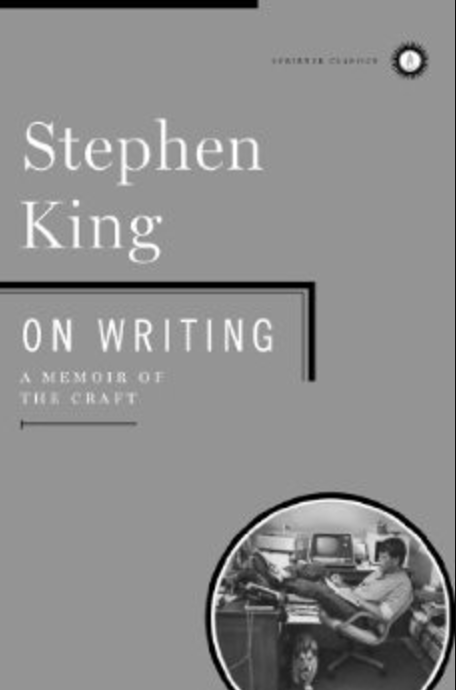
Book Review: On Writing: A Memoir of the Craft

Five StarsonwritingIn On Writing, King introduces himself through his early life experiences, suggests what tools I should keep in my toolbox, and then shares what works for him when he writes. His unpretentious writing style made me feel as though King were sitting in my living room, sharing a cup of coffee along with his stories. I felt privileged to have him share so much of his wisdom as well as his humor.

I admit I haven’t read Stephen King’s novels. Horror is not my preferred genre. But I haven’t escaped seeing his movies, so I didn’t feel ignorant of his work. After reading On Writing, I want to read all his books.

Of the books on writing I have read, this is the best, not because here are hidden secrets in it, but because of his stories of where his stories came from. And the story is central.

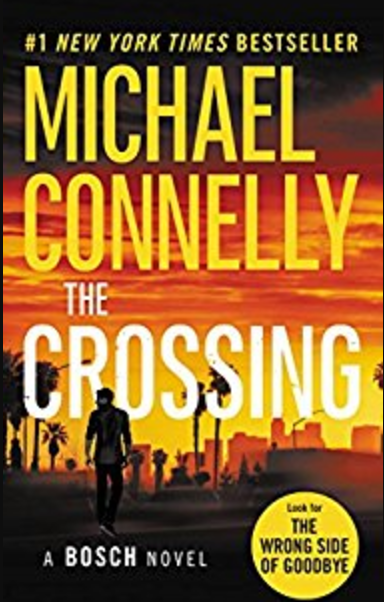
Book Review: The Crossing

thecrossingFive StarsRetired LAPD homicide detective Harry Bosch reluctantly agrees to help his half-brother defense attorney Mickey Haller investigate a murder Haller is convinced his client did not commit. Along the way, Bosch crosses lines he never wanted to face, including involving his former partner in spite of the risk to both her reputation and career.

Connelly keeps the pace moving in this compelling crime thriller. Details from 2015 headlines regarding events in Ferguson, Missouri, and Baltimore, Maryland, as well as references to real life Matthew McConaughey’s portrayal of Haller in The Lincoln Lawyer draw contemporary readers into the story, keeping the pages turning.

Book Review: The Twleve Tribes of Hattie

thetwelvetribesofhattieFive StarsThe novel tells the story of each of Hattie’s 11 children and one grandchild over a period spanning 1925 to 1980 with Hattie and her husband, August, as the only continuing presence in each chapter. Beginning with Hattie as a 17-year-old mother of twins in Philadelphia, two years after her father died in Georgia and shortly after her mother’s death, the story’s early chapters remind the audience of just how late into the century Jim Crow laws were enforced. The latter chapters illustrate how much change is still needed for the remnants of discrimination and inequality to be erased.

In contrast to many of the other reviewers, I enjoyed this book very much. The chapter-by-chapter change in point of view emphasized the differences in the experiences of Hattie’s children more effectively than stringing the chapters together from a single point of view could have. It is a family story as well as the story of a baker’s dozen individuals, each with challenges to overcome and dreams to fulfill or let go of.