Idun (pronounced “EE-done;” from Old Norse Iðunn, “The Rejuvenating One”[1]) is a goddess who belongs to the Aesir tribe of deities. Her role in the pre-Christian mythology and religion of the Norse and other Germanic peoples is unfortunately obscure, but she features prominently in one of the best-known mythological tales, The Kidnapping of Idun. In this tale, which comes to usContinue reading “I is for Iðunn”
Author Archives: Sandra Yeaman
H is for Heimdallr
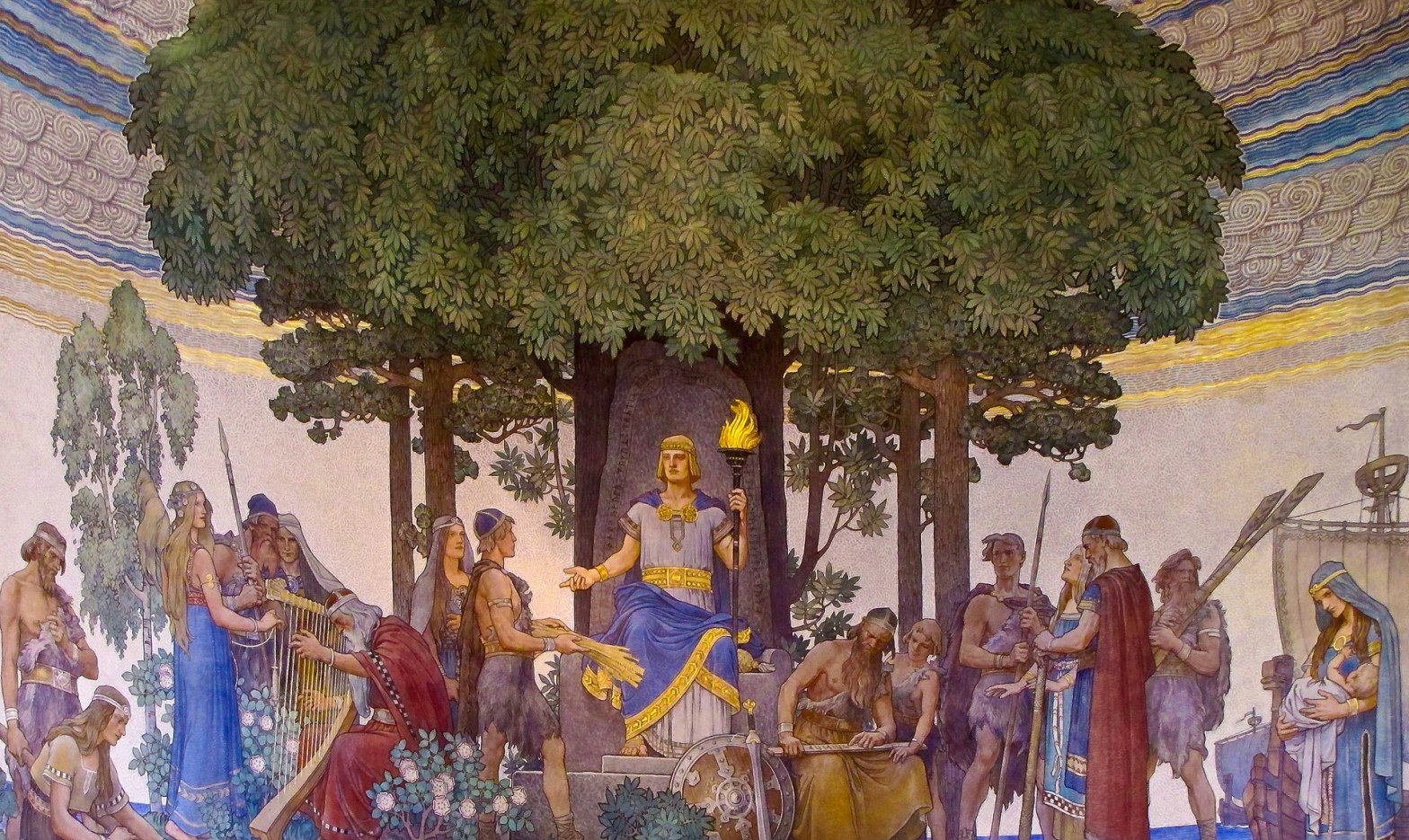
Heimdall (pronounced “HAME-doll;” Old Norse Heimdallr, whose meaning/etymology is unknown[1]) is one of the Aesir gods and the ever-vigilant guardian of the gods’ stronghold, Asgard. –from Norse Mythology for Smart People by Daniel McCoy Alphabetical order may not be the most sensible way to introduce the characters, settings, and action of Norse mythology, but there is an opportunity for synchronicity toContinue reading “H is for Heimdallr”
G is for Ginnungagap

Ginnungagap is the bottomless abyss that was all there was prior to the beginning of the cosmos, and into which the cosmos will collapse once again during Ragnarok, the “Twilight of the Gods,” only to be reborn as the cycle completes itself. As the Eddic poem Völuspá, “The Insight of the Seeress,” describes the time before the cosmos existed: ThatContinue reading “G is for Ginnungagap”
F is for Freyr
Freyr (pronounced “FREY-ur;” Old Norse Freyr, “Lord;” sometimes anglicized as “Frey”) is a god who belongs to the Vanir tribe of deities. He’s also an honorary member of the other tribe of Norse gods, the Aesir, having arrived in their fortress, Asgard, as a hostage at the closing of the Aesir-Vanir War. –from Norse Mythology for Smart People by Daniel McCoy When LokiContinue reading “F is for Freyr”
F is for Freyja

Freya (Old Norse Freyja, “Lady”) is one of the preeminent goddesses in Norse mythology. She’s a member of the Vanir tribe of deities, but became an honorary member of the Aesir gods after the Aesir-Vanir War. Her father is Njord. Her mother is unknown, but could be Nerthus. Freyr is her brother. Her husband, named Odr in late Old Norse literature, is certainly none other than Odin, and, accordingly,Continue reading “F is for Freyja”
F is for Fenrir
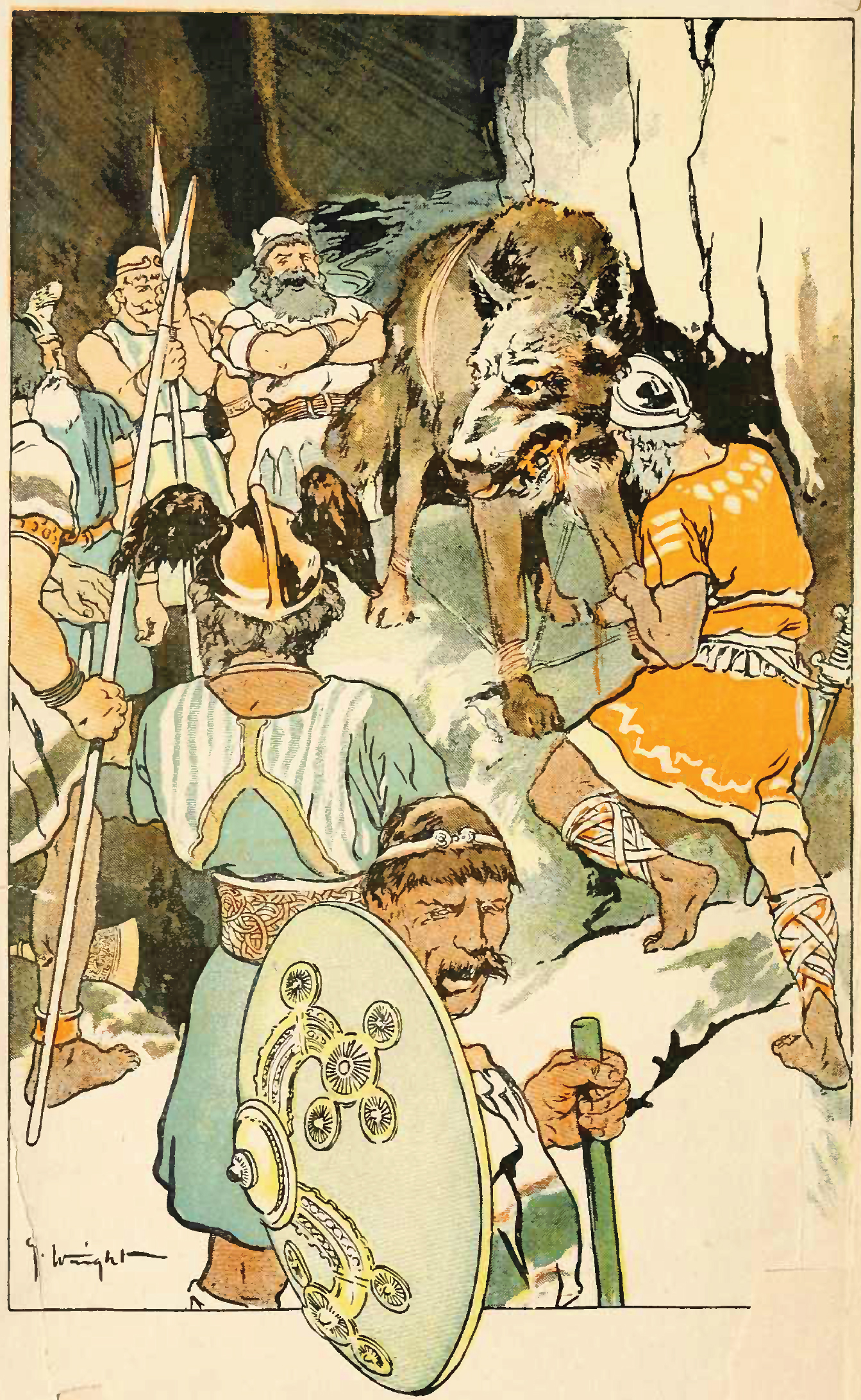
Fenrir (pronounced “FEN-reer;” Old Norse Fenrir, “He Who Dwells in the Marshes”[1]) is the most infamous of the many wolves in Norse mythology. His importance for the pre-Christian Scandinavians is demonstrated by his being depicted on numerous surviving runestones, not to mention his ubiquity in Old Norse literary sources. He’s the son of the god Loki and the giantess Angrboða, which makesContinue reading “F is for Fenrir”
E is for Edda
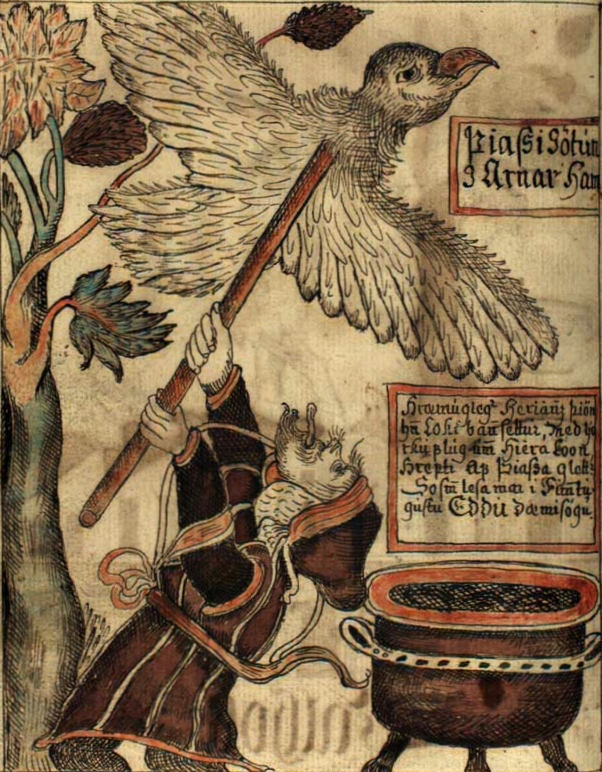
The name “Edda” has been retroactively applied to this set of poems and is a reference to the Edda of Snorri Sturluson. . . . The authors of the poems are all anonymous. Debates have raged over the dates and locations of the poems’ composition; all we can really be certain about is that, due to theContinue reading “E is for Edda”
D is for Draupnir
Sindri then set another piece of gold on the fire as Brokkr worked the bellows. The fly bit Brokkr on the neck, and Sindri drew out a magnificent ring, Draupnir (“Dripper”[1]). From this ring, every ninth night, fall eight new golden rings of equal weight. –from Norse Mythology for Smart People by Daniel McCoy Draupnir,Continue reading “D is for Draupnir”
B is for Baldr
Baldur (pronounced “BALD-er;” Old Norse Baldr, Old English and Old High German Balder) is one of the Aesir gods. He’s the son of Odin and Frigg [Freya], the husband of the obscure goddess Nanna, and the father of the god Forseti. He’s loved by all the gods, goddesses, and beings of a more physical nature. So handsome, gracious, and cheerful is he that he actuallyContinue reading “B is for Baldr”
 sandrayeaman.com