Holidays Around the World: Ramadan

I chose Ramadan as the holiday to highlight in April not because it is so little known, but in order to share my personal experiences of living in countries where Ramadan is widely celebrated. These observations cover four countries in the world and span nearly 30 years.

First, a basic description of the holiday as I understand it.

Ramadan is the ninth month of the Islamic calendar. During this month followers of Islam are expected to fast from sunup to sundown each day. Because the Islamic calendar is based on the moon, not the sun, the date for Ramadan advances about 12 days each year. This year it begins on April 13 and ends on May 12. Observing the fast during Ramadan is one of the five pillars of Islam.

My first Ramadan experience: Tehran, Iran, 1975 and 1976

My first experience of living in a country where Ramadan was observed was when I lived and worked in Tehran between 1975 and 1977. In both 1975 and 1976, Ramadan fell in late summer months when days are hot and long. Yet observant Muslems rose each morning before sunrise in order to have a meal that would have to tide them over for the entire day. They would refrain from eating, drinking, and smoking for all daylight hours. The most observant would even refrain from swallowing saliva. They would next be able to eat when the sun went down in the evening.

But I must admit that I didn’t see much of the impact in those years. I don’t recall restaurants closing during the day. I do remember one restaurant with windows along the main street pulled their shades down so that no one walking by would have to see patrons inside eating. In the office, we continued to be served tea or soft drinks whenever we requested them. If in our ignorance we offered food or drink to our students, who all continued to attend classes at the same times as in other months, those who were fasting would politely refuse by explaining they were fasting. That was enough for us to realize we shouldn’t have made the offer.

In addition to not being impacted negatively by the reversal of times for normal activities, I also did not see the joyous observations of Ramadan. But more about that later.

My second Ramadan experience: Doha, Qatar, 1988 and 1989

In 1988, Ramadan began in the middle of April. While not summertime, the temperatures in Qatar are hotter from March through November than in any other place I had lived. Not being able to drink water in the heat was a more obvious hardship.

Unfortunately, in Qatar, my view of Ramadan shifted from it being barely visible to it being an inconvenience. All the restaurants closed during the day so that everyone knew daytime fasting was normal. Business hours shifted, too. Offices opened later in the morning to be sure everyone had time for a filling meal before dawn and time to rest before beginning work. Offices did not close for lunch but closed earlier at the end of the day. These changes lessened the impact of normal daytime activities on those who fasted. And that’s where Ramadan began to seem like an inconvenience. Those of us who were not fasting were expected to work normal hours in spite of the fact that we couldn’t schedule meetings with our counterparts outside of the shortened days. It felt a bit like being kept after school because we didn’t take part.

My Ramadan revelation: Abu Dhabi, United Arab Emirates, 1996 through 1999

Thankfully, my experience with Ramadan in Abu Dhabi included my eyes being opened by the tradition of iftar, the breaking of the fast at the end of each day in Ramadan. I had heard about iftar in Qatar. We Americans at the embassy even held one for ourselves once. But since we hadn’t gone through the fasting, our iftar was little more than an office dinner.

In Abu Dhabi, we didn’t adjust our working hours during Ramadan, but we did allow local employees who were fasting to arrive later than normal and leave earlier than usual without making official note. Each employee was permitted to handle their personal needs during Ramadan as appropriate. This translated into happy employees, working as it made sense to do with many of them sharing their joy at the daily upcoming iftar when they would be able to get together with family and friends to break the fast. To hear them talk about it, Ramadan sounded like a month of Thanksgivings.

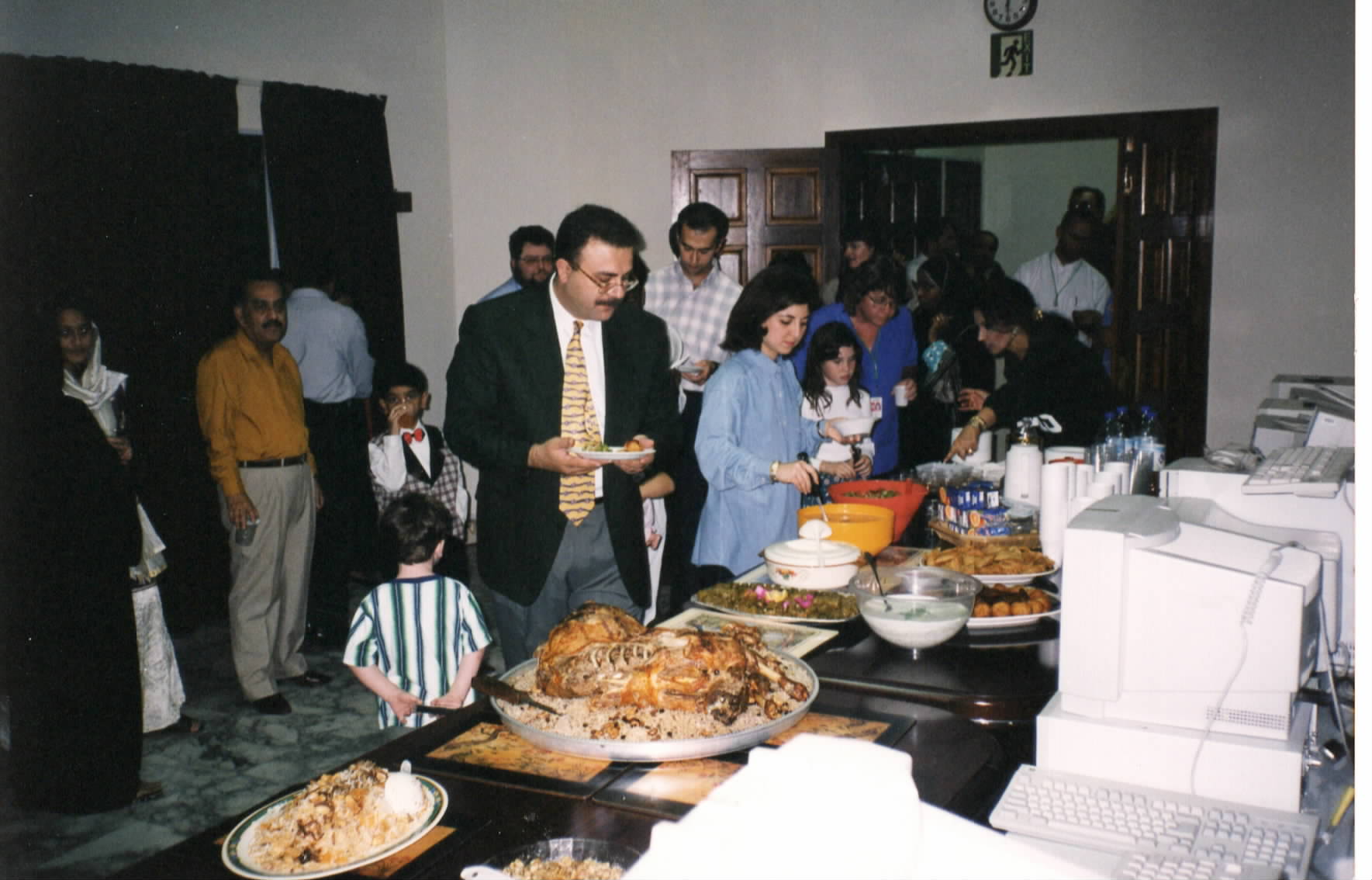
Our Emirati counterparts in the UAE invited members of the embassy staff to join them for iftar. This was an eye-opening experience for me because at each of these events, I could see how joyous getting together with others to share a meal could be, proof of what our local employees were saying.

Iftar in Abu Dhabi at the home of the Public Affairs Officer

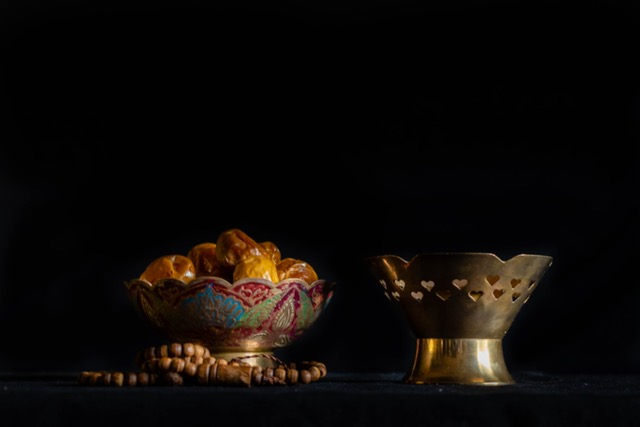
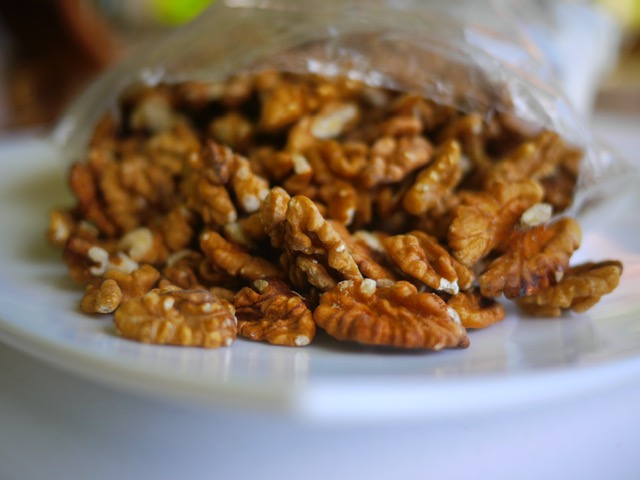
I also realized the meal included a number of traditions. Because those who fasted had not had any food in their stomachs for several hours, they broke the fast slowly, beginning with fruit juices, to provide the liquid they needed, dates, which are rich in nutrients as well as sugar to give an energy boost, and nuts. Prayers followed this initial breaking of the fast. Hosts provided a separate space for observant Muslims to pray. Once those who prayed rejoined the group, a meal beginning with the most delicious lentil soup I have ever had followed by all types of fish, meat, vegetables, and grains was served. The end of the meal included tea and desserts I rarely saw at other times of the year. I began to look forward to invitations to iftar from my counterparts.
But the iftar meal that touched me the most was one delivered by the wife of one of my employees. Her husband, Mackawee, had been with the embassy since it opened in 1971. His wife, Huda, had worked for the embassy in the past until they married. Both were from Yemen although they rarely traveled there.

Huda and Mackawee

Huda called me at the office one day during Ramadan to tell me she didn’t want me to cook anything. She said she would bring a meal for us. That evening, before sunset, Huda arrived with an array of Yemeni foods I had never seen in any restaurant. Mandi—meat and rice with a special blend of spices—zhug—a hot sauce akin to chimichurri, chermoula, and salsa verde—a dish whose name I cannot recall made with fenugreek that Huda showed me how to mix into the rest of the sauce, and much more. There was enough to feed everyone on my block. When I asked if Mackawee would be joining us, she explained that she wanted the meal to be for us, a gift from her because of the many ways she said I had helped her and her husband. She explained that giving gifts to say thanks to those in their lives and to acknowledge their own blessings is an important part of Ramadan.

How I wished I had known that about Ramadan when I lived in Iran and Qatar.

Huda’s generosity to my husand and me prompted me to suggest to other women at the embassy who were not Muslims that we could create our own iftar for the entire embassy staff as a way of sharing in the joy of the holiday. Four others, from Jordan, Lebanon, and Egypt, joined me in planning a meal with the traditional foods we had all seen at iftar in Abu Dhabi. I was surprised to learn that many of the foods I thought were traditional for all Muslims were not known to everyone. Each country has it’s own traditional food for iftar, so we all were learning as we went.

We identified the day we would observe iftar and invited all the employees, American and local, to join us. As we set out the food, we began to worry that we didn’t have enough. The five of us agreed to hold back to make sure all our guests could eat.

We knew not all the employees would return to the embassy. We were pleasantly surprised by how many did, with their families of course. Again, we worried the food might run out. But after all who had come had served themselves, there was plenty left for the five of us. We dished up food and brought plates to the American staff who were still working in the main building who couldn’t break away to join us. And we invited the Marines to eat. Then the local guards who protected the exterior of the embassy grounds.

And still there was food left over. We dished up plates and brought them out to the local Emirati policemen who guarded the block the embassy was on.

Those of us who grew up in the Christian faith couldn’t help but compare the result with the story of loaves and fishes. We invited the local employees who were still on the embassy grounds to take what still remained home or to deliver to the places where those without families and means were known to congregate.

Ramadan in Yemen, 2000

In 2000, Ramadan fell in early December. The proximity to Thanksgiving made me think it would be special to host a meal at the embassy that combined the traditional food of Ramadan with a traditional Thanksgiving meal. I thought it was a dream too big, but I mentioned how we had held an embassy iftar two years before in Abu Dhabi to my Yemeni secretary, Sumaya, and she took the idea to the local employee association who all agreed we should do the same in Sana’a.

Sumaya and the other local employees spread the word to plan what each employee would bring. The commissary in Yemen had obtained turkeys for Thanksgiving, so finding one for a communal Thanksgiving iftar was no problem. The American employees agreed who would bring mashed potatoes, gravy, corn, green beans, sweet potatoes, stuffing, and pumpkin pies. The Marine guards put up a traditional Yemeni tent on the grounds at the back of the embassy, with cushions lining all sides for people to lean against in the Yemeni style of a mafraj or sitting area. They installed lights inside the tent and a sound system so we could enjoy traditional Arab music in the background.

On the day, families arrived. Wives and children we American staff members had never seen accompanied their husbands. The event continued until late in the evening with everyone smiling as they left.

Ramadan Today

Observing the joy that comes with the month of Ramadan for those who observe it made me begin to think about the joy I was missing by not taking part in the religious and spiritual traditions of my youth. I hadn’t turned my back on Christianity. I hadn’t claimed that God doesn’t exist. But I had stopped taking part in the community of believers in the tradition of my youth. The generosity shown to me by Huda and the local employees in both the Abu Dhabi and Yemen during Ramadan made what was missing in my life visible.

Once I returned to the US after my year in Yemen, I returned to the community of believers within my Lutheran tradition. And every year when I am reminded that Ramadan is about to begin, I think about the endurance that those who flip-flop day and night for 28 days must have in order to join in the celebrations every evening for those same 28 days. I think of that each time we whinge when we move our clocks ahead one hour as we move from Standard to Daylight Savings Time.

And I thank Huda for sharing her faith with me so that I would reconnect with my own.

Featured Content Image credit: Photo by Abdullah Arif on Unsplash

E is for Ten in Eritrea

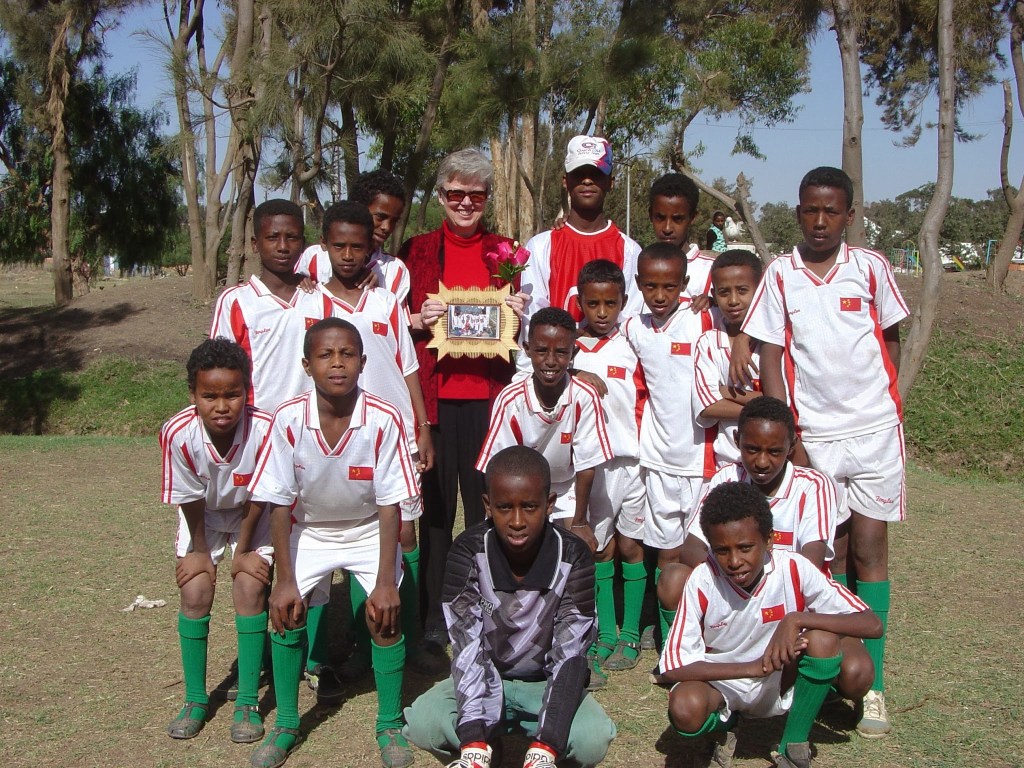
Ten preteen boys surrounded me on one of the major streets of Asmara, Eritrea, as I waited for my friend Jewel’s tire to be changed.

Not only was Jewel’s tire changed, but the remainder of my temporary duty time there changed as I spent every Sunday after that watching these boys and a few more on the soccer field. Afterwards, they came home with me to watch movies and eat popcorn.

For more about my adventure with the boys of Eritrea, check out this post and a few that follow on an earlier blog platform. I guess I have to admit that I exagerated the number of boys I met that day in order to meet the Guild’s anthology requirement. Please don’t tell anyone.

This post is one in a series of short posts including the number 10 in the first sentence, a requirement of the San Diego Writers and Editors Guild anthology submission in 2021.

D is for Ten in Detroit Lakes, MN

Nothing really got going at the Pavilion in Detroit Lakes until 10 p.m. back in my late teen years.

But my parents always insisted I be home by midnight. The 45-minute drive home left me little time to watch the activities, let alone get involved or in trouble. At least none I ever admitted.

This post is one in a series of short posts including the number 10 in the first sentence, a requirement of the San Diego Writers and Editors Guild anthology submission in 2021.

Image credit: Photo of Lake Park Blvd, Detroit Lakes, MN, by Sunil GC on Unsplash

C is for Ten in the Caribbean

Saba, one of ten underrated Caribbean Islands our travel agent encouraged us to explore, is only five square miles.

The rocky shore persuaded Christopher Columbus not to bother stopping there when he sighted it in 1493. Pirates, on the other hand, found that quality to be Saba’s most favorable trait.

This post is one in a series of short posts including the number 10 in the first sentence, a requirement of the San Diego Writers and Editors Guild anthology submission in 2021.

Image credit: Photo of Saba, Caribbean Netherlands by Julian B. Sölter on Unsplash

B is for Ten in Barbados

Barely more than ten miles wide east-to-west, Barbados offered beautiful sunrises and sunsets over the ocean, lush rain forests, and exotic plants and animals.

But this paradise hides a darker side.

For more about Barbados, especially crime in Barbados, check this post on an earlier blog platform.

Image credit: Photo of Hastings Beach, Barbados, by David Cain on Unsplash

A is for Ten in Africa

Top of the list of the ten most impressive sites in Africa is Victoria Falls in Zambia and Zimbabwe.

If you choose to go there, watch out for Devil’s Pool, a natural pool atop Victoria Falls that far too many visitors choose to swim in to dare the devil.

They say no one has ever died as a result of a fall from Devil’s Pool, but perhaps they haven’t heard of the explorer Samson Bonham’s trip there in 1899 when he tried to follow the route David Livingstone took through the area then known as Zambisia.

This post is one in a series of short posts including the number 10 in the first sentence, a requirement of the San Diego Writers and Editors Guild anthology submission in 2021.

Image credit: Photo by Jason Zhao on Unsplash

Common Issues in Manuscripts Requiring Correction: #8 Sentence-ending Punctuation

This is the eighth in a series of posts to address common issues in manuscripts with my suggestions for how writers can improve their manuscripts before turning them over to agents, editors, and the many other individuals involved in the process of turning a manuscript into a book.

#8 Use only appropriate Sentence-Ending Punctuation

There are five appropriate sentence-ending punctuation marks, three legitimate ones and two coincidental ones that just end up there because of what the author has written.

  • The legitimate ones
    • periods (referred to as full stops in British English) (.)
    • question marks (also referred to as interrogatory marks) (?)
    • exclamation points (!)
  • The coincidental ones that just end up there
    • ellipses (. . .)
    • em dashes (—)

The Legitimate Ones

Period

The most common sentence-ending punctuation mark is the period. A period at the end of a sentence is what we all expect. When you reach the period, the message is complete. Anything else signifies information beyond the words that were spoken or written. And that’s why we have more than one sentence-ending punctuation mark.

All the world’s a stage, and all the men and women merely players; they have their exits and their entrances, and one man in his time plays many parts, his acts being seven ages.

William Shakespeare, As You Like It

Question Mark

The appropriate mark at the end of a question is a question mark. Pretty obvious, right? Questions might indicate a request for information.

Who is that masked man?

Or they might serve as a clue that the speaker disbelieves what has been said.

Are you telling me you’ve never been to Paris?

The inherent quality of a sentence ending with a question mark is that the speaker wants more information.

Exclamation Point

An exclamation point marks the end of a sharp or sudden utterance (says Merriam-Webster.com).

Watch out!

Such utterances are not usually whispered or spoken in one’s inside voice. And that’s why people interpret an exclamation point as evidence that the speaker is shouting. Add all caps, and the message is even clearer.

Since almost no one in the world likes to be shouted at, editors, including me, stress the importance of being very cautious in the use of exclamation points. Some editors will accept one exclamation point per chapter. Some accept one per book. The most stringent of editors prefer to see only one exclamation point in a lifetime’s work. My view is that if you need one, use it. But if you use too many, be aware that the reader may be dissuaded from continuing.

The Coincidental Ones

Ellipses

Ellipses (or ellipsis points as The Chicago Manual of Style refers to them) function most often within sentences. CMS defines an ellipsis (three or four marks that look just like periods) as denoting “the omission of a word, phrase, line, or paragraph from a quoted passage.” When the passage continues after the ellipsis until it reaches the end of a sentence, the ellipsis consists of three dots. When the omission falls at the end of a sentence or in the middle of text that picks up again with a new sentence, the ellipsis consists of four dots, which is really a sentence-ending period followed by the three ellipsis points. An ellipsis can also follow other punctuation marks, including commas, colons, semicolons, question marks, and exclamation points.

When following the rules for the use of an ellipsis when a character stops speaking without finishing the thought, CMS refers to the dots as suspension points. This is the case for the appropriate use of the ellipsis (or what looks just like an ellipsis) as a sentence-ending punctuation mark.

I wonder if I will finish my first novel this year or . . .

Em dashes

Like ellipses, em dashes are used most often within sentences, where a comma, a semicolon, parentheses, or a period would also be appropriate, but where the writer wishes to connect items or distinguish among items, when the use of other punctuation may lead to confusion. For example, when items in a sentence, separated by commas, include one or more items that are further explained within the text, as an appositive would do, the use of commas alone may confuse the reader regarding how the pieces of the sentence fit together. The preceding sentence, with em dashes in place of some of the commas, makes the main clause easier to identify by isolating the subordinate text between em dashes:

For example, when items in a sentence—separated by commas—include one or more items that are further explained within the text—as an appositive would do—the use of commas alone may confuse the reader regarding how the pieces of the sentence fit together.

One of the usual uses of em dashes, according to CMS, is “to indicate sudden breaks.” This may occur within a sentence or at the end of what is spoken, whether or not it’s a complete sentence. This is where an em dash functions as a coincidental sentence-ending mark in dialog. If one character interrupts another in mid-sentence, an em dash marking the interruption at its end becomes a sentence-ending punctuation mark.

She said, “I thought we were going—”

He interrupted and said, “Don’t tell me what you thought. You never think things through anyway.”

Ellipses vs em dashes

The rules to remember:

  • An ellipsis marks the end of a segment of dialog if the speaker trails off without finishing . . .
  • An em dash marks the end of a segment of dialog if the speaker is interrupted—by someone or something.

Putting them all together

Question: How do all these sentence-ending punctuation marks go together?

Answer: One at a time. No sentence-ending punctuation mark should be repeated or combined with another sentence-ending punctuation mark.

Never use more than one sentence-ending punctuation mark together with another one. One period (.) One question mark (?) One exclamation point (!) That’s it.

Each sentence needs only one sentence-ending punctuation mark. What might look like three or four periods in a row is really a three-dot ellipsis or a period that ends one sentence followed by a three-dot ellipsis that marks something has been left out.

What about the interrobang? (‽ or ?!)

Merriam-Webster.com defines the interrobang as “a punctuation mark (‽) designed for use especially at the end of an exclamatory rhetorical question.” It combines a question mark with an exclamation point. Considered an unconventional punctuation mark, its use has not caught on widely, but I suspect this will change. Given my statement above that exclamation points are interpreted by readers as shouting, I will continue to recommend against using the interrobang. I suspect in the future, it may become accepted since each legitimate sentence-ending punctuation mark already includes what looks like a period, and each conveys its own subliminal meaning (surprise for exclamation marks and more information, please, for question marks) that may call for combining occasionally.

A to Z Blogging Challenge Reveal

Each year the San Diego Writers and Editors Guild puts out a call to its members to submit poetry, short stories, essays, or other creative writing for its anthology, The Guilded Pen. I have been fortunate to have a piece included each year since I joined the Guild in 2013.

This year’s anthology will be the Guild’s tenth, and to celebrate, the theme this year is The Power of Ten. Reflecting that theme, each submission must include the number10 or the word ten in the first sentence.

For the A to Z Blogging challenge this year, I plan to provide a set of A to Z first paragraphs to meet the Guild’s submission requirements, posting one each day of April, except for Sundays. Some will be first paragraphs for possible short stories or memoirs, some for essays, some for nonfiction reporting. All will include 10 in the first sentence. With only one exception, the topic of the posts will be places around the world, some I’ve lived in, some I’ve only dreamed of living in. Some of the first sentences will be a bit tortured to fit in the word or number ten. I hope what follows will provide enough of a temptation for you to want to read more.

I invite readers to share with me which of these beginnings you’d like most to see me develop to submit to the Guild’s anthology this year. The submission period ends May 31, leaving me a month to refine one or two pieces.

Common Issues in Manuscripts Requiring Corrections: #7 Scare Quotes

This is the seventh in a series of posts to address common issues with my suggestions for how writers can improve their manuscripts before turning them over to agents, editors, and the many other individuals involved in the process of turning a manuscript into a book.

#7 Removing scare quotes and single quotes used to emphasize words and phrases and italicizing the text instead

The Chicago Manual of Style uses the term scare quotes to refer to double quotes used “to alert readers that a term is used in a nonstandard (or slang), ironic, or other special sense.” (CMS 16th edition, Section 7.55). Some consider the quotes indicate the author means to refer to the word as so-called. CMS advises authors to be aware that using quotes to emphasize words and phrases in this way may irritate readers.

When I edit the work of others, I reserve the use of double quotes for instances when a character speaks.

Another common style I have found in the works of others is the use of single quotes for emphasis. Since CMS restricts use of single quotes to instances of quoted material within text already enclosed within double quotes, I choose to use italics to emphasize words and phrases instead of using single quotes as well.

When I edit the work of others, I choose to put the words or phrases in italics for emphasis in place of single or double quote marks. If this results in what appears to be too much italicized text, I review every italicized word or phrase to determine if the emphasis is necessary.

Image credit: Photo by Charles Deluvio on Unsplash