Authors You Love to Hate?

All the recent publicity about W.W. Norton’s decision to stop distributing and publicizing Blake Bailey’s biography of Philip Roth because of accusations of his inappropriate behavior with women, including underage students when he was a teacher, has made me begin thinking about what turned me against the author at the top of my love to hate list. That list isn’t very long, in part because authors who present a view of life at odds with mine don’t make it onto any of my author lists. It’s not those authors I hate. It’s their ideas. More often than not I’ll just pass by their books.

I do see books by many authors with viewpoints that contrast sharply with mine in my Little Free Library. And I don’t remove them simply because I disagree with what I assume is inside. I recognize that my Little Free Library patrons represent the diversity of my neighborhood which may include fans of those authors, so I leave the books there in the hope that someone will appreciate them. I didn’t set up the library to serve as a censor.

I also realize I should read books that espouse a different world view in order to understand the people the ideas appeal to. Understanding, not manipulation, is my goal.

But there is a very small group of authors on my love to hate list. Only one, in fact—the one at the top of the list. I won’t mention the name because I realize my reasons are personal and may not apply to anyone else. I’ll focus on the general information that informed my decision.

The author was my mother’s favorite. She always added her name to the waiting list at the library for that author’s new book releases. My mother’s enthusiasm made me pay attention to anything said by or about that author. And I began reading her books, all in a genre I enjoyed. During one television interview, however, the author so thoroughly dismissed her readers and anyone around her who the interviewer mentioned as helping the author that I began paying close attention to what I could learn about her from nonverbal clues. Her body position, angled away from the interviewer with very little eye contact with either the interviewer or the camera, gave me the impression she really wanted to be somewhere else. I know I did. Maybe it was an off day for her. Unfortunately for her, I decided never to watch or read anything more about her. I also haven’t read any more of her novels.

What have I learned from this?

First, I realize the author on my love to hate list got there while she was alive. She still is alive. My reasons for including her are visceral, generated by what I learned in real time about her. I am more likely to judge the works of authors who aren’t around to defend themselves than to pay much attention to what I learn about the individuals.

Second, if an author is comfortable publicly dismissing another individual or a group of individuals, my dislike radar strikes quickly. That means my list may grow as the norms of behavior change.

Third, if I ever complete my work-in-progress and succeed in getting it published, I know I need to be sure I don’t write anything, record anything, or agree to an interview if I feel I am not at my best. Mindfulness, positive thinking, attracting good energy: These will all be important practices then.

And that raises the question of whether I should wait to make those concepts part of my life. Why not begin now?

Fourth, now that I’ve learned from the experience, I plan to reverse my previous decision not to read or listen to anything about that author again. Maybe I’ll discover that interview really was one of the author’s bad days. And maybe I’ll thank her for the lessons I learned from her on that bad day.

Featured image credit: Photo by Jon Tyson on Unsplash

Z is for Ten in Zambia

HIV/AIDS continues to lead the list of the top ten causes of death in Zambia.

This post is one in a series of short posts including the number 10 in the first sentence, a requirement of the San Diego Writers and Editors Guild anthology submission in 2021.

Image credit: Photo of AIDS in Africa poster by chaouki on flickr.com. Creative Commons license CC BY-SA 2.0

Y is for Ten in Yemen

In Yemen, a child under the age of five dies of preventable causes every ten minutes.

It wasn’t always so, and it doesn’t need to be so. It’s one of the biggest challenges in the Middle East.

For more information about children in Yemen from the time I spent there, see this post on an earlier blog site.

This post is one in a series of short posts including the number 10 in the first sentence, a requirement of the San Diego Writers and Editors Guild anthology submission in 2021.

Image credit: Photo of children in Yemen by KGBBristol, via flickr.com, Creative Commons license CC BY-NC 2.0

Holidays Around the World: International Workers Day

I wouldn’t be surprised if most readers think of May Day as either a day to leave a basket full of flowers and treats on the doorstep of someone special or as a day of military parades down the wide streets of Moscow. It is both of those things. But those military parades in countries that celebrate their proletariat origins of power stem from observing May 1 as International Workers Day, also known as Labor Day.

The holiday goes back to workers’ struggle for acceptance of the eight-hour workday. On April 21, 1856, stonemasons in Australia went on strike to show their support for the eight-hour workday movement. For years afterwards, workers in Australia marked the stoppage annually, and it eventually caught the attention of workers in the United States.

In this country, on May 1, 1886, workers went on a general strike for better working conditions. Three days later in Chicago, police attempted to disperse a public demonstration when someone threw a bomb into Haymarket Square. The police responded with guns. In the end, seven police officers and at least thirty-eight civilians died. Many more were injured. In reaction, labor leaders were rounded up with four being executed after a trial many considered a miscarriage of justice. More demonstrations and more deaths followed the next day in Milwaukee. These events became known as the Haymarket Affair.

By 1891, a group of international trade union and socialist organizations from twenty countries, known as the Second International, had met twice in Paris and decided to establish May 1 as International Labor Day.

While the Haymarket Affair, which prompted the selection of May 1 as international labor day, took place in the United States, this country did not follow the tradition set in Paris. By 1887, four years before the Second International acted, the first Monday in September had already been established throughout North America as Labor Day.

And that left May Day in this country as a day to celebrate spring with dances, singing, and exchanging baskets of goodies.

Image Credit: Photo of the Hotel Ukraina from the Kutuzovsky Bridge, Moscow, USSR, during the May Day celebrations, 1988 by Steve Harvey on Unsplash

X is for Ten in Xi’an

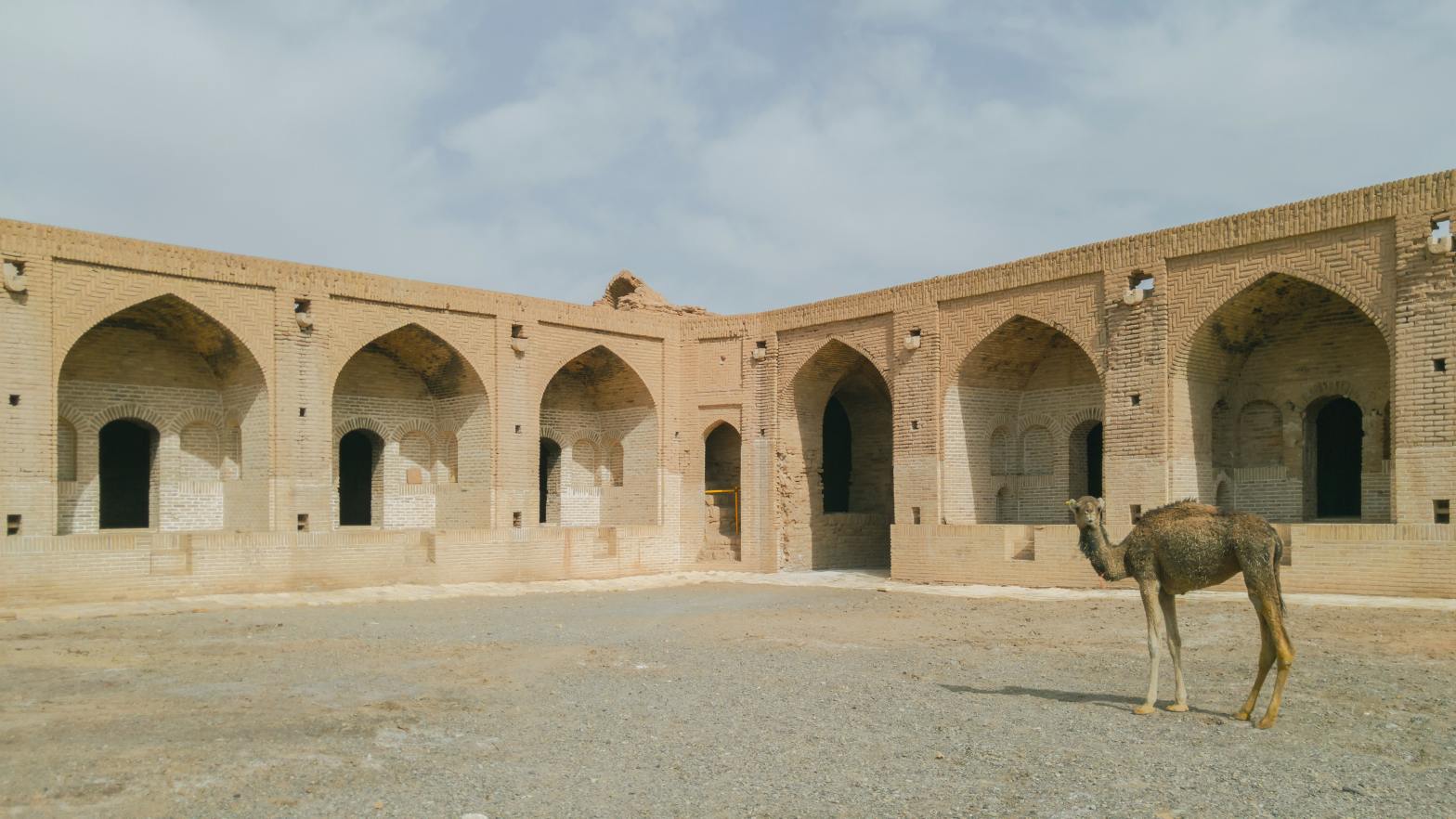
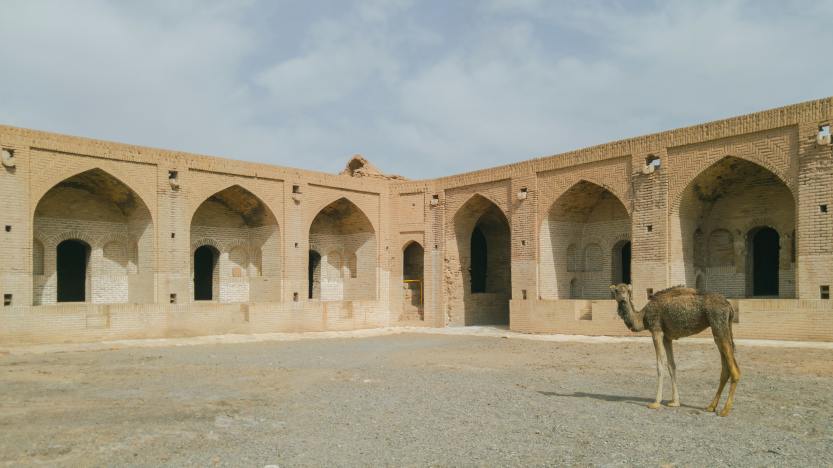
The Silk Road, a ten-thousand-mile network of roads spanning the four thousand miles between China with the west starting from the then-capital Xi’an, China, began used in 130 BC when China opened trade with the west.

When the Chinese government hired Sven Hedin to create a road linking China with the province of Xinjiang, the Swedish explorer set out to travel along all ten thousand miles to record what he found.

This post is one in a series of short posts including the number 10 in the first sentence, a requirement of the San Diego Writers and Editors Guild anthology submission in 2021.

Image credit: Photo of a caravansary by mostafa meraji on Unsplash

W is for Ten in Washington

One out of ten residents of the metropolitan Washington region is food insecure, according to the Capital Area Food Bank.

Nearly one-third of them are children.

This post is one in a series of short posts including the number 10 in the first sentence, a requirement of the San Diego Writers and Editors Guild anthology submission in 2021.

Image credit: Photo by Joel Muniz on Unsplash

V is for Ten in Virginia

Since I had an address in Virginia for nearly twenty years, you’d think I would have visited the top ten destinations in that state.

I’ve only been to two: Mount Vernon and the Luray Caverns.

This post is one in a series of short posts including the number 10 in the first sentence, a requirement of the San Diego Writers and Editors Guild anthology submission in 2021.

Image credit: Photo of Mount Vernon by Matt Briney on Unsplash

U is for Ten in Union City, NJ

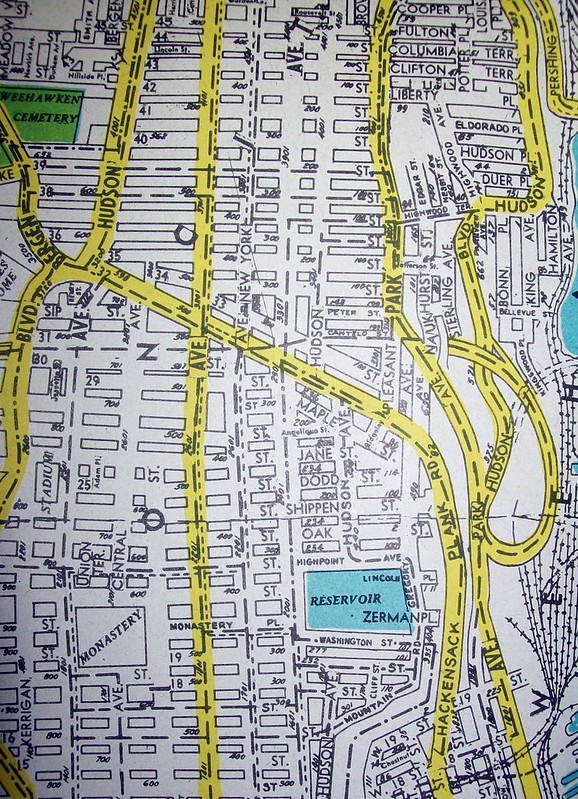
The ten weeks I spent in Union City, New Jersey, during the summer between my sophomore and junior college years changed my life forever.

On my return, I changed my major and broke off my engagement, determined that I had found a way to escape my midwestern background forever.

This post is one in a series of short posts including the number 10 in the first sentence, a requirement of the San Diego Writers and Editors Guild anthology submission in 2021.

Image credit: Photo of Union City map by davecito from flickr.com. Creative Commons license CC BY 2.0