T is for Twin Brothers

When I was ten, my twin brothers arrived a month earlier than Mom expected.

My parents had planned for five children. That unexpected sixth arrival meant we were going to have to move into a bigger house. I wanted no part of it. My dad found an ingenious solution.

This post is one in a series of short posts including the number 10 in the first sentence, a requirement of the San Diego Writers and Editors Guild anthology submission in 2021.

S is for Ten in San Diego

Ten years ago my husband and I began considering a move from Virginia to San Diego.

A year later, we sold our Arlington townhouse and began driving across country.

This post is one in a series of short posts including the number 10 in the first sentence, a requirement of the San Diego Writers and Editors Guild anthology submission in 2021.

Image credit: Photo of Balboa Park in San Diego by Zane Persaud on Unsplash

Common Issues in Manuscripts Requiring Corrections: #10 Phrasal Verbs

This is the tenth in a series of posts to address common issues I have found in manuscripts with my suggestions for how to improve them before turning them over to agents, editors, and the many other individuals involved in the process of turning a manuscript into a book.

#10. Phrasal verbs vs HYPHENS

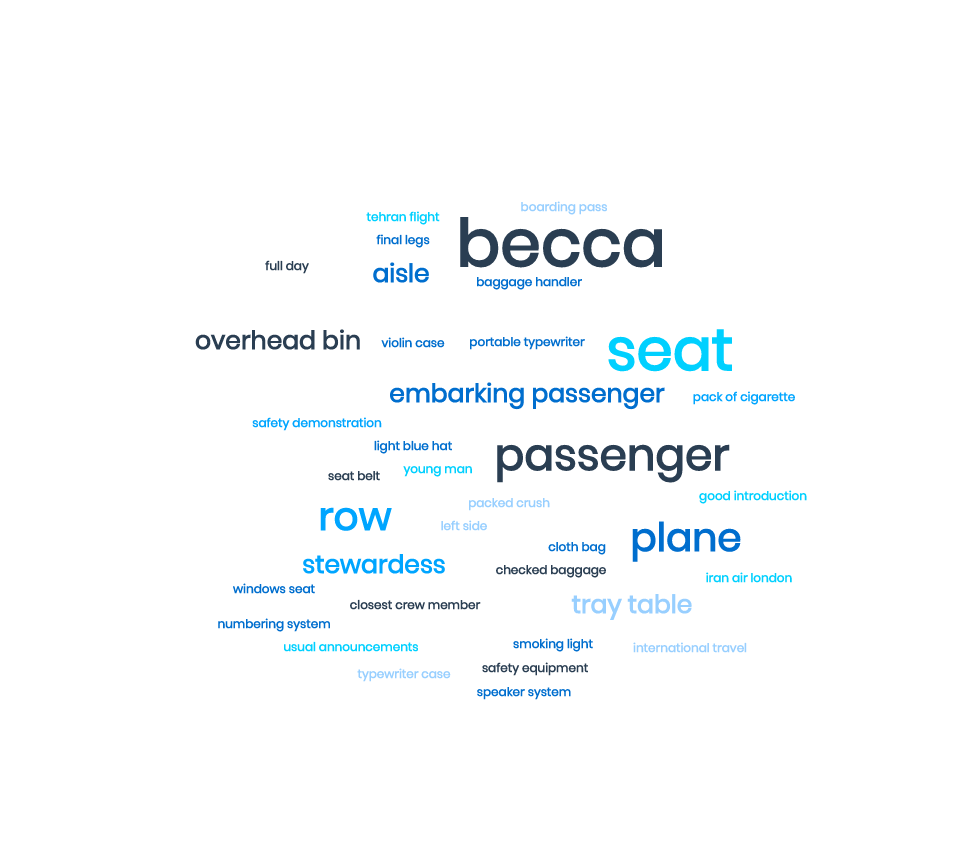
As the WordCloud above illustrates, not all multiple-word phrases need hyphens. Hyphens are handy to identify when two or more words, when combined, mean something different from the two words on their own. For example, a man eating shark is different from a man-eating shark.

Over time, multiple-word expressions have evolved from being spelled as separate words, then words connected with a hyphen, and finally as single words without either a space to separate or a hyphen to combine. Earlier (Common Issues in Manuscripts Requiring Corrections #1), the example of base ball evolving into base-ball and eventually into baseball illustrated this tendency of standard spelling of English words to move away from requiring hyphens.

If I am uncertain whether a hyphen is needed to connect two words that function together, I look up the words in merriam-webster.com. If the combination of the words with a hyphen does not appear as its own entry, but the two words together as one word does, the hyphen is no longer needed and what were once two words should be written as one. If the combination of words with a hyphen does not appear and the two words together as a single word also do not appear, a hyphen is probably needed.

For example, neither upsidedown nor upside-down appear, and the phrase upside down appears in merriam-webster.com as an adverb, but not as an adjective. To refer to an upside-down map of the world, therefore, it’s appropriate to use the hyphen since the two words together, used as a modifier, are not yet in the dictionary as a single word.

Be careful to check the part of speech of the entry. Frequently two words are appropriate for verbs when the noun form has shifted to being spelled as one word and the hyphenated form exists as an adjective.

One category of verbs is often mistaken for requiring a hyphen between the words—phrasal verbs. These two- and three-word phrasal verbs are formed by combining a common verb with a particle (a short word that looks very much like a preposition but doesn’t function as one). which changes the meaning of the verb.

Some of these verbs function as transitive verbs which may make them look like the particle after the verb is a preposition with the noun after it the object of the preposition, but it isn’t. The meaning of the combination of words is not the same as the meaning of the verb itself. The fine points of how to describe these words is a matter for grammarians to deal with. Writers just need to know how to spell them.

Look out!” the audience said as the villain approached the heroine from behind her.

Look out functions as a phrasal verb with the meaning Take care or Be careful.

She promised to look after her younger brother while her parents were at worked.

look after is a phrasal verb, also meaning take Care with her younger brother serving as the direct object of the phrasal verb.

Following are some examples of two- and three-word phrasal verbs that do not need hyphens to connect them:

WordAs It Appears in merriam-webster.com
look afternot listed as a separate phrasal verb, but mentioned in the definition of look
look atnot listed as a separate phrasal verb, but mentioned in the definition of look
look fornot listed as a separate phrasal verb, but mentioned in the definition of look
look forwardnot listed as a separate phrasal verb, but mentioned in the definition of look
look forward tonot listed as a separate phrasal verb, but mentioned in the definition of look with an example that includes to your visit as if the phrase is the object of look forward. To me it’s clear look forward to is a separate transitive phrasal verb with your visit as the direct object.
look intonot listed as a separate phrasal verb, but mentioned in the definition of look
look outtwo words listed as the verb; one word, without either space or hyphen, as a noun
look overtwo words as a verb
look tonot listed as a separate phrasal verb, but mentioned in the definition of look
look uptwo words as the verb; one word, without either space or hyphen, as the noun
look up tothree words, listed as a phrasal verb

None of these phrasal verbs need a hyphen. Don’t attempt to reduce your word count to get a piece under the limit by sprinkling hyphens between verbs and their particles. I can assure you it will drive the editor crazy.

R is for Ten in Romania

At the end of my second semester teaching English at Alexandru Ioan Cuza University, I discovered the class I thought was small in fact had ten more students than I had ever seen in class. How was I supposed to grade students I had never seen?

For more about how I handled assigning grades to students who had never attended class, see this post from an earlier blog platform.

This post is one in a series of short posts including the number 10 in the first sentence, a requirement of the San Diego Writers and Editors Guild anthology submission in 2021.

Photo of Palace of Culture, Iași, Romania by Tudor Baciu on Unsplash

Q is for Ten in Qatar

Roughly one out of ten residents of Qatar is a citizen.

The rest of the population are temporary workers from Asia, Africa, Europe, and the Americas. For five years, I was one of them.

This post is one in a series of short posts including the number 10 in the first sentence, a requirement of the San Diego Writers and Editors Guild anthology submission in 2021.

Image credit: Photo of National Museum of Qatar by tarek suman on Unsplash

A Holiday I Hate

Image Credit: Photo by Kateryna Tyshkul on Unsplash

Wednesday, April 21, is on many calendars as Assistants Day. Once again, the Wednesday in the last full week of April rears its ugly head. This is a holiday I would like to see stamped out. I see it as less an opportunity to celebrate and more as a trap to make sure someone feels slighted.

It used to be Secretaries Day. Then it became National Administrative Assistants Day. And now, apparently, it has been shortened to Assistants Day.

Have I mentioned yet that I hate this “holiday” (and I use the scare quotes around the word very deliberately).

First, let me state that while I have never been a secretary or an administrative assistant, I appreciate and honor those who have held those positions. My hatred of the holiday that supposedly honors those in the positions is that it is rarely obvious who holds those positions, except for the people in them. Not even the bosses know what those titles mean to the people who hold them.

My first awareness of this day goes back to my days as a software engineer, back when it was referred to as Secretaries Day. On that day, I went to lunch with several other software engineer friends. We were a mixed group of men and women, as most groups of software engineers were in those days. As we entered the restaurant, a member of the staff handed each of the women a rose. When I asked what it was for, he said it was for Secretaries Day. I tried to give the rose back since I wasn’t a secretary, but he stared at me blankly and didn’t take it. It wasn’t that I felt insulted by the assumption that I was a secretary. I felt uncomfortable for the man who had apparently been told that any woman who entered the restaurant must be a secretary.

A few years later, when the holiday was still referred to as Secretaries Day, I worked in a government office, no longer as an engineer, but still not a secretary or admin assistant. Our office suite had offices with windows and doors along one wall. Desks without windows or doors lined the front of the bank of offices. Some of those desks were for secretaries. Some were for junior-level staff members for whom no office was available. On Secretaries Day, someone decided that each person whose desk was in the row in front of the offices should receive a plant for Secretaries Day. At least one of the junior-level staff members in this case was insulted that the position of his desk conveyed a status he hadn’t considered appropriate. In this case, it was clear he was insulted.

Another time, each secretary in an office suite received something unique, selected by the executives they each reported to. I watched one of those women cut the flowers of her bouquet from the stems because her bouquet was smaller than that another woman received.

A few years later, once the holiday was rebranded as National Administrative Assistants Day, a male secretary in a different office resented the fact that, while the women in admin positions in the office received flowers and cards, he did not.

Today I saw balloons and bouquets on sale in the grocery store for Assistants Day. What does that mean? Whose job title is simply Assistant?

Come on. Why would anyone come up with a holiday that is rife with risk of leaving a coworker feeling insulted or underappreciated? What must we do to stamp out this hideous “tradition?”

P is for Ten in Paducah, KY

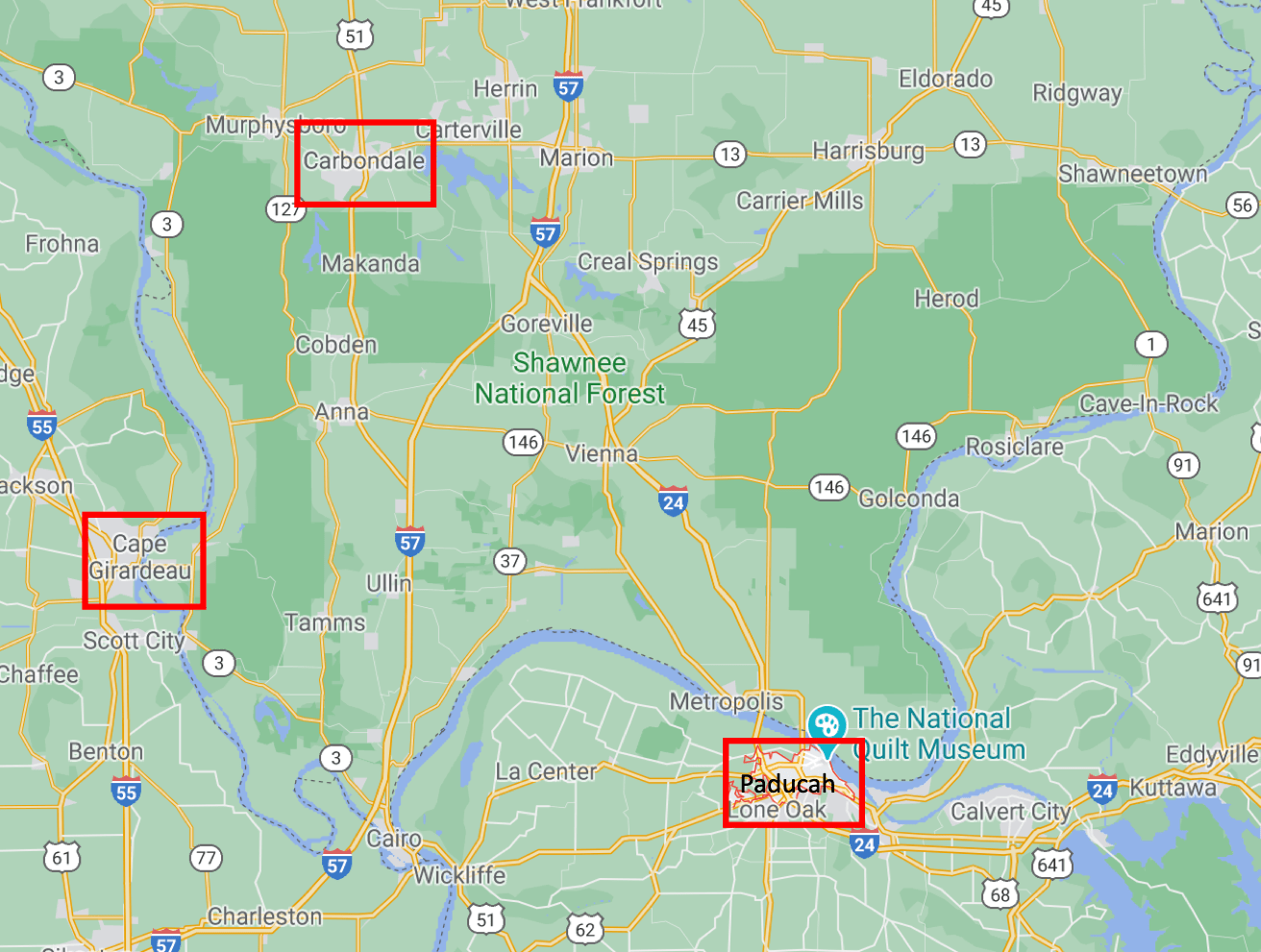
The Southern Illinois University interviewer advised I would need to be in Carbondale within ten days.

To help me plan the trip, he described the location as being 70 miles from Paducah, Kentucky, and 45 miles from Cape Girardeau, Missouri. I still had no idea where Carbondale was.

This post is one in a series of short posts including the number 10 in the first sentence, a requirement of the San Diego Writers and Editors Guild anthology submission in 2021.

O is for Ten in Odessa

While we missed seeing most of the ten most recommended sights in Odessa, our trip there through Transnistria is among my most memorable.

For a glimpse into what made that trip through Transnistria so memorable, check out this post on an earlier blog site.

This post is one in a series of short posts including the number 10 in the first sentence, a requirement of the San Diego Writers and Editors Guild anthology submission in 2021.

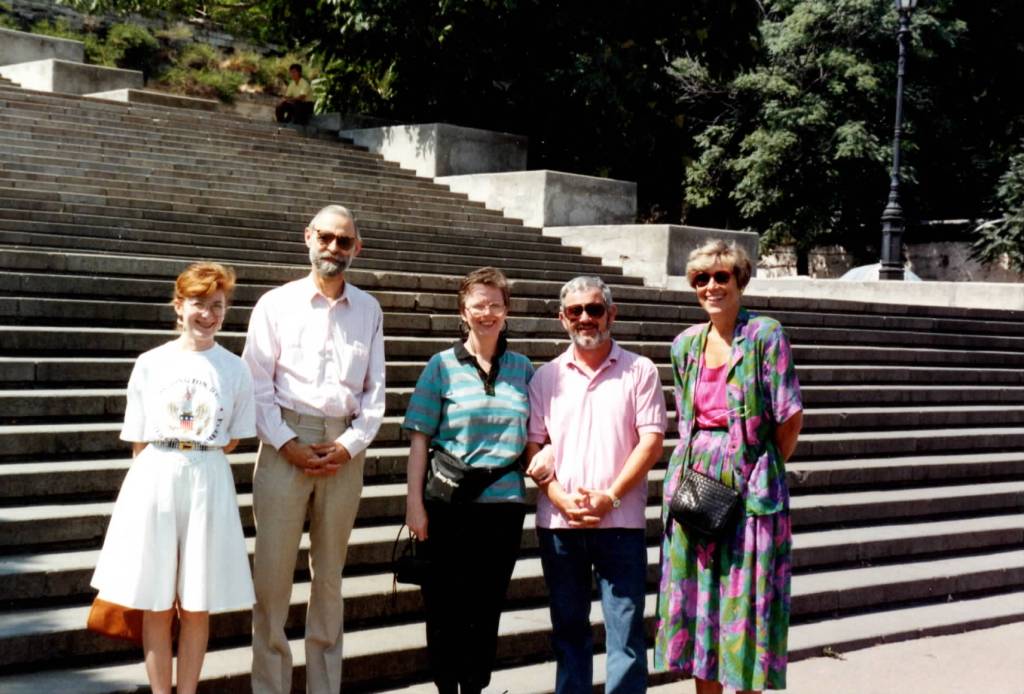
A photo of our party, minus Ambassador Pendleton, at the Potemkin Steps in Odessa, Ukraine, in 1994.

N is for Ten in Norway

Ten days was not long enough for me to spend in Norway.

Ten years probably wouldn’t be either.

This post is one in a series of short posts including the number 10 in the first sentence, a requirement of the San Diego Writers and Editors Guild anthology submission in 2021.

Image credit: Photo of crying baby in Vigeland Sculpture Park by 🇸🇮 Janko Ferlič on Unsplash