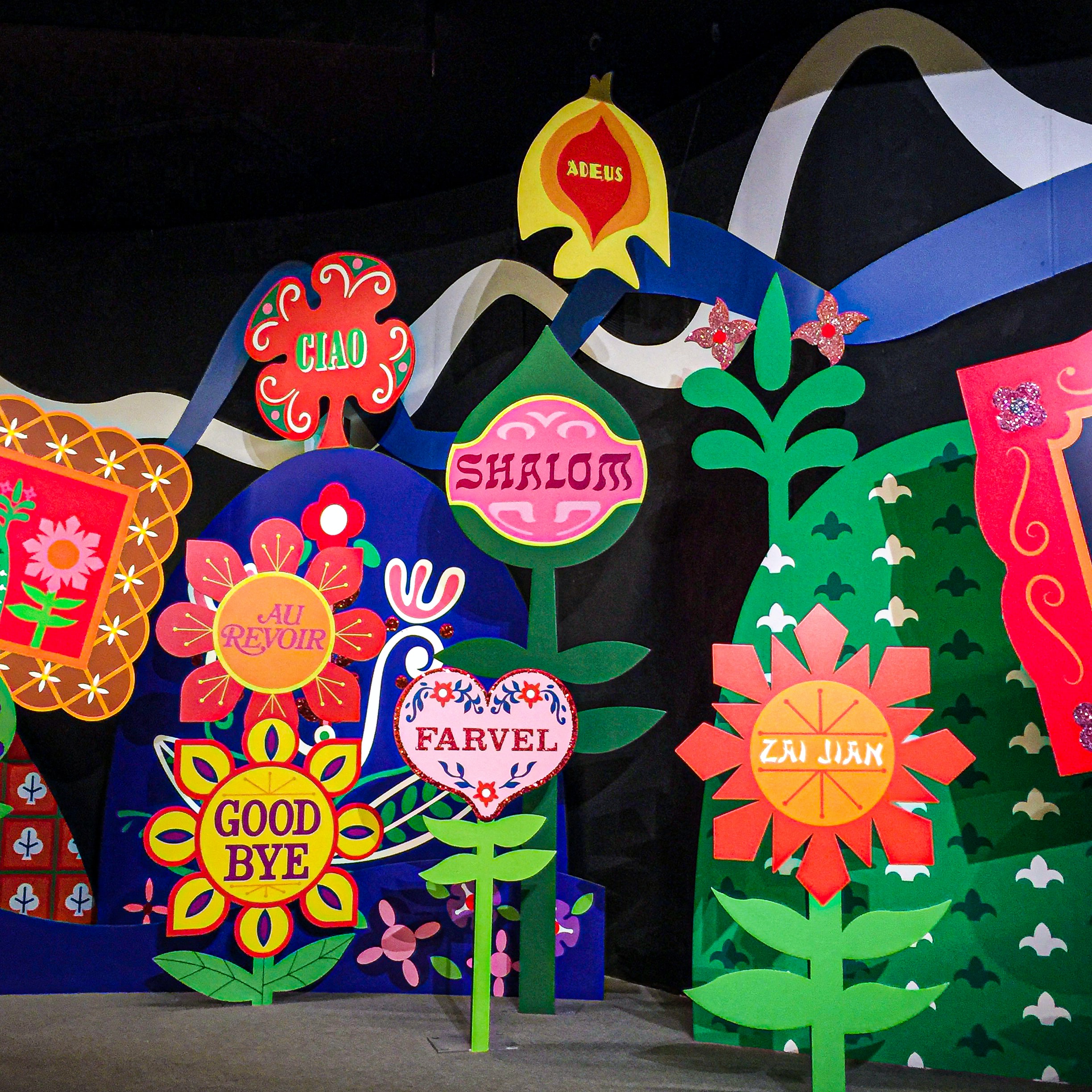
Is it Important for an Editor to be Bilingual if Your Manuscript Includes Foreign Words?

I am surprised by the number of best-selling books that have errors in translation in them, errors that could have been caught by an editor familiar with that specific foreign language. An editor needn’t be bilingual since most of these errors could have been caught through more diligent research. That makes them all the more surprising.

For example, a book about the experience of the US diplomats held hostage in Iran for 444 days included misspellings of some of the Iranian leaders at that time. Maybe the editor felt the correct spelling wasn’t something most readers would catch, so why slow down the production? Or maybe the author felt including the misspelling would illustrate his contempt for the persons whose names were misspelled. Or maybe the misspelling was simply the result of an improper transliteration of the Farsi spelling.

Nevertheless, I was surprised. The names of people in the news during those days were burned into my brain since it occurred so shortly after I left Iran at the end of my contract. For example, Mehdi Bazargan was one of the rotating list of prime ministers during that time. His first name was Mehdi, not Mahdi, a name that refers to a spiritual and temporal leader who will rule before the end of the world and restore religion and justice. Yet, the book consistently referred to Mahdi Bazargan.

Similar errors in lesser-known books by lesser-known authors aren’t quite so surprising. In a novel about an American woman who manages to get herself assigned to world hot spots where she meets up with spies and international businessmen and eventually discovers the illicit diversion of funds donated by Muslims who follow the third of the five pillars of Islam uses a misspelling of that pillar, the giving of alms, written in Latin script as zakat. Her novel uses zatak, the name of a deodorant manufacturer.

But transliteration from languages with non-Latin alphabets isn’t the only cause of language errors. A book about an American woman who served both in the British SOE and the American OSS provided background about the German military and intelligence services, including the Gestapo, the abbreviation of Geheime Staatspolizei (Secret State Police). The author spelled the full name the way it sounds, but misspelled it as one word and substituted an a for the final e in the first word: Geheimastaatspolizei.

Do these misspellings interfere with the stories? No. But in each case I stopped reading while I pondered how such small errors could have gotten past an editor.

I don’t claim to be bilingual or even fluent in the languages I am familiar with. The only language that I both understand and speak well enough to conduct business in is German. And that doesn’t make me a translator.

I have lived in countries where I daily heard native speakers of other languages on television and radio and I read articles in the newspapers. As a result, my ear is attuned to what sounds right and my eyes recognize patterns that fit or stick out, making it possible for me to recognize simple errors and correct them to make the works better. When I don’t have personal experience with another language, I do the research to ensure the names of characters and what they say make sense to native speakers of those languages. And if that’s not enough, I’ll recommend an editor who can do the job better than I can.

If your manuscript includes foreign names or words, consider having someone familiar with that foreign language edit it, or at least provide one reading pass to confirm the translations and transliterations are correct.

My Tradition of Solving Jigsaw Puzzles

In my childhood, putting together a jigsaw puzzle was a family event, especially the week between Christmas and New Year’s Day. In keeping with that tradition, I completed the puzzle above the last week of 2020. It was a small victory, something I could do at the end of 2020 to make it feel a little bit normal.

Now I realize the end-of-the-year jigsaw puzzle tradition was likely in part a ploy on my mother’s part to keep the kids from fighting after a week of vacation from school and no more sugar treats to look forward to. Or at least it kept the fighting in a part of the house she could observe. But over the years I’ve discovered many lessons that came to me through the annual tradition of putting together jigsaw puzzles. They all boil down to one overarching lesson:

Don’t Get Stuck on Only One Way to Look at the Puzzle

#1—Don’t Be Afraid to Turn the Pieces Upside Down

I was often disappointed when I was sure I had found the right place for the puzzle, only to find out it only looked like it fit. Mom taught me a trick to be sure two pieces fit together—she told me to turn them over so I could view the backs of the pieces where the colors and patterns of the puzzle couldn’t trick my eyes and brain.

#2—Don’t Get Distracted by the Color of the Pieces

When the space for a missing piece appears next to a piece of a uniform color, it’s easy to look for another piece of the same color. Sometimes that edge is just where the color of the picture ends.

#3—Don’t Give Up. Stick with It Until You Succeed

Even if there are pieces missing, keep going, putting one piece in after another. Giving up is a temptation, but the feeling of success, even finding where the missing pieces should go, is worth the struggle.

Are There Bigger Lessons for This Moment?

I began writing this piece when I was distracted by the news on my television as mobs stormed the Capitol Building in Washington, DC. And on reflection, I realize my jigsaw puzzle lessons can be applied to the very large puzzle (I prefer that word to problem) needing to be put together now—our nation.

Photo by Clay Banks on Unsplash

How do I see my jigsaw puzzle lessons applying here?

#1—Don’t Be Afraid to Turn the Pieces Upside Down

I don’t suggest an anarchist’s approach of overturning everything in order to start over. This lesson for me means it can be useful to do the opposite of what I initially am tempted to do. In this case, I hope that instead of shouting at one another about our different opinions, we can all begin spending more time listening to one another.

We need to listen until it is clear to our conversation partners that we hear them. That we understand without judgment. That doesn’t mean we will always agree, but it has been too easy to judge based on assumption. It’s time to evaluate based on understanding in order to respect one another.

#2—Don’t Get Distracted by the Color of the Pieces

The pundits and reporters have conveniently illustrated the divisions within our nation by coloring the states in shades of red or blue. But when they zoom in on the big smart screens to see the smaller divisions within the states, the counties and the cities, the truth that no state is solidly one color or the other becomes clear. The states are all really shades of purple.

We need to look more deeply into the divide between our cities and our countryside. Neither of those groups can survive without the other. We need to build bridges based on understanding and respect.

#3—Don’t Give Up. Stick with It Until You Succeed

Divisions within the United States have always been there all the way back to when the first immigrants arrived and carved out their separate pieces of land and established their own new ruling systems. Yet, in spite of those differences, the first 13 colonies recognized they had more to gain by joining together against a common enemy. And the 13 grew to 50. Perhaps in the next decade the District of Columbia will become our 51st state.

Before our country reached its first century, differences of opinions had torn the nation apart and brought brother against brother in civil war. While the peace that came at the end of that war wasn’t quite the happily-ever-after image our elementary school textbooks suggested, the process of binding old wounds in order to face greater problems together began. We are still facing the challenges of breaking down the systemic racism that got baked into the end of our Civil War.

We cannot give up. Our democracy was the most incredible gift our founding fathers could have bequeathed to us. It was not perfect then. It is not perfect now. But if we stop working to correct it, we won’t be able to see the spaces representing the missing pieces we must continue looking for to complete it.

Merry Christmas to All

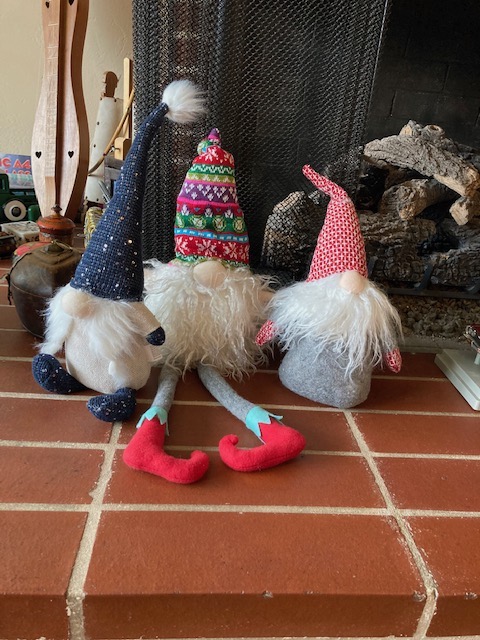
Three Norwegian nisse waiting by the fireside

It’s a Norwegian tradition to celebrate Christmas with the family on Christmas Eve, not on Christmas Day. In my own home, for most of my growing up years, we would have a snack late Christmas Eve afternoon and then choose one of the presents under the tree for each of us to open. Then we all bundled up (it was always cold in December in Minnesota) and packed into the car to drive to one of our relatives on my mom’s side to celebrate the holiday with the wider family.

Until they moved to Arizona for the winter, to provide relief for my grandpa’s arthritis, it was Grandpa and Grandma D who gathered us all together. And we were a crowd. Grandpa and Grandma D had five living children and each of them had at least five children. Even in the early years, before Mom’s youngest brother married and began adding to the brood of grandchildren, we filled the room.

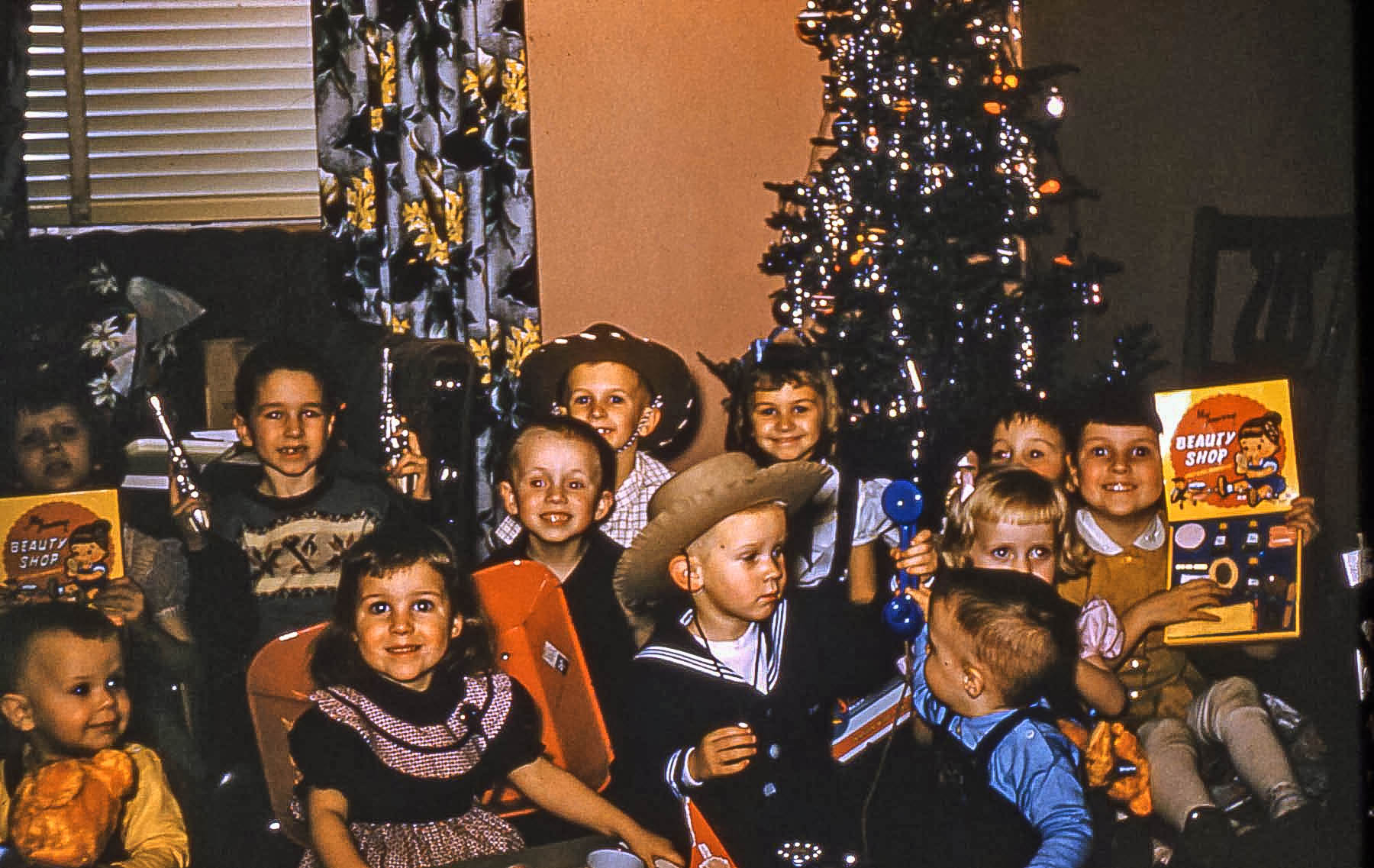
Fewer than half of Grandpa and Grandma D’s grandchildren

At Grandpa and Grandma’s house, we would each receive a present from the grandparents and one from whoever drew our names in the arrangement our parents worked out so that none of them had to buy presents for all the cousins. Only Grandpa and Grandma bought presents for all of us. Then, after eating a real meal and hearing the cousins whose families attended the small church located in the country recite their pieces, usually a verse from the Biblical story of the birth of Jesus, we bundled up and headed back home where we would open the rest of the presents. Some of them were labeled “from Santa,” but none of us asked how Santa could have delivered the presents before he made his midnight ride with reindeer.

The next morning our stockings would have little things in them. Truly stocking stuffers. Oranges, candy, nuts, and perhaps a small toy. We were happy Santa hadn’t missed our house, even though we had no fireplace.

I’ve married into a family with English Christmas traditions. Christmas Eve isn’t much of an event in that tradition. Maybe it’s because the Twelve Days of Christmas of Victorian England only began on Christmas Day. Those twelve days have shrunk to two—Christmas Day and Boxing Day—but they are no less full of ritual. Christmas crackers (not edible) and Christmas pudding (not pudding) were new to me. They are now old hat, though sometimes tricky to find, for the holiday.

Christmas crackers: Photo by Nick Fewings on Unsplash

Now I have to wait one more day than I’m used to in order to see the grandchildren rip open their presents on Christmas morning. And for the ten days ahead of Christmas, I ask them where they found the elf on the shelf each morning. That little guy sure finds some creative places to wait to spy on the children to be sure Santa knows they’re being good.

Photo by Misty Ladd on Unsplash

The elf on a shelf may be a new addition to the tradition of leading up to Christmas, but the Norwegians have had their own version for hundreds of years, the nisse who lived out in the barn to protect the animals and ensure good fortune to the farmers.

Like the elf on a shelf, the presence of the nisse also encouraged good behavior, not just of children but of their elders as well, and not just for Christmas. The nisse were present all year long.

The nisse were offended by swearing, pissing in the barn, or mistreating the animals, offenses most often attributed to adults than to children.

The nisse expected to be taken care of, too. They were short-tempered and could become very angry and destructive or even leave the farm altogether if they felt offended. One of the best ways to make sure they didn’t get upset was to leave food out for them, especially porridge on Christmas Eve.

To conclude, I hope your nisse, whether you knew of them before or not, have been truly satisfied with your treatment of them this year, and I wish you all a wonderful Christmas, whenever and however you celebrate it, and a happier new year than 2020 delivered to us.

This Is a Personal Statement

I’ve never been accused of using too few words to make my point. I hope that I at least have chosen my words carefully in this long piece.

In the past weeks, I’ve seen many thoughtful posts about the systemic racism and lack of justice for people of color, especially Black Americans, on blogs and social media as well as in email messages from organizations. I’ve liked the posts, shared them, followed their authors, and learned from them. But I haven’t written my own words—until now.

This is my personal statement, with a few borrowed words from others included to show how they connect with me.

Statement from Sons of Norway International Headquarters

As a descendant of Norwegian immigrants to the United States, I have been a member of the Sons of Norway organization for 15 years. Its mission is to promote and to preserve the heritage and culture of Norway, to celebrate our relationship with other Nordic Countries, and provide quality insurance and financial products to our members. What does that have to do with the current status of protests against injustice in the United States, you may ask. I’ll let their words answer. From the Sons of Norway international headquarters:

We are deeply troubled by the senseless murder of George Floyd in our organization’s hometown—a product of unchecked systemic racism and violence, and a direct assault on the values we hold most dear. We mourn with our neighbors and community members in this time of nationwide distress and injustice; when our communities suffer, we all suffer. It is our collective responsibility not only to hope for a more just, peaceful, and inclusive society, but more importantly to strive for it through our words and actions.

Eliminating racial prejudice and social injustice is everybody’s business. Correcting systemic racial policies that led to inequality of treatment of any group of people must be addressed by all people.

The death of George Floyd shocked me. The shock came not only because I, like so many people, saw it on TV as a bystander’s cell phone camera caught the image of one police officer’s knee on George Floyd’s neck while at least one other police officer stood, doing nothing. The angle of the view I saw didn’t include the two other officers on the other side of the car where George Floyd lay on the ground and took his last breaths. That such an event happened in Minnesota, not New York, not in the South, or not in one of the nation’s largest cities, that shocked me.

The shock regarding the place of the horrendous death of George Floyd was personal. The place—Minneapolis—made it impossible for me to continue to sit back somewhat reassured by the thought that there is evil everywhere, but not so much in my neighborhood. I was removed from it. That place—Minnesota—is the place where I learned my values, a place where I thought everyone else shared my values.

I grew up in Minnesota—in the northern half of the state, on the border with North Dakota. And years later, for seven years I lived in Minneapolis suburbs.

My first 20 years in Minnesota involved my struggle to get away. I felt my home was boring. Nothing ever happened there, at least nothing like what I saw on TV. I had no opportunities for adventure like Ken McLaughlin in My Friend Flicka, Joey Newton in Fury, Jeff Miller in Lassie, or even Theodore “The Beaver” Cleaver in Leave It to Beaver. Those TV kids didn’t live in big cities either, but their stories were interesting enough to be on TV.

I wanted to live in the world, not be stuck in small town Minnesota where the most significant conflict was between Catholics and Lutherans, followed closely by the Norwegian Lutherans vs. the Swedish Lutherans. Time seemed to be the antidote needed to resolve, or at least lessen, those conflicts. But time isn’t good enough to address systemic injustice.

Even as an elementary school pupil, I saw from the newspaper headlines that the rest of the country wasn’t like my home. I learned the meaning of words like segregation, desegregation, and integration by asking my parents after seeing photos of crowds of people whose skin was darker than mine being hit by police officers holding clubs or shooting high-pressure streams of water from fire hoses.

After college, I went as far away from Minnesota as I could go without having to get on an airplane or a ship—California. After five years of working and studying there, I grabbed an opportunity for adventure that allowed me to travel, live, and work outside the United States.

When I returned from adventures in two countries with very different histories, culture, and governments, I returned to Minnesota, to Minneapolis, the star of the state. And I saw Minnesota through new eyes.

Where I had previously seen boredom and sameness, I now saw stability and community. And I celebrated those qualities. My travels to and working in far away countries where the people had little or no say in how they were governed propelled me to get involved with local politics, an arena unlike the larger national and international politics. Minnesota has been known for its Minnesota nice quality. Neighbors help one another out, even if they don’t know one another all that well.

Eventually that political involvement led me back to an international lifestyle. After seven years of taking the annual Foreign Service exam and occasionally passing it, I decided I would continue to take it every year thereafter whether I passed it or not to ensure that I kept up with events about the world. After the last pass, I was invited to join the US Department of State as a Foreign Service Officer. For the next 30 years, I lived and worked in countries on four continents.

During those years, I saw people in Yemen struggling to stay alive while food and medicine were in short supply due to a war being waged in their country by outsiders, and people in Eritrea where no one was safe from being rounded up and forced into unlimited military service or into prison without their families being informed. Those were injustices worth fighting for, but I was in those environments as a representative of the US government. And my time there was limited. What could I do to make a difference, I thought and then put away the thought.

Statement from Foreign Policy Magazine

Already, the debate has underscored the fact that, while social justice has not been a traditional focus of foreign-policy thinkers, it should be. As Bishop Garrison and Jon Wolfsthal argue in a recent FP essay, “The United States cannot claim to be a beacon of freedom in the world if it continues to witness and accept the ongoing murder of innocent black people. … If the national security community only seeks to address global threats but refuses to confront the sins that hide in plain sight at home, there will never be lasting progress in either area.”

Many of the organizational statements I’ve received included calls to action. As a result, I’ve watched movies, documentaries, TV series that I had previously overlooked when they first appeared. The 2019 TV miniseries When They See Us, about the falsely accused and imprisoned Central Park Five; the 2016 documentary 13th, detailing how the abolition of the institution of slavery didn’t result in the freedom for former slaves; the 2016 film I Am Not Your Negro, featuring powerful words from James Baldwin describing his reactions to the deaths of Medgar Evers, Malcolm X, and Martin Luther King, Jr., a film produced 30 years after Baldwin’s death.

I’ve taken part in Zoom panels with young Black leaders of organizations dedicated to changing the status quo, with Black actors and behind-the-scenes personalities in the world of theater. I’ve been excited to see so many participants and then disheartened when many reported being either the only Black person or one of only two in the larger organizations they represent.

What Have I Learned?

I’ve been listening for a call to action that involves more than making a donation or signing up for a newsletter or taking time to read books on the subject of systemic racism. I do not reject those responses, but I want to do more. Two ideas hit home for me.

Seek Structural Solutions

In one of those panels, Rashad Robinson of Color of Change pointed out that too often in the past, charitable solutions have been proposed for structural problems. As an example, he pointed to sending bottled water to Flint, Michigan, instead of cleaning out the pipes and providing sufficient funding to replace them. Donations that go toward charitable rather than structural solutions waste resources.

I will dig more deeply into the goals of the organizations and programs seeking my donations to identify those that offer structural solutions.

Pay Attention to the Narrative

Rashad also pointed out the importance of paying attention to the words used in any narrative. An example I noticed in 13th is the narrative that after the abolition of slavery, former slaves left the South for big cities in the North and West for better opportunities. The narrator in 13th pointed out that the cause of the migration was flight from an area where the former slaves were oppressed, making their journeys more similar to refugees than migrants.

That made me wonder whether the narratives about my immigrant ancestors have overlooked the main cause for their migration, allowing the overarching story of the pull of the promised land instead of the truth to serve as the explanation. As a society, we may need to reevaluate our immigrant stories in order to better understand how they compare with those of current day immigrants.

I hope that I have chosen my words carefully here and that I will continue to do so in the future.

Image credit: photo by Nathan Dumlao on Unsplash

I am thankful

Thankful

I am thankful for so many things this year. I’ll focus on my top five, the top five from 2019, because of course I am always happy for family, friends, freedom, health, wealth, and the American way.

physical therapy
Image from wistechcolleges on flickr.com, some rights reserved

Number 5: Physical therapists.

Three years ago my husband and I took a trip to England. I could barely make it up the stairs each night.

Just before we left for England, I saw a doctor about a pain in my groin which I concluded was the result of three separate falls while I was walking in the morning. Each fall seemed identical: I tripped on something I couldn’t even see, twisted my right ankle, and fell forward, landing on my hands, which were sore for a couple of days each time but that pain eventually went away. The pain in my groin did not.

The first doctor determined it must be my hip. She sent me away for an x-ray and a referral to an orthopedist for a possible hip replacement. The vacation to England took place right after this visit, before the visit to the orthopedist. The only treatment available on the trip was taking extra strength Tylenol, but not too much.

While at the orthopedist’s office, I mentioned a pain in the knee of the same leg as well. That triggered her to think the source of the pain might be in my back. The x-ray didn’t show anything to explain the hip pain, though it did confirm developing arthritis. The second doctor sent me away with a referral to a physical therapist to address the hip pain and a recommendation that I come back if I could no longer stand the pain.

The physical therapist treated the hip joint, and things got better for awhile. But two years later, the pain was still there. When I asked for an appointment with the same orthopedist I had seen before, I was told I needed an MRI first. The MRI didn’t show anything that would explain the pain in either my hip or my knee, so this time she sent me away with a further referral to a physical therapist, just in case something could be done.

Wow! Can physical therapists do magic! Once we all concluded the pain in my groin was really from the muscles and tendons in my groin–what I had thought in the first place–work began. In my first session, Adam, the physical therapist, pressed so hard on the troublesome tendon that I thought I was going to pass out or throw up or both. But when he let go, the pain was gone. It was temporary, of course, but for the first time in years I experienced no pain there.

Eight weeks later, after two sessions per week to stretch and then strengthen the tendons, it no longer hurts to bend down, to get up from a bent position, to sit down, to get up from a chair, to roll over in bed, to go up or down stairs. I feel my mind prepare for the pain when I’m about to make certain movements, but then the pain doesn’t happen.

I am grateful for physical therapists.

Happy Birthday
Image by Annie Spratt

Number 4: Birthday Parties.

Not mine, of course. I could have given up having birthdays, or at least celebrating them, years ago.

But our grandson turned six this year, our oldest granddaughter turned five, and our youngest granddaughter turned three (though she insisted that she was going straight from two to four because she is just as big as her older sister who was at that time four).

And they all still insist that we come to their parties. That’s what I am so thankful for.

I wonder how many years will pass before they stop inviting us to their parties, when having their friends as guests will become more important than having grandparents around.

Until then, I am grateful for birthdays.

Image by Matteo Catanese

Number 3: Rain

California recently experienced several dry years. Not long ago, we were advised to take shorter showers and not to wait until the water turned hot to begin them. Cold water showers were always short.

We bought rain barrels to collect the water and then tried to figure out what to do with the collected water since it didn’t drain with any pressure behind it so the only way to use it to water plants was to drain the water into sprinkling cans–repeatedly.

But rain finally came this past winter. In the spring that meant wildflower super blooms in the deserts. Today, Thanksgiving, the rain is pouring down. And I love it.

I am grateful for rain.

statue of a nurse
Image by Graham Ruttan

Number 2: Nurses

I am blessed to have a number of nurses in my life.

Our daughter-in-law is a nurse. When either my husband or I wonder if something we are experiencing is severe enough that a trip to the emergency room or urgent care is needed, we have a nurse to turn to. We trust her advice. Even more importantly, we know that our son and our three grandchildren have the best in-home medical resource possible, so we worry less about them.

My sister-in-law is a nurse. When I learn something medical is going on in the life of someone else, I know I can get a straightforward explanation of options and advice on what to look for from her.

We’ve had plenty of reasons to turn to both of them in the past year–wait until you get to #1 to see why.

Whenever we need to see a doctor–whether for a routine matter or something more serious–we see more nurses than doctors. I am thankful for every one of them.

I am very grateful for nurses.

doctor performing surgery
Image by JAFAR AHMED

Number 1: Successful surgery.

Several important people in my life had surgery this year. I had three surgeries myself–two to replace cataracts and one to remove damaged parts. All successful.

My brother-in-law had emergency surgery in England when he presented symptoms his doctors had never seen before. The positive change in his life has been amazing according to his wife. I am thankful for that outcome.

The most important successful surgery this year was not one of mine–it was our son’s. Two months before, he went to the emergency room because of pain in his lower abdomen. It turns out his appendix was leaking. Surgeons removed it.

That sounded like good news, but there was some less good news tucked in that removed appendix–a 1 cm tumor that was cancerous.

That dreaded word: cancer.

So more surgery was scheduled. But first, a few more tests: an MRI and that invasive exam that so often just goes by the euphemism, “the procedure.” He was too young for that procedure to be part of his routine medical testing, but it was essential to make sure the cancer hadn’t spread beyond the appendix.

His surgery was on the same day as a friend also underwent the first step in her treatment to address a large and aggressive cancerous tumor on her liver. Both our son’s procedure and my friend’s treatment were successful.

Our son’s surgeon found no evidence of additional cancer. He may still have to undergo additional treatments to ensure no recurrence. That leaking appendix may have been good news after all. If the small and well-defined tumor hadn’t been found when it was, we may not have known what was lurking invisibly.

I am extremely grateful for successful surgeries.

Featured image from Pro Church Media

Bucket List

Last month I ticked off an item on my bucket list: take a ride in a helicopter.

I have wanted a ride in a helicopter since I first saw the 1950s TV show, The Whirlybirds. I didn’t care about the plots and stories of the series. It was of no importance to me that the main characters were usually brought in by the police. They could even have been the bad guys for all I cared. All I knew was that I wanted to fly into the sky with a huge bubble window to look out at the land below, just like the stars of The Whirlybirds.

Finally, on a trip to Sedona, Arizona, where my husband and I met up with my sister and her husband for a week’s holiday, I got my wish to ride in a helicopter with Sedona Air Tours. For 35 minutes we rode over the red rocks of Sedona, seeing sights that are not accessible by road and would require serious hiking and climbing skills to reach. We snapped photos and recorded videos of  the cliff dwellings of the former Sinagua natives as the helicopter hovered high above the trees and valleys below. At least my brother-in-law and I did. My husband sat behind me clutching the back of my seat until his knuckles turned white.

Sights of Sedona

He told me he didn’t want to go, but the way he said it always gave me an excuse to rationalize it away. Or at least that’s how I heard it. First, my sister wasn’t feeling well when the time came, so she decided to stay back. Let’s not go, he said. Maybe they wouldn’t fly with just three of us. Well, let’s go find out, I said. Then when a group that arrived after us was called forward to go out to the field before us, he again said he didn’t want to go. We had to wait too long, he said, implying that the company was stalling us. It was my fault, I said, because I thought the time on the note we had was our appointment time, not the time we were advised to arrive at the airport. The cost was too high, he said. But it’s a wonderful opportunity for us to see the beauty of Sedona, I said.

Sinagua cliff dwellings

I had the front seat view, right next to the pilot. The second set of pedals that control the aircraft were right at my feet. (I promised not to touch them.) There was no floor there–just the pedals above air. I was thrilled. My husband wasn’t.

But he survived. And for the days and weeks since then, when he tells people about our trip, he says they should definitely take the helicopter tour. The scenery is stupendous, he says.

I’ll remember that if we ever end up back in Sedona. Sedona Air Tours gives a 10% discount to repeat travelers.


Wacky Cake

Yesterday my grandson, James, helped me make a chocolate cake. He calls it funny cake. The recipe we used calls it wacky cake. I know it as crazy cake. The recipe we used can be found below.

My dad’s sister made crazy cake for me when I was about the same age James is now. I asked her for the recipe once, but she didn’t remember the cake or making it for me. Yet it’s one of my clearest childhood memories.

I remembered that the cake was chocolate and that preparing the batter involved making three holes in the dry ingredients and pouring in three different liquids, one into each of the holes. I was delighted when I found the recipe for wacky cake in a cookbook prepared in the 1950s by the ladies of First Lutheran Church of Fargo, ND. Friends we met here who went to high school in Fargo found the cookbook among items from their parents and shared the book with me because they knew it contained recipes for some Norwegian foods. Finding the wacky cake recipe in it was a bonus.

I’ve since found the same recipe listed as an eggless, milkless cake, perfect for vegans.

I assume the recipe came from depression days, when prices were higher than many households could afford. Or maybe from World War II when food items, among other things, were rationed. During such times, the eggless, milkless cake recipe may have been normal. But later, as the economy improved and rationing ended, the recipe would become what it is for James and me–a funny cake recipe.

Having succeeded at making the chocolate wacky cake, I now wonder if I could alter the recipe for other flavors. Maybe a lemon version would work with lemon juice substituted for vinegar. I found a white cake recipe online that also calls for apple cider vinegar as an egg replacement, so I’m sure other flavors would work.

Besides, even if there are easier vegan cake recipes, I’d love to discover another one I can make with my grandchildren.

Wacky Cake
(Chocolate)

Quantity: 9×13 pan Time: 35-40 min Temp: 350o
3 cups flour 2 tsp. vanilla
2 cups sugar 1 tsp vinegar
2 tsp soda 2/3 cup oil or melted shortening
1/2 cup cocoa 2 cups cold water
pinch of salt
Mix first 5 ingredients and put into a greased and floured cake pan. Make 3 holes in the dry ingredients. In one put the vanilla, in another put the vinegar, and in the third put the oil or melted shortening. Over all pour the cold water. Mix well. Bake.

Mrs. Ruth Radcliffe

Buying Barbie

My oldest granddaughter turns four at the end of this month.

I have always tried to pick out presents for children, even before my life was blessed with grandchildren, that are not gender-specific. Or that cross gender lines. Girls should have fun with toy trucks and train sets. And boys should be comfortable with stuffed animals and toy tea sets.

Very often I settled on books as gifts. Or toys, like Legos, that can lead to adventure and creativity.

Her mom told me she wants a Barbie. She also told me they already bought a Barbie for her, but it would be fine if we also bought one so she would have two dolls to play with.

I have given her a doll before, a cloth doll with yarn for hair that probably fits the definition of a rag doll. It was part of a project to help her figure out how to use snaps, zippers, velcro, frogs, and buttons. I made clothes for the doll and included all those closures on the dresses and coats. So it’s not like I gave her a doll then. I gave her an educational opportunity.

Am I ready to give my granddaughter a real doll?

I was born too early for Barbie to be part of my childhood, although my younger sister had one, and I enjoyed making clothes for her doll. So the idea of making clothes for my granddaughter’s Barbie is appealing.

In the end, I decided to choose a present I know my granddaughter wants–Barbie–instead of something educational.

Who knew what a chore it would be to pick out an appropriate Barbie!

Barbie is no longer only fair skinned with choice of blonde, brown, or red hair color being the only option. There’s a brown-skinned, brunette Barbie in her quinceanera dress right alongside the fair-skinned, blonde Christmas edition Barbie.

Barbie also is no longer only a vehicle for displaying fashion items. I definitely do not want a Barbie that displays no ambition. I want a Barbie who works, not one who just sits around on a lounge chair outside her Barbie RV or around the pool outside her Barbie mansion. Fortunately, there are plenty of career-oriented Barbies available so I didn’t think it would be difficult to choose one.

The one I really wanted was the Barbie physician, which comes with two baby dolls, appropriately sized for a Barbie-sized doctor. But that Barbie looked more like nurse than a doctor. (Or am I allowing my own gender-biased upbringing to impose that judgment on the doll?) She was wearing scrubs, as both doctors and nurses do, but she didn’t have the white coat that I expect doctors to wear.

My granddaughter’s mom is a nurse, so I nearly picked up that Barbie anyway, but I have to admit that a second reason dissuaded me from buying it. That Barbie has very dark skin. My granddaughter is light skinned, blue eyed, and blonde. So this Barbie doesn’t look like my granddaughter. I consider it progress that dolls now come in all shades of skin color and all types of hair color, but I realized that picking out a doll that my granddaughter could identify with is still important to me, just as it is to most moms and grandmoms and aunts and great-aunts everywhere. But I cringed at the feeling in my gut that my choice evidenced values regarding skin color that I don’t believe–at least with my words.

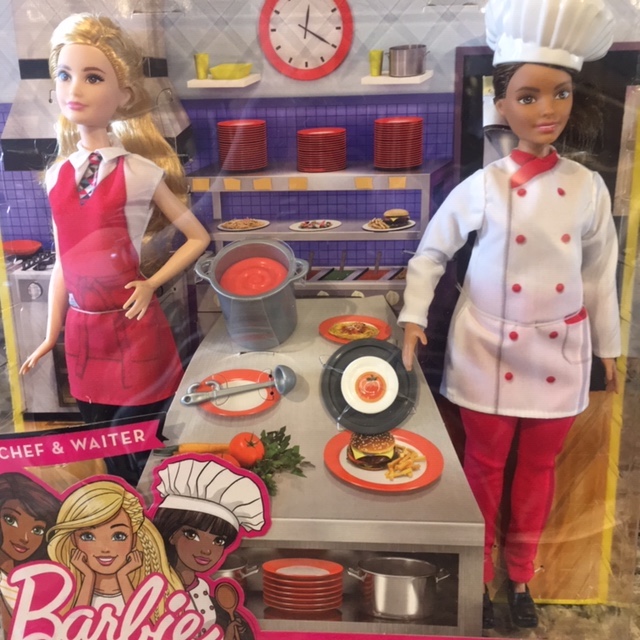
I kept looking and finally found a pair of Barbies, a chef and a waiter. One is fair skinned and blonde. The other is dark skinned and brunette. The blonde Barbie is the waiter, a word-choice I was pleased to see on the box since it ignores the silly -ess ending used in the past when referring to occupations when women fill the positions. The brunette Barbie is the chef. If there is a hierarchy between these two, the chef’s status is higher. That feels good.

Last Christmas my granddaughter received a play kitchen, complete with pots and pans, an oven, a sink, and a stove-top with dials that turn the circles representing burners red, but without the heat. We gave her a plastic assortment of fruits and vegetables that can be “cut” apart at their velcro seams to prepare them for cooking on her stove. So the chef and waiter Barbie option is an extension of that theme. That feels good.

The only lingering, niggling thought left is this: I wasn’t sure I was ready to buy her a Barbie. Now, we’re giving her TWO.


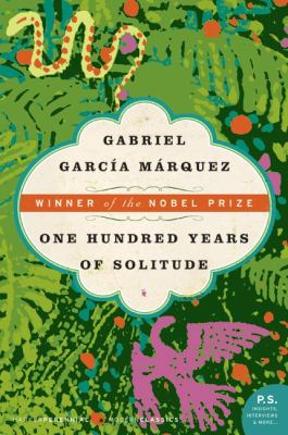
One Hundred Years of Solitude

Two things I love, the book, One Hundred Years of Solitude, and the educational outreach arm of Technology, Education, and Design (TED-ed), have combined to make the audiobook version of the novel available for free. (Well, there’s a catch–the free offer comes with a 30-day trial of Audible.com.)  Check out the YouTube video even if you don’t want the attached offer: